
Ranunculaceae Field Notes
This section is a work in progress. It will continue to evolve as new observations, photographs, comparisons, and field notes are added for members of Ranunculaceae, the buttercup family. The focus is on documenting this family through repeated encounters, careful observation, and diagnostic patterns, while acknowledging that species-level identification from photographs alone is often uncertain.
The emphasis here is on genus-level recognition and visible diagnostic characters–growth form, leaf arrangement, flower structure, reproductive structures, habitat, bloom season, and fruiting details–rather than definitive species determination. In many cases, species-level identification from photographs alone remains uncertain, and that uncertainty is preserved rather than resolved prematurely.
Content in this section may include:
- Comparative notes between similar genera or species
- Field observations recorded across seasons and locations
- Identification frameworks drawn from regional field guides and herbarium references
- Provisional or evolving identifications
This material is intentionally separated from the Gallery.
The Gallery presents these plants as photographic subjects; these field notes explore them as biological organisms.
Both perspectives inform one another.
Ranunculaceae Genera

Description
Ranunculaceae is the buttercup family, a diverse family of eudicot flowering plants that includes columbines, buttercups, anemones, clematises, meadow-rues, larkspurs, and several other familiar wildflower groups. In field notes, the family is especially useful for studying variable flower structure: some members have obvious petals, while others have showy petal-like sepals, spurs, numerous stamens, or distinctive clusters of pistils. Leaves are often divided or lobed, and fruits may appear as achenes, follicles, or other dry structures that can be important for identification.
Orientation
These notes follow Ranunculaceae from family-level characters toward genera and individual species notes. The most useful photographic evidence often includes both flowers and leaves, plus later-season fruits or seed structures when available.
Field Characters
- Flower orientation, symmetry, and number of showy parts
- Petals, petal-like sepals, spurs, nectaries, and stamens
- Leaf arrangement, leaf division, basal leaves, and stem leaves
- Fruit type, seed heads, follicles, or achenes
- Growth habit, habitat, bloom season, and associated insects
Current Species Notes
Aquilegia
- Aquilegia canadensis
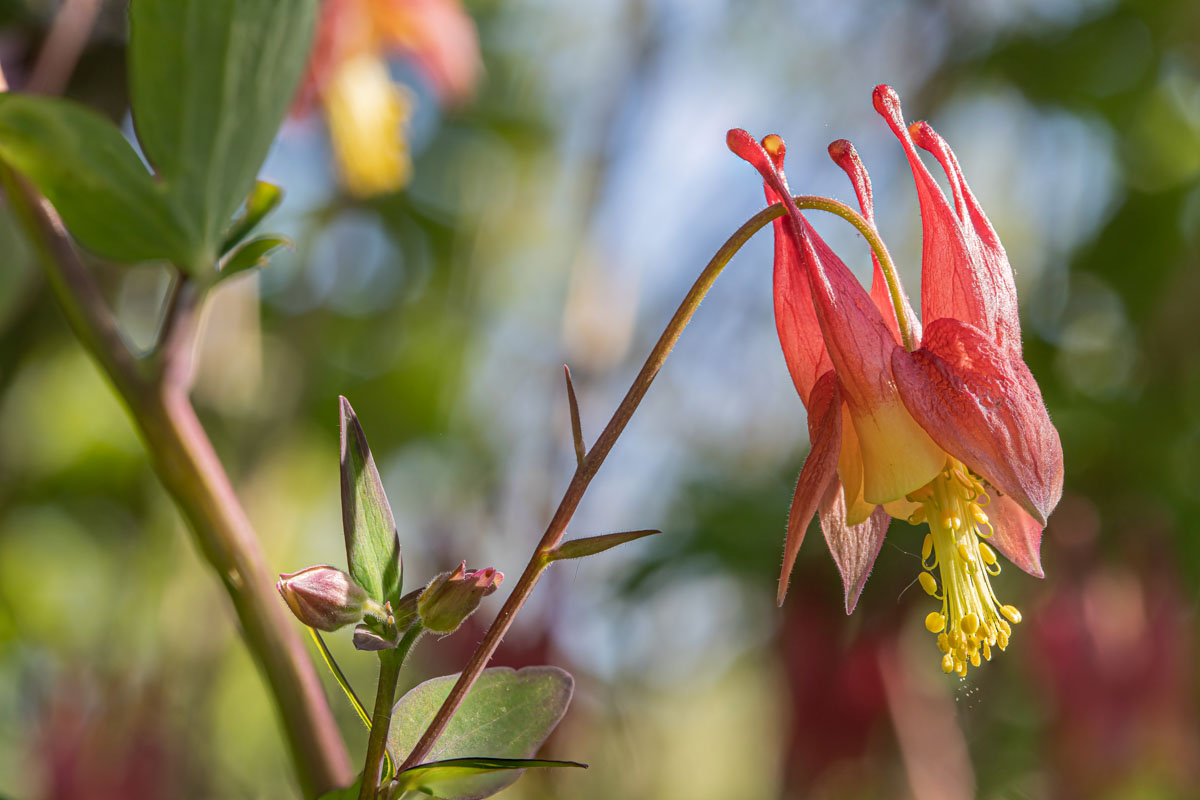
Wild Columbine – a native woodland wildflower with nodding red-and-yellow flowers, long backward-projecting spurs, and protruding yellow stamens.
Gallery page: Wild Columbine
Taxonomy
- Genera represented: 2
- Species represented: 1
- Documented: 1
Provisional Notes
Notes that cannot yet be placed confidently to genus or species can be listed here until better photographic evidence or field comparison is available.