
Odonata (Dragonflies & Damselflies)
Odonata is an ancient order of predatory insects that includes both dragonflies and damselflies.
They are defined by their elongate bodies, large compound eyes, and two pairs of membranous wings.
All odonates are closely tied to freshwater habitats. Their aquatic nymphs develop in ponds, lakes, streams, and wetlands, where they are active predators long before emerging as winged adults.
Taxonomic Structure
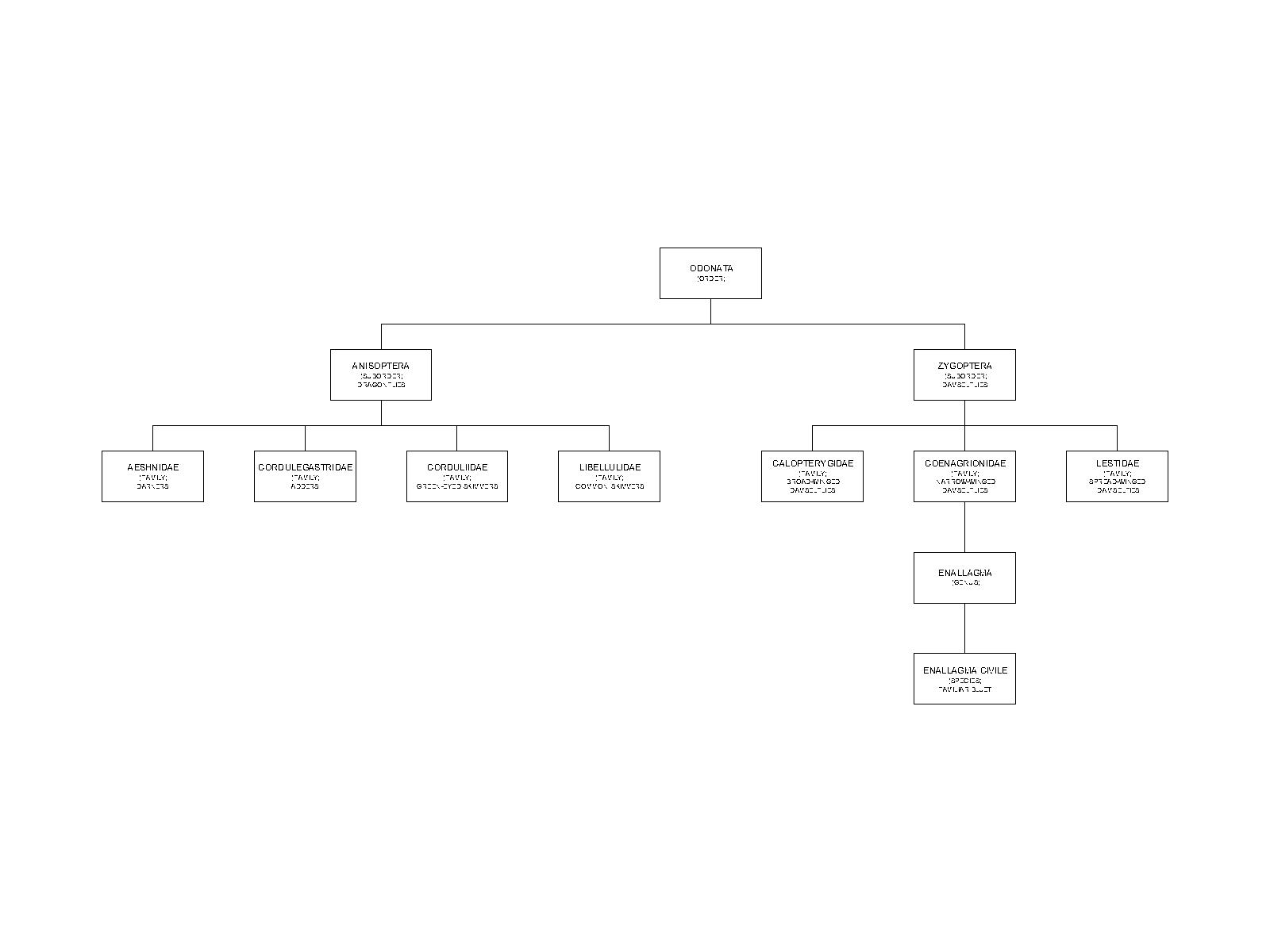
Suborders
Zygoptera (Damselflies)
Damselflies are typically slender with narrow abdomens and wings that are usually held together above the body at rest.
Their eyes are separated, and their flight tends to be lighter and more fluttering.
Anisoptera (Dragonflies)
Dragonflies are generally more robust, with broader wings held open at rest.
Their eyes are large and usually meet or nearly meet at the top of the head.
They are strong, direct fliers.
Life Cycle
Odonates undergo incomplete metamorphosis:
- Egg
- Aquatic nymph
- Winged adult
The nymph stage may last months to years depending on species and climate.
Emergence from water marks a dramatic transition to the aerial adult stage.
Notes
Odonates are among the most visually striking insects in freshwater ecosystems and are often used as indicators of habitat quality.