Cygnus buccinator
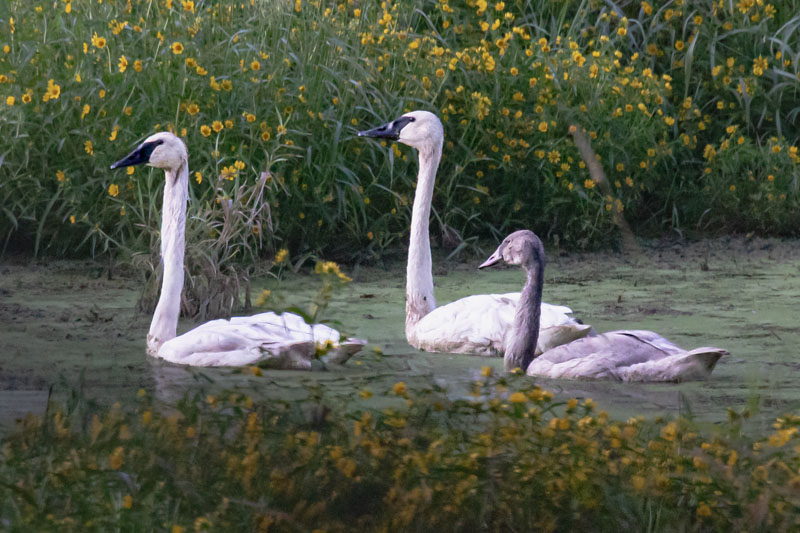
Trumpeter Swans move with quiet authority across open water, their long necks and bright white bodies standing out against the subdued tones of marsh and reed. In still conditions, they seem almost motionless—gliding rather than swimming—leaving only a faint wake behind them. In Minnesota wetlands, their presence is both calm and commanding, a reminder of scale and space within the landscape.
For identification details and comparison with similar species, see the Cygnus buccinator in the Field Notes section.

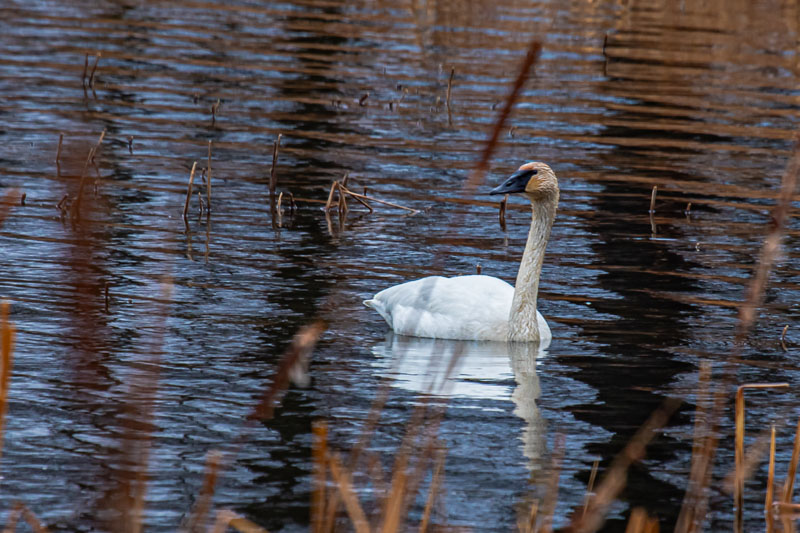
Trumpeter Swan — Quiet Marsh Water
A solitary presence moving through still water at the edge of the reeds.
The swan drifts between last season’s cattails, its reflection broken only by small ripples. The long neck and heavy bill give it a deliberate, grounded appearance even in motion.
Camera: Canon EOS 5D Mk IV
Lens: EF100-400mm f/4-5.6L IS USM
Settings: ISO 500 • Aperture f/8.0 • Shutter 1/640 s
E22A0348 • Size: 3507x2338
Overview
Among the largest flying birds in North America, the Trumpeter Swan carries a sense of weight and stillness that defines its presence on the water. Unlike smaller waterfowl, its movements are slow and measured, each shift of the neck or body unfolding gradually.
In marsh settings, the contrast between white plumage and dark water draws the eye immediately, even when the bird is partially obscured by reeds.
On the Water

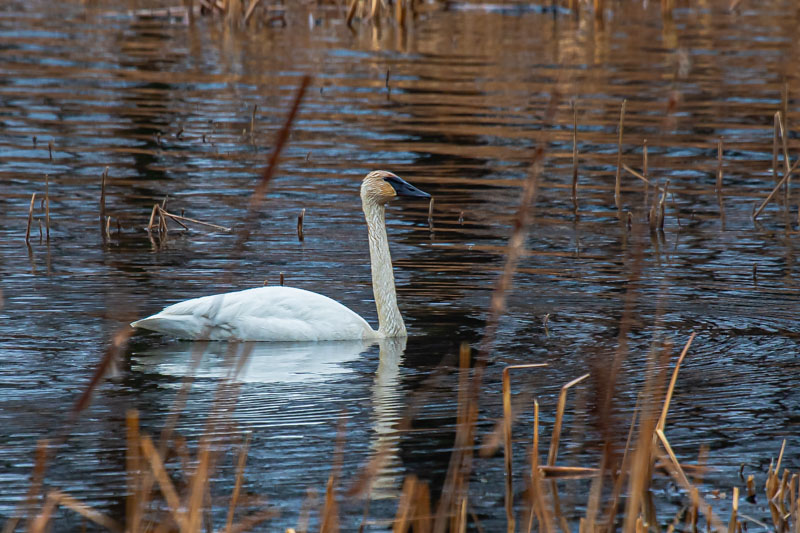
Side Profile — Still Water
A clean profile showing the long neck and smooth, buoyant form.
Camera: Canon EOS 5D Mk IV
Lens: EF100-400mm f/4-5.6L IS USM
Settings: ISO 500 • Aperture f/8.0 • Shutter 1/320 s
E22A0352 • Size: 3031x2021

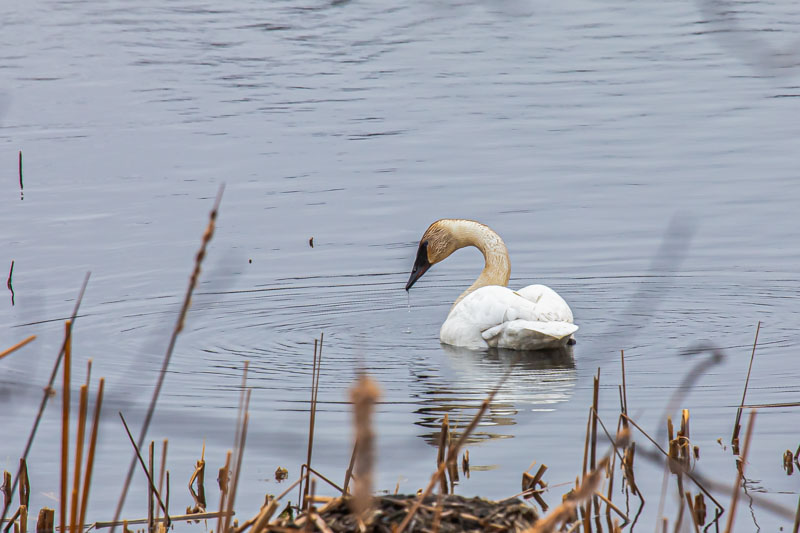
Lowered Head — Feeding Posture
A subtle shift as the bird angles downward, scanning the water below.
Camera: Canon EOS 5D Mk IV
Lens: EF100-400mm f/4-5.6L IS USM
Settings: ISO 500 • Aperture f/13.0 • Shutter 1/200 s
E22A0363 • Size: 3850x2567
Photographer’s Perspective
The still water and muted tones of early-season marsh create a quiet backdrop where the swan becomes the focal point almost immediately. With little wind, reflections remain intact, and even small movements—like a slight turn of the head—become visually significant.
Working through reeds adds a natural frame, but also requires patience. The best moments come when the bird moves into small openings, revealing its full shape against darker water. The long neck and smooth white body simplify the composition, making structure and posture the primary visual elements.