Eastern Forktail Damselfly
Ischnura verticalis
The Eastern Forktail is a small, common damselfly of pond edges, marshes, wet meadows, and quiet shoreline vegetation. These photos show several likely female forms, including a green individual with a crisp blue terminal abdominal segment and orange immature females resting low among leaves, stems, and dry grass.
For identification details, notes on female color variation, and comparison with similar forktails, see Ischnura verticalis in the Field Notes section.
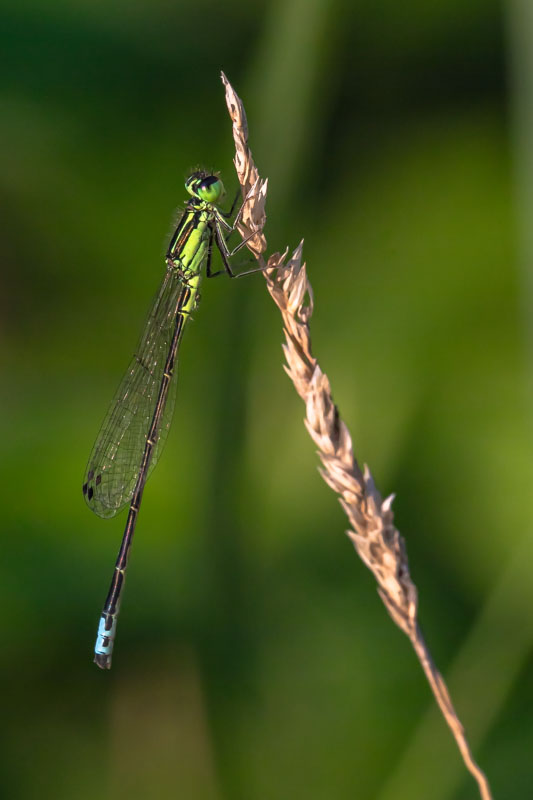
Eastern Forktail on Grass Seed Head
A sharply detailed green female Eastern Forktail perched along a tan seed head, showing the slender body, dark abdomen, and blue near the abdominal tip.
Camera: Canon EOS 5D Mark IV • Lens: EF100mm f/2.8L Macro IS USM
Settings: ISO 400 • Aperture f/13.0 • Shutter 1/400
D79A0192 • Size: 4000x2667
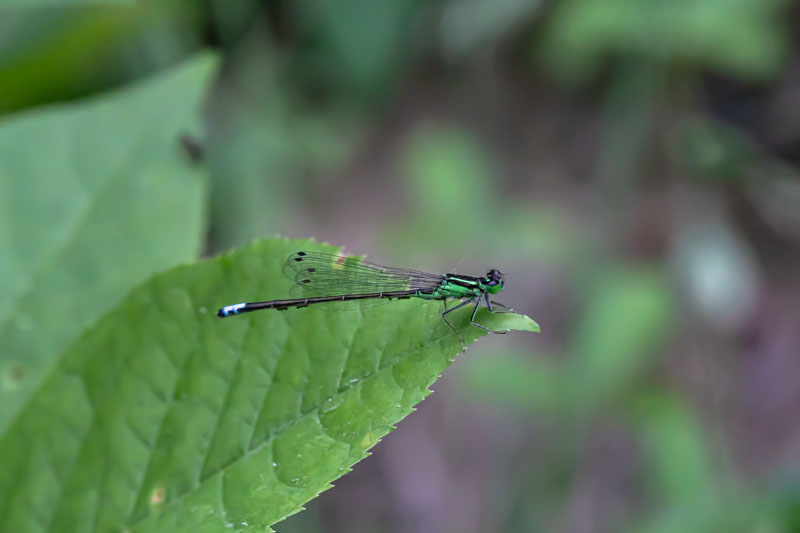
Likely Female Eastern Forktail on Leaf
A side view of a likely female Eastern Forktail resting on a leaf, with the blue terminal abdominal segment visible against the soft woodland background.
Camera: Canon EOS 5D Mark IV • Lens: EF100mm f/2.8L Macro IS USM
Settings: ISO 2500 • Aperture f/13.0 • Shutter 1/200
E22A3907 • Size: 5000x3333
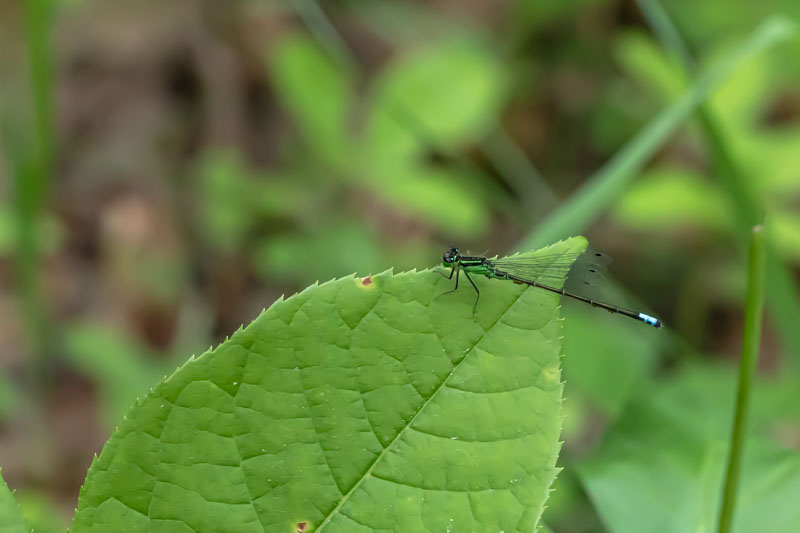
Eastern Forktail with Blue Tail Segment
The green thorax, mostly dark abdomen, and bright blue near the tip help place this damselfly among the Eastern Forktails.
Camera: Canon EOS 5D Mark IV • Lens: EF100mm f/2.8L Macro IS USM
Settings: ISO 8000 • Aperture f/13.0 • Shutter 1/200
E22A3910 • Size: 5000x3333
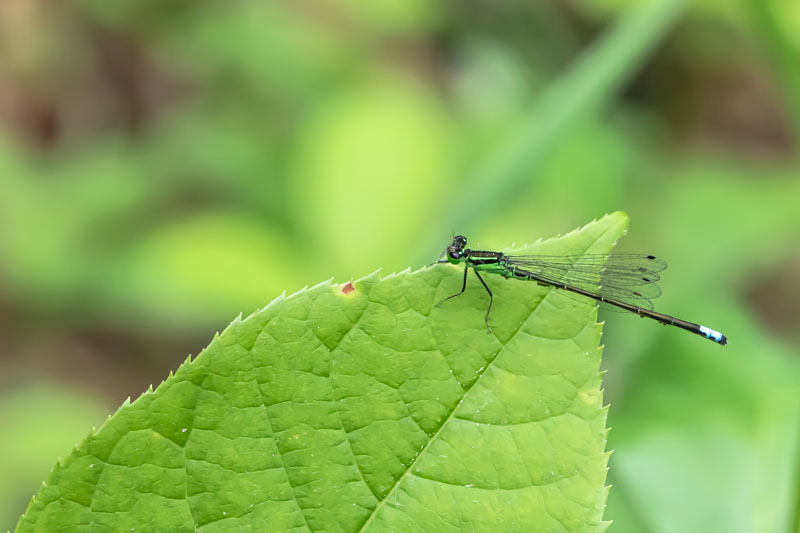
Likely Female Eastern Forktail, Side View
A side profile of the same likely female form, showing the green thorax, narrow dark abdomen, and pale blue terminal segment.
Camera: Canon EOS 5D Mark IV • Lens: EF100mm f/2.8L Macro IS USM
Settings: ISO 8000 • Aperture f/9.0 • Shutter 1/200
E22A3911 • Size: 5000x3333
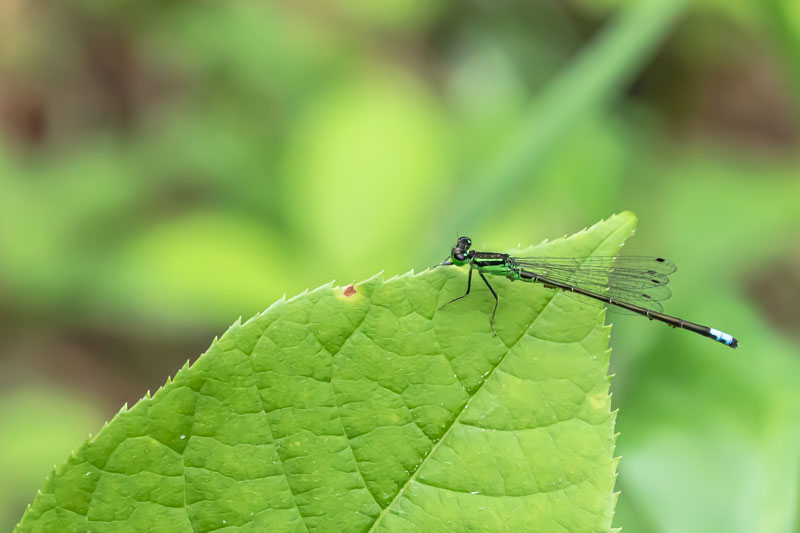
Likely Female Eastern Forktail, Leaf Perch
This view of the same individual as E22A3911 gives a clean look at the folded wings, dark abdomen, and blue near the abdominal tip.
Camera: Canon EOS 5D Mark IV • Lens: EF100mm f/2.8L Macro IS USM
Settings: ISO 8000 • Aperture f/9.0 • Shutter 1/200
E22A3913 • Size: 5000x3333
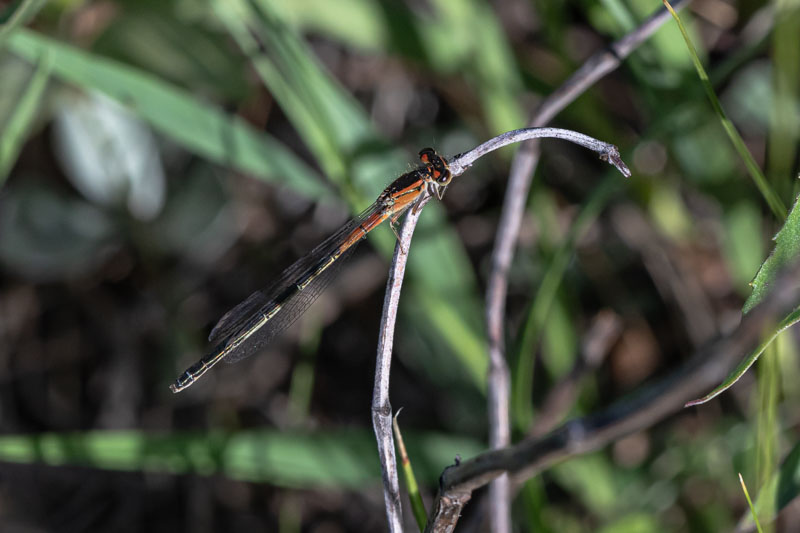
Orange Immature Female Eastern Forktail
An orange female form perched on a dry twig, showing how different immature females can look from the greener individuals.
Camera: Canon EOS 5D Mark IV • Lens: EF100mm f/2.8L Macro IS USM
Settings: ISO 400 • Aperture f/13.0 • Shutter 1/100
E22A4089 • Size: 3000x2000
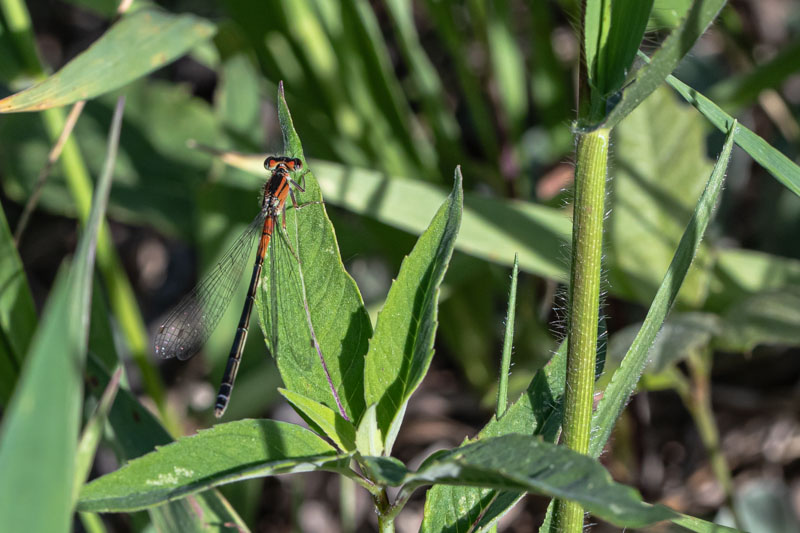
Orange Female Eastern Forktail Among Leaves
A second view of the orange female form, perched low in vegetation where forktails often pause between short flights.
Camera: Canon EOS 5D Mark IV • Lens: EF100mm f/2.8L Macro IS USM
Settings: ISO 400 • Aperture f/13.0 • Shutter 1/100
E22A4092 • Size: 3000x2000