
Ash Rust
(Puccinia sparganioides)
A striking fungal infection that adorns ash leaves and young twigs with vivid orange pustules — a visual marker of the complex life cycles hidden in our forests.
Identification
- Common name: Ash Rust
- Causal agent: Puccinia sparganioides
- Hosts: Primarily green ash (Fraxinus pennsylvanica) and white ash (Fraxinus americana)
- Appearance: Bright orange pustules or blisters on leaves, petioles, and young twigs
- Effect: Distorted leaves and stems; heavy infections may cause early leaf drop
- Spore color: Orange to yellow-orange, often forming dense powdery clusters
Life Cycle
Ash Rust has a complex, two-host life cycle:
- Primary Host: Ash trees — where orange pustules develop on leaves and stems.
- Alternate Host: Cordgrass (Spartina spp.) — found in wetlands and coastal habitats.
Spores are carried by wind between hosts, allowing the fungus to overwinter on cordgrass and reinfect ash in spring.
Habitat
- Environment: Moist, warm conditions near wetlands or lakeshores
- Season: Visible from late spring through midsummer
- Distribution: Common in regions where ash and cordgrass overlap in range
Photos
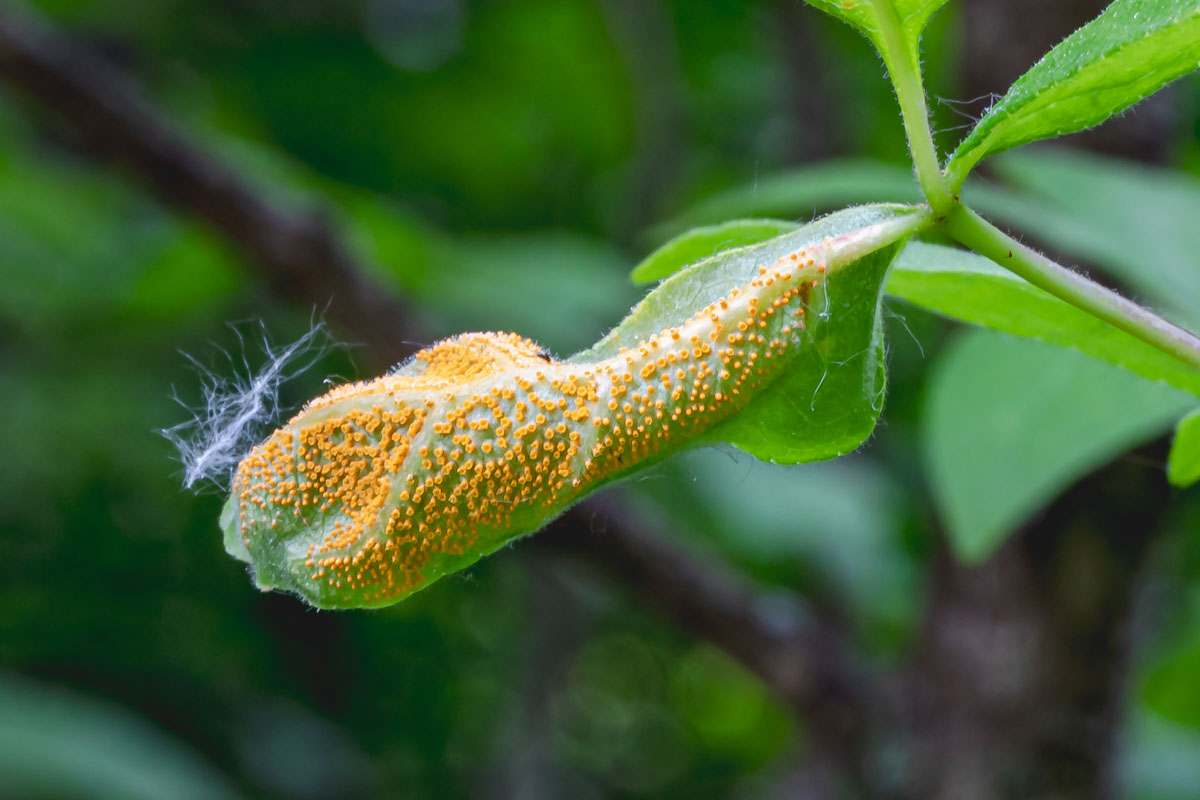
Ash leaf covered in bright orange rust pustules — typical of Puccinia sparganioides.
Notes
Ash Rust is primarily an aesthetic issue and rarely fatal. Mature trees typically recover with little impact, though young saplings can suffer reduced growth. Pruning infected shoots can improve air circulation and reduce spread.