Spinus tristis
Spinus tristis
Family: Fringillidae
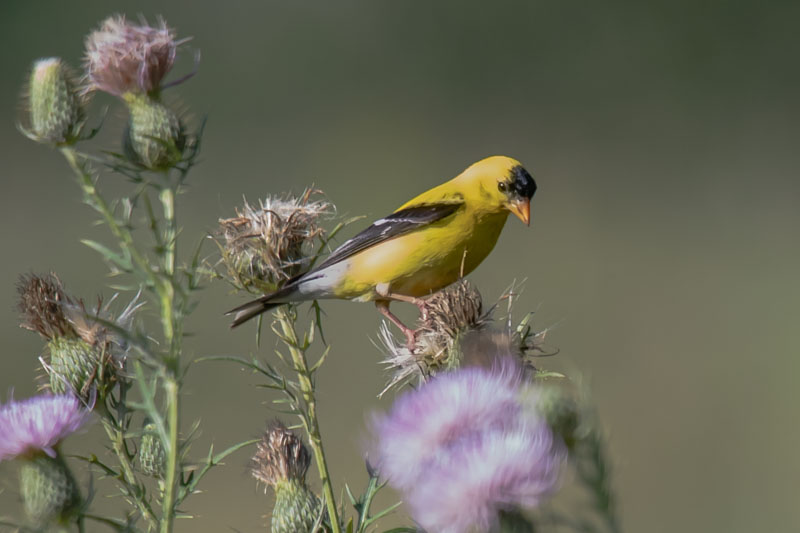
American Goldfinch (Spinus tristis) is a small, active finch of open fields and gardens, most noticeable in late summer when males reach peak brightness. Breeding males are vivid yellow with a black cap, while females and nonbreeding birds show softer olive tones that blend into surrounding vegetation.
For photographic observations and visual context, see Photographer’s Perspective and the American Goldfinch in the Gallery section.
Description
Spinus tristis is recognized by:
- Size: small songbird, approximately 4.5–5 in (11–13 cm)
- Male plumage (breeding): bright yellow body with black cap, wings, and tail
- Female plumage: olive-yellow overall, lacking black cap, with muted contrast
- Nonbreeding plumage: both sexes become duller, with brownish or olive tones
- Bill: short, conical, pale in color
- Flight: undulating, with a characteristic bounding pattern
Seasonal molt is pronounced, with males shifting from subdued winter tones to bright yellow in spring.
Habitat and Range
Typical habitats include:
- Open fields with abundant seed-producing plants
- Weedy roadsides and meadow edges
- Gardens, orchards, and suburban plantings
Notes may include:
- Strong association with thistle, sunflower, and other composite plants
- Common throughout Minnesota in summer; present year-round in many areas
- Forms loose flocks outside the breeding season, often mixed with other finches
Identification
Key features for field diagnosis:
- Male (summer): vivid yellow with black cap and contrasting black wings
- Female / winter birds: subdued olive-yellow, lacking strong contrast
- Voice: light, musical calls often given in flight
- Flight pattern: bouncing, undulating flight with intermittent wingbeats
The combination of bright coloration (in season) and distinctive flight pattern makes the species easy to recognize even at a distance.
Behavior and Ecology
- Feeds primarily on seeds, often while perched rather than on the ground
- Specializes on thistle and other composite seeds
- Breeds later than most songbirds, timing nesting to peak seed availability
- Nests are compact cups built in shrubs or small trees
- Diet remains largely seed-based year-round
Goldfinches are highly social outside the breeding season and often move through habitats in small, active groups.
Notes
- One of the few North American songbirds that molts twice per year
- Late nesting strategy closely tied to plant phenology
- Frequently observed clinging to seed heads, often hanging upside down while feeding
- Their flight calls and movement create a constant sense of motion across open landscapes
References
-
Cornell Lab of Ornithology – All About Birds
https://www.allaboutbirds.org -
Audubon Field Guide
https://www.audubon.org -
iNaturalist taxon page
https://www.inaturalist.org/taxa/6837-Spinus-tristis