R. Fraley

American Goldfinch

Spinus tristis

American Goldfinches move through spring and summer greenery in flashes of yellow, their color catching the light as they pass between leaves, seed clusters, and exposed perches. Their flight rises and falls in a gentle rhythm, and even at rest they seem poised for the next movement.

For identification details and comparison with similar species, see the Spinus tristis in the Field Notes section.


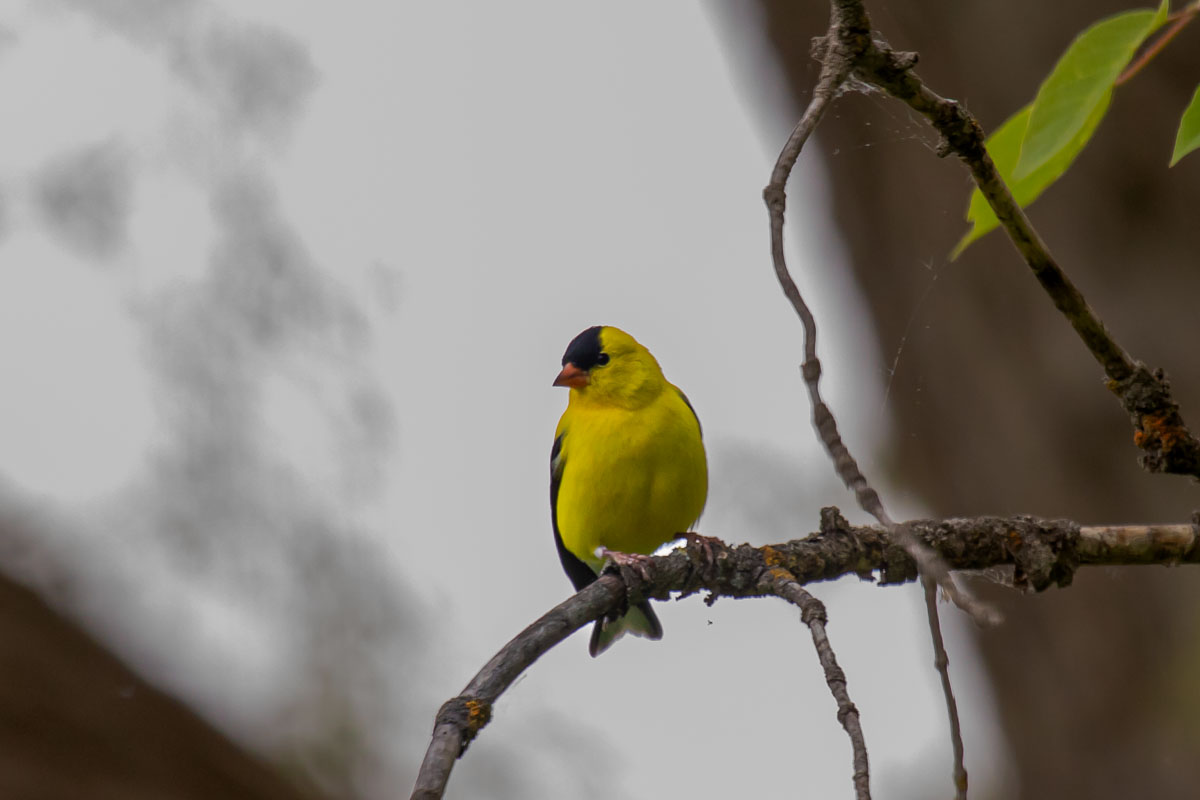
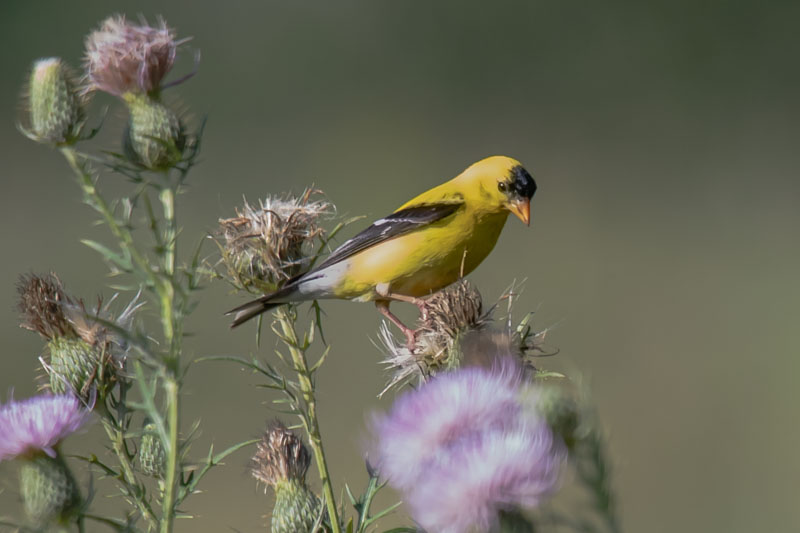
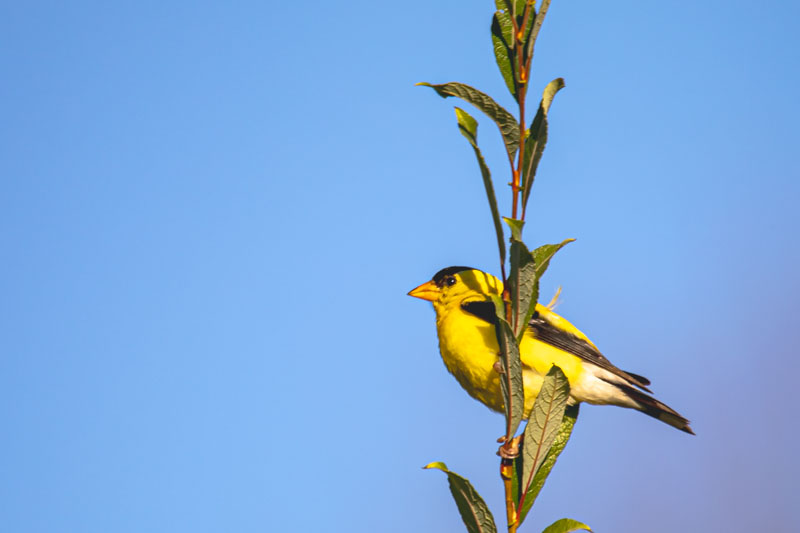
A male American Goldfinch pauses on an open branch, facing forward with the black cap, pale bill, and vivid yellow plumage clearly visible. The simple perch and soft background make this the strongest portrait in the sequence.

American Goldfinch frontal portrait

Frontal Portrait
A direct look from a quiet perch.
Camera: Canon EOS 5D Mark IV
Lens: EF100-400mm f/4.5-5.6L IS USM
Settings: ISO 1250 • Aperture f/5.6 • Shutter 1/640 s
E22A2984 • Size: 2493x1662


Overview

The American Goldfinch is a familiar bird of open fields, gardens, woodland edges, and weedy borders. Breeding males are vivid yellow with a black cap and sharply contrasting wings, while females and nonbreeding birds are quieter in color, blending into the greens and browns of the season.

This page combines two views of the species: clean portraits that show structure and plumage, and feeding images that place the bird within the leaves and seed clusters that shape its daily behavior.


Identification

The frontal portrait shows the bright yellow body, black cap, pale conical bill, and compact finch shape. From this angle, the bird reads as alert and upright, with the strong facial contrast typical of a breeding male.

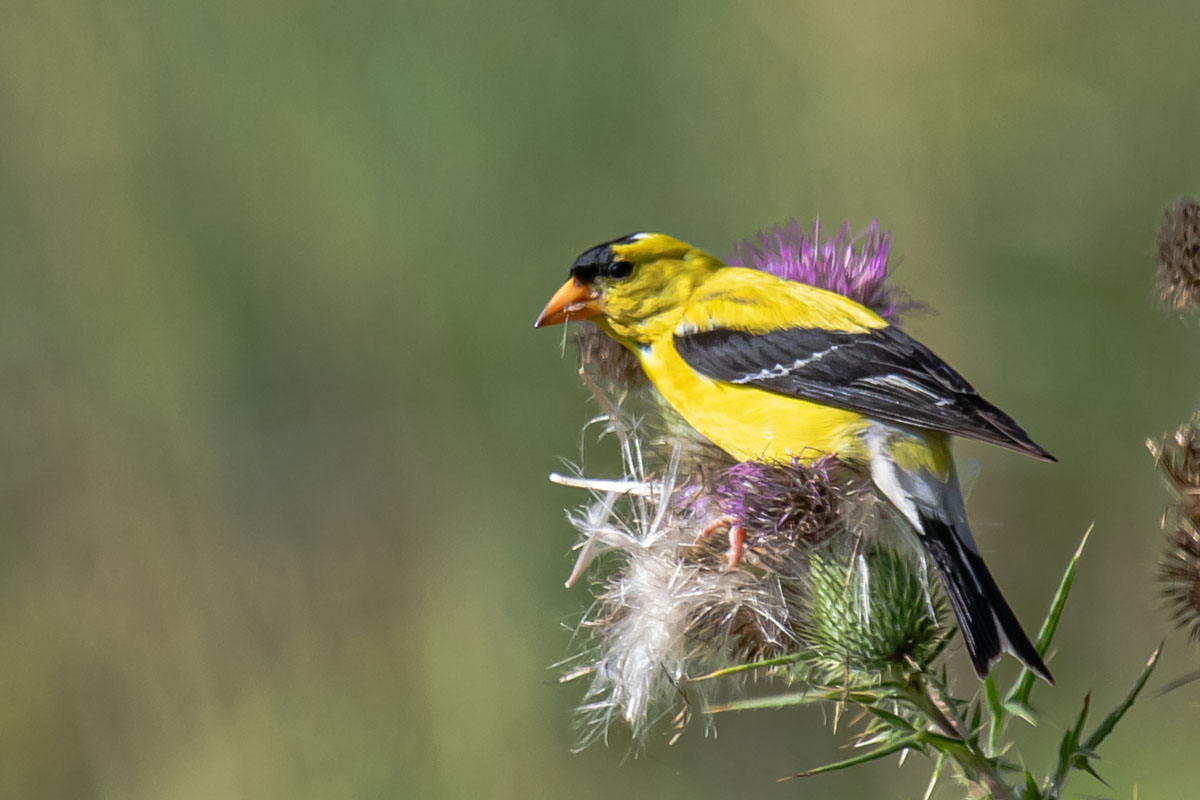
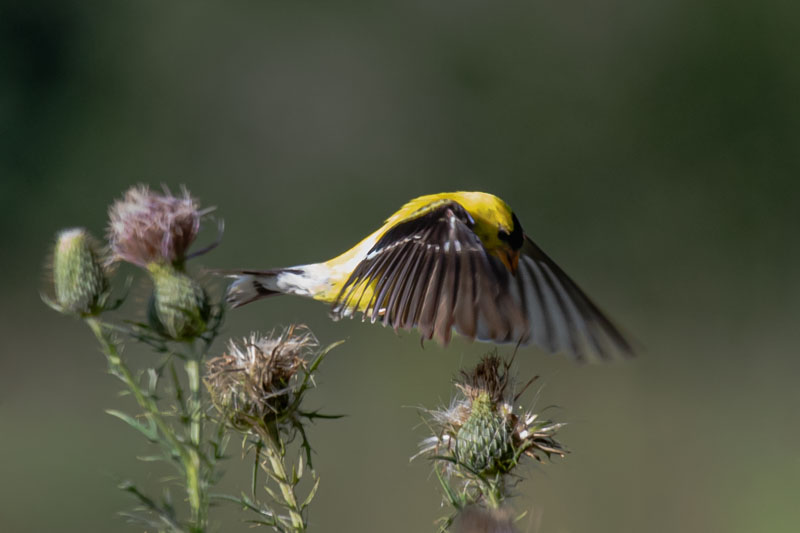
American Goldfinch showing wing detail

Wing Detail
Black-and-white patterning set against bright yellow plumage.
Camera: Canon EOS 5D Mark IV
Lens: EF100-400mm f/4.5-5.6L IS USM
Settings: ISO 1250 • Aperture f/8.0 • Shutter 1/640 s
E22A2986 • Size: 2358x1572

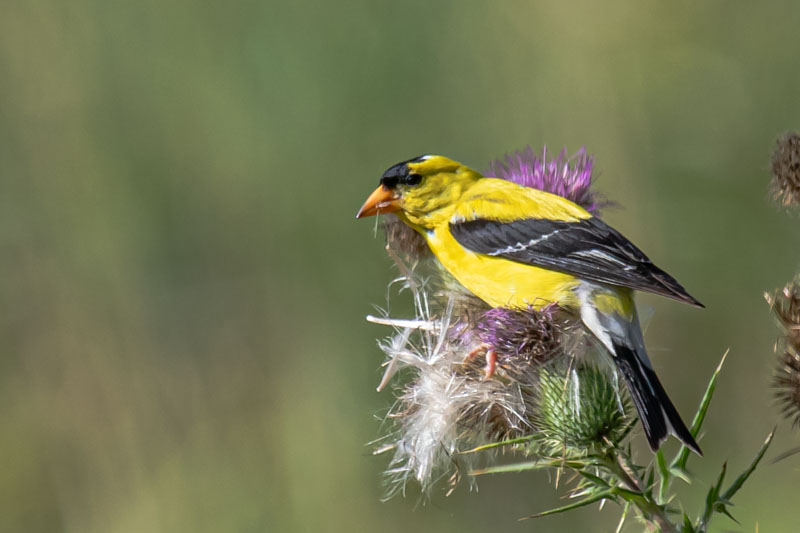
The side view adds important wing detail. The dark folded wing, pale markings, and bright body color help confirm the species even when the bird is partly screened by branches or leaves.


At the Dinner Table

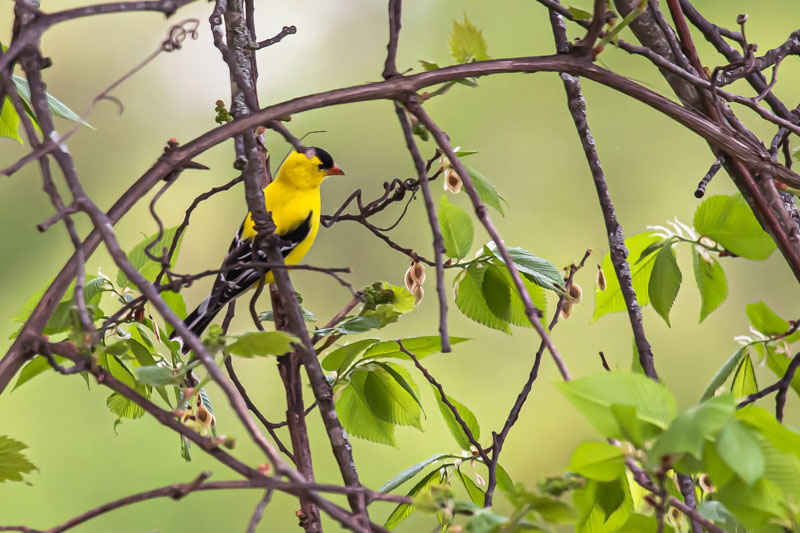
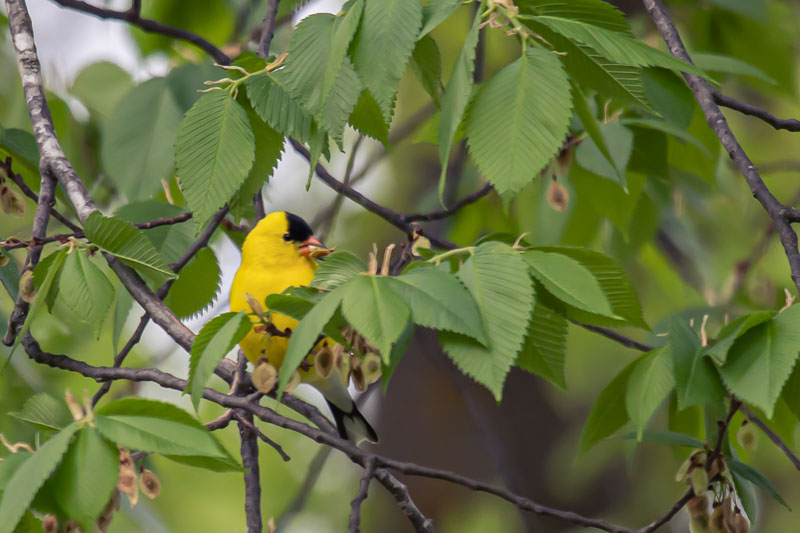
The feeding images show the goldfinch using the tree rather than simply perching in it. He moves through fresh leaves and seed clusters, partly hidden, selecting food from the surrounding structure.

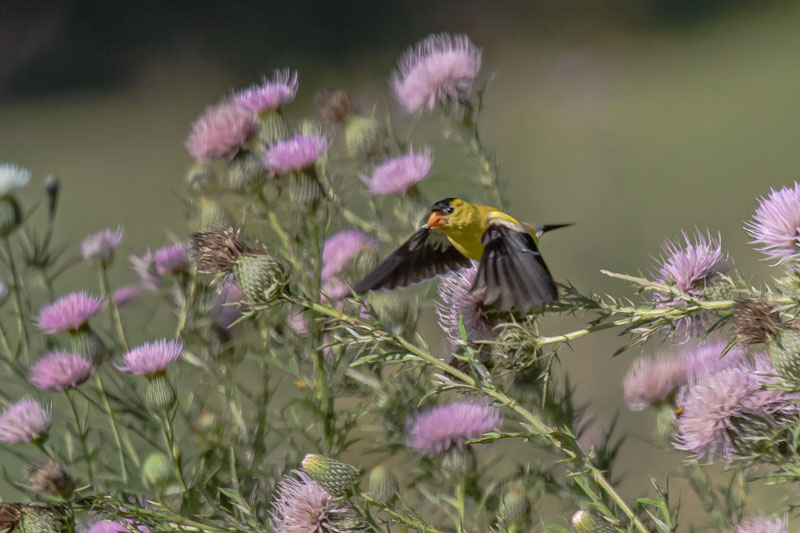
American Goldfinch feeding among leaves

At the Dinner Table
Selecting seeds among fresh leaves.
Camera: Canon EOS 5D Mark IV
Lens: EF100-400mm f/4.5-5.6L IS USM
Settings: ISO 640 • Aperture f/5.6 • Shutter 1/640 s
E22A2989 • Size: 1900x1267

This frame gives the strongest behavioral context. The bird’s bright color still draws the eye, but the leaves, branches, and seed clusters make the scene feel active and lived-in.

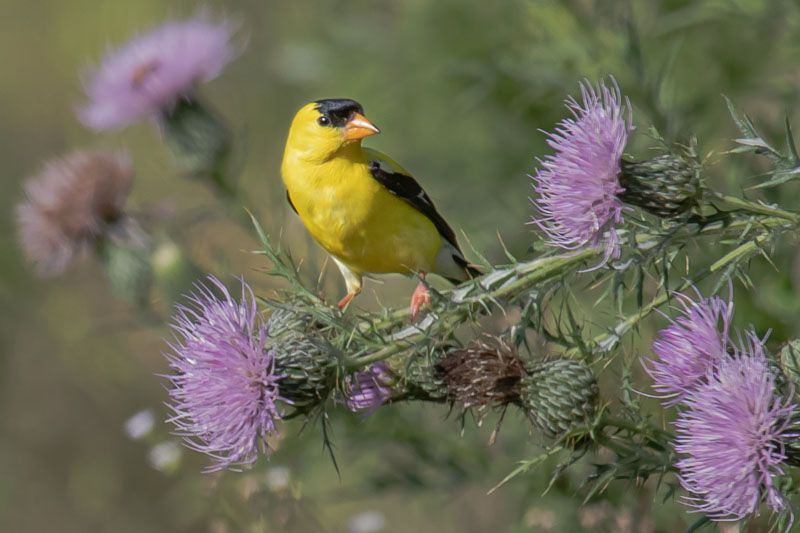
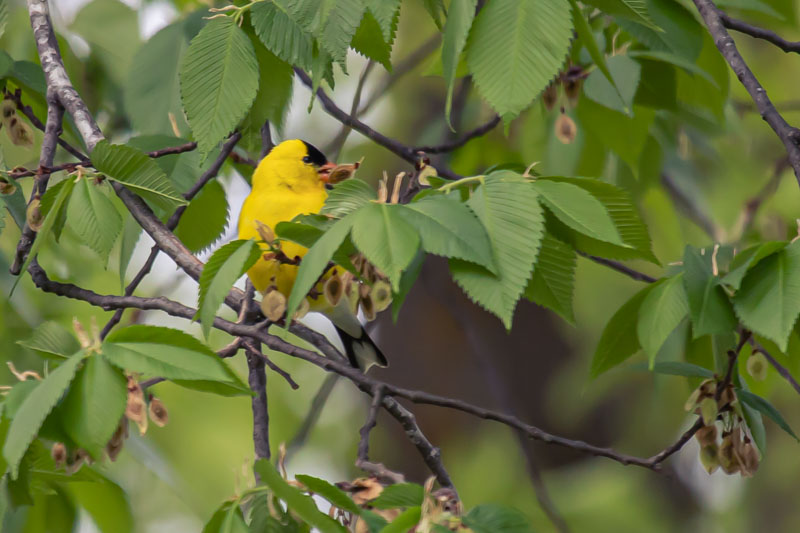
American Goldfinch with seed in beak

Seed in Beak
A feeding moment partly hidden by foliage.
Camera: Canon EOS 5D Mark IV
Lens: EF100-400mm f/4.5-5.6L IS USM
Settings: ISO 640 • Aperture f/5.6 • Shutter 1/640 s
E22A2991 • Size: 1900x1267

A second feeding frame catches the moment more tightly, with the bird partly obscured by leaves and the seed visible at the bill. It shows the ecology of the species in a single frame: movement through seed-bearing plants, often partly concealed rather than fully exposed.


Among the Leaves

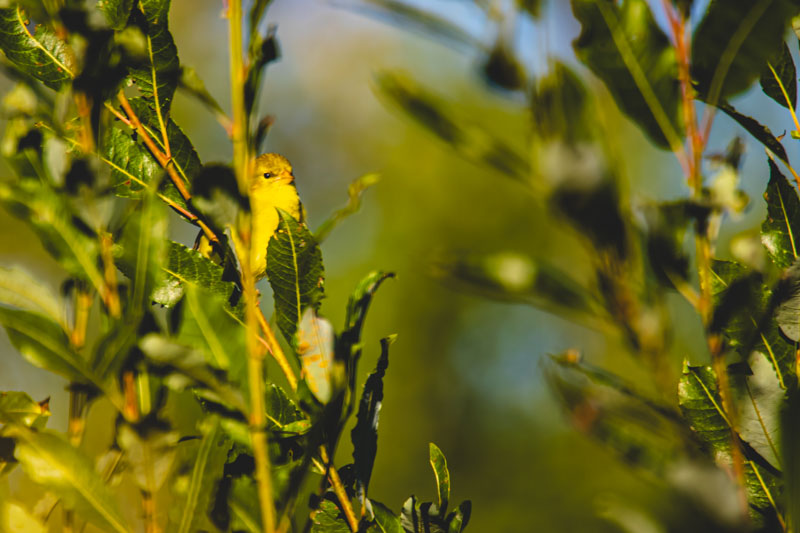
The earlier leafy portrait shows the same species in a softer summer setting. Instead of exposed branches and fresh spring seed clusters, the frame is defined by filtered light, dense foliage, and brief openings through the leaves.

American Goldfinch side profile

Side Profile — Filtered Light
A quiet pause, framed by shifting light.
Camera: Canon EOS 5D Mark IV
Lens: EF100-400mm f/4.5-5.6L IS USM +1.4x
Settings: ISO 100 • Aperture f/8.0 • Shutter 1/320 s
E21A3395 • Size: 3517x2345


Female American Goldfinch

Where the breeding male announces himself in color, the female moves quietly through the same space. Her olive and yellow tones blend into leaves and stems, making her presence depend more on movement than contrast.

Female American Goldfinch peeking through leaves

Female — Peeking Through Leaves
Subtle, nearly lost within the foliage.
Camera: Canon EOS 5D Mark IV
Lens: EF100-400mm f/4.5-5.6L IS USM +1.4x
Settings: ISO 100 • Aperture f/8.0 • Shutter 1/320 s
E21A3396 • Size: 4310x2873

The softer plumage changes the feel of the page. Instead of the male’s high contrast, the female shows the other side of the species: quieter, more concealed, and easily overlooked until she shifts among the leaves.


Photographer’s Perspective

E22A2984 works best as the opening image because it gives the bird a clean, readable presence. The posture is direct, the perch is simple, and the field marks are clear without losing the natural setting.

The feeding images add the stronger story. E22A2989 and E22A2991 show the goldfinch as part of the tree’s structure, moving through leaves and seed clusters rather than posing apart from them. Together, the portraits and feeding frames give the page both identification value and behavioral context.