Kennebec River, Maine
Exploring Maine’s Working River
The Kennebec River flows from Moosehead Lake to the Gulf of Maine, connecting forests, mills, shipyards, and lighthouses along its winding course. Near Bath, history and industry converge — where Doubling Point and Fiddler’s Reach Lights still guide vessels past Bath Iron Works and toward the open sea.
Featured View
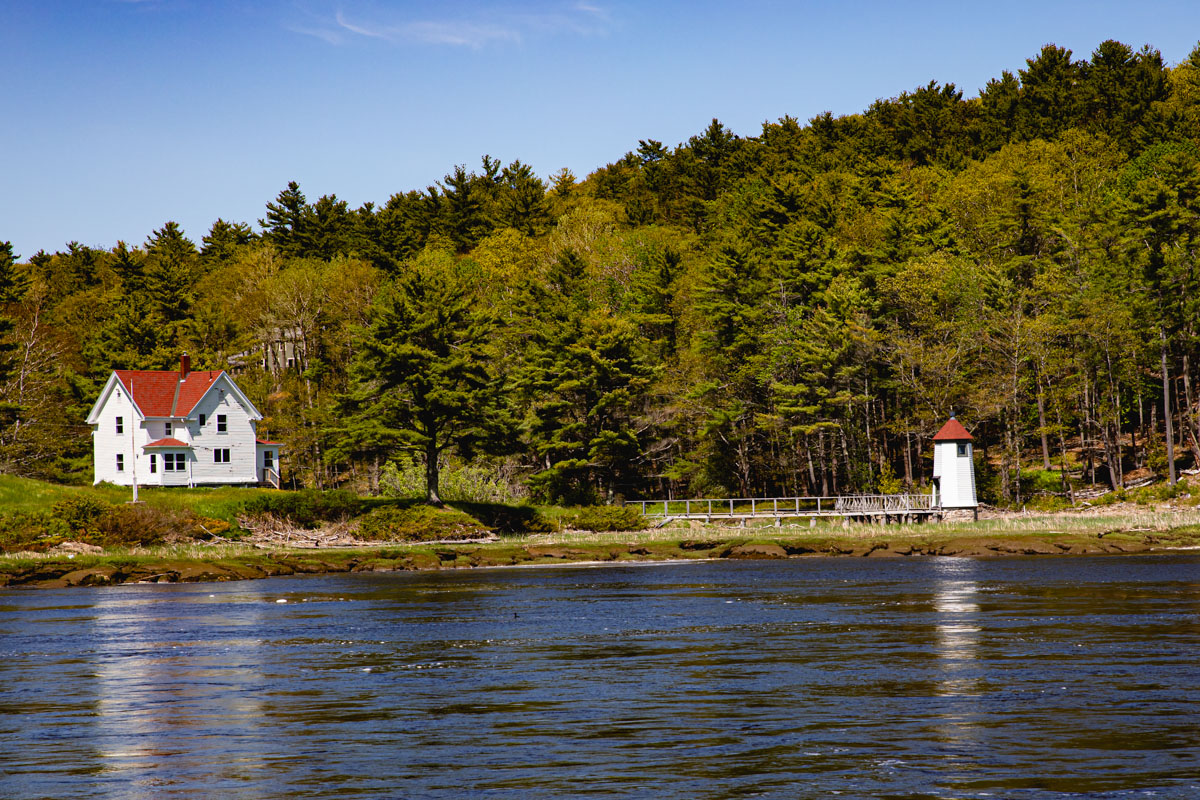 Fiddler’s Reach Lighthouse — Arrowsic, ME
Monitoring the bend where river meets tide.
A small white tower and keeper’s house mark the turning point of the Kennebec River, guiding ships past forested banks toward the open sea.
Camera: Canon EOS 5D Mark IV
Lens: EF24-70mm f/2.8L II USM
Settings: ISO 200 • f/5.6 • 1/640 s
Kennebec River Lights
The lower Kennebec is marked by lights, bends, and tidal crossings where navigation still shapes the river. Near Arrowsic, Fiddler’s Reach and Doubling Point Lights frame the transition from wooded shoreline to the working waterfront near Bath.
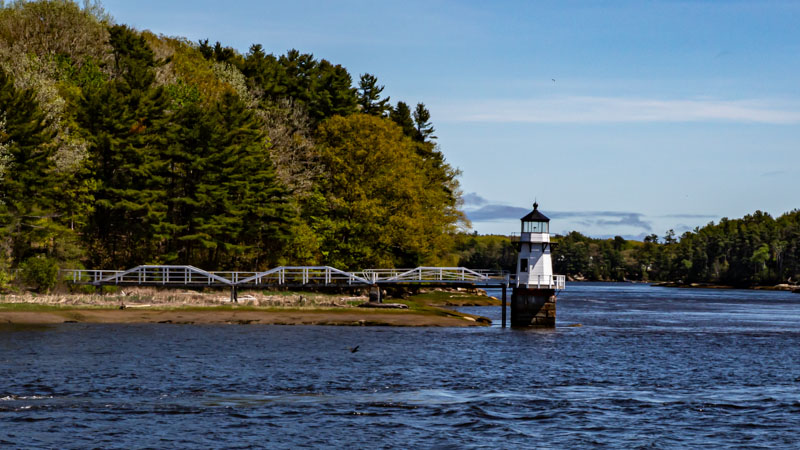 Doubling Point Lighthouse — Arrowsic, ME
Guiding ships along the upriver bend toward Bath.
Set among pines and tidal flats, Doubling Point Light has guided mariners since 1898 where the Kennebec narrows toward Bath Iron Works.
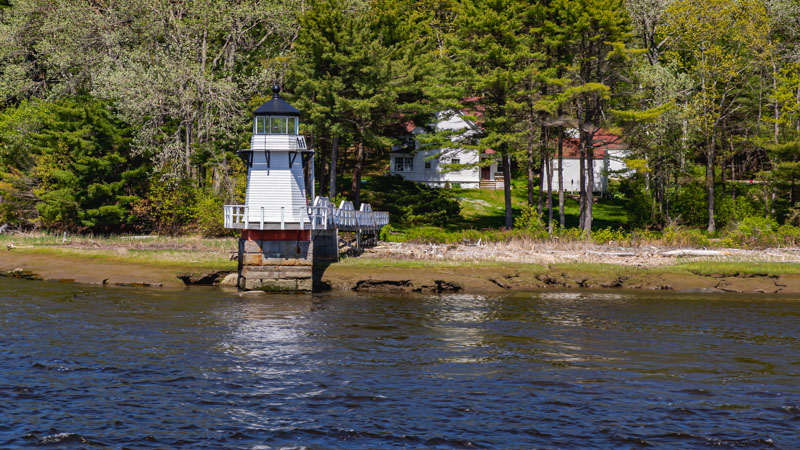 Doubling Point Lighthouse and Keeper’s House
A quiet riverside view across low tide and spring foliage.
The white keeper’s house rests back among the trees while the narrow catwalk reaches to the lighthouse perched above the tidal edge.
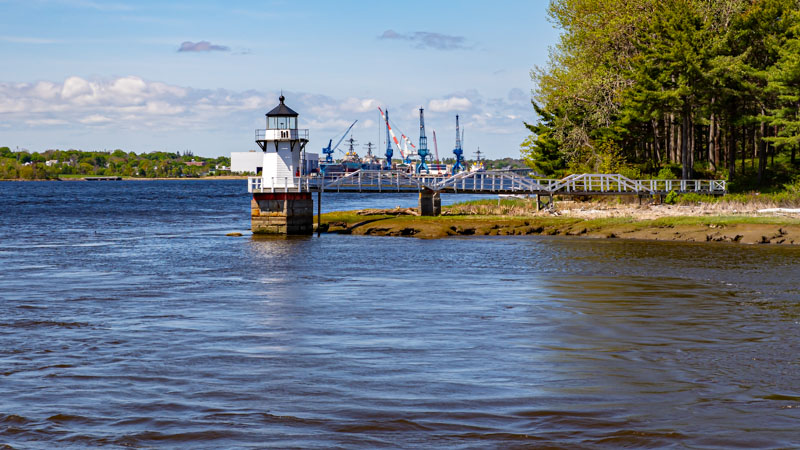 Doubling Point Lighthouse and Bath Iron Works — Arrowsic to Bath, ME
The lighthouse foreground contrasts with Bath Iron Works cranes beyond.
Though the shipyard infrastructure competes visually, the juxtaposition of the historic lighthouse with Bath’s Arleigh Burke–class destroyer yard hints at the Kennebec’s long maritime continuum.
Bald Eagles Along the Kennebec
Between the river lights and the shipyard, the wooded banks of the Kennebec offered a wildlife moment: a bald eagle perched among the pines before lifting into flight over the river.
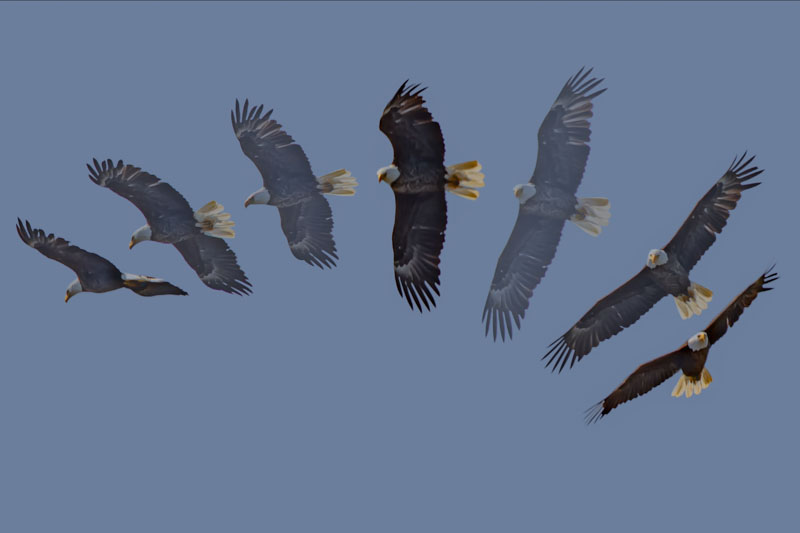 Bald Eagle — Kennebec River Flight Study
Composite of a bald eagle banking over the river.
The layered sequence captures the grace and strength of the eagle in motion, a fitting emblem for Maine’s wild rivers.
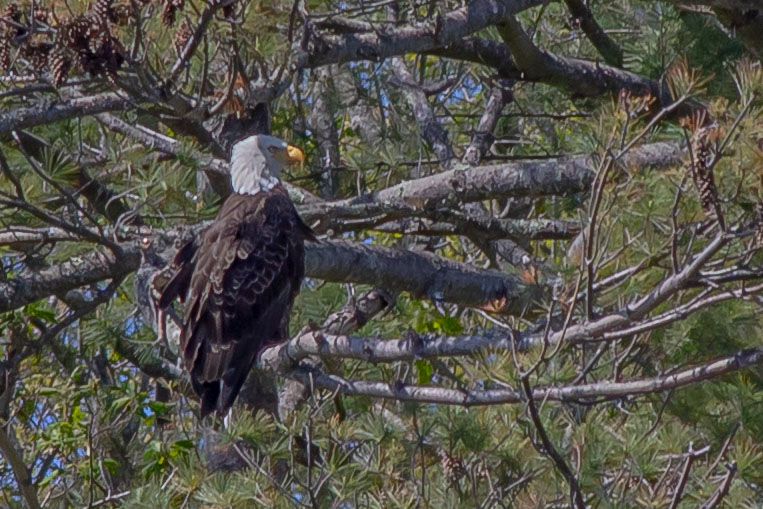 Bald Eagle — Kennebec River, ME
Perched watchfully in the pines above the river.
The eagle’s posture and bright eye show the intensity of a predator surveying the forest below.
Camera: Canon EOS 5D Mark IV
Lens: EF70-300mm f/4-5.6L IS USM
Settings: ISO 200 • f/9.0 • 1/640 s
D79A3611 • Size: 763 × 509
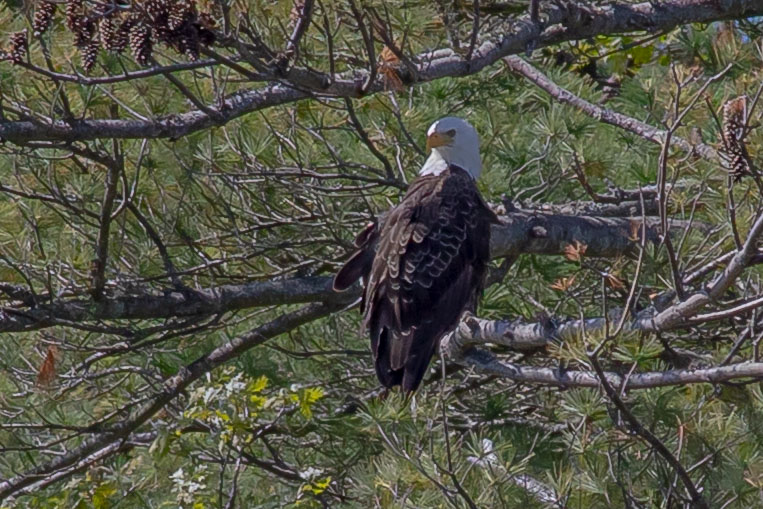 Bald Eagle — Kennebec River, ME
The same bird moments later, head turned into the light.
This angle highlights the layered feathers and massive bill as the eagle scans the waterway below.
Camera: Canon EOS 5D Mark IV
Lens: EF70-300mm f/4-5.6L IS USM
Settings: ISO 200 • f/9.0 • 1/640 s
D79A3612 • Size: 763 × 509
Kennebec River Industry
Upriver at Bath, the Kennebec shifts from wooded shoreline and historic navigation lights to bridgework, shipyard cranes, museum grounds, and the industrial scale of Maine’s shipbuilding tradition.
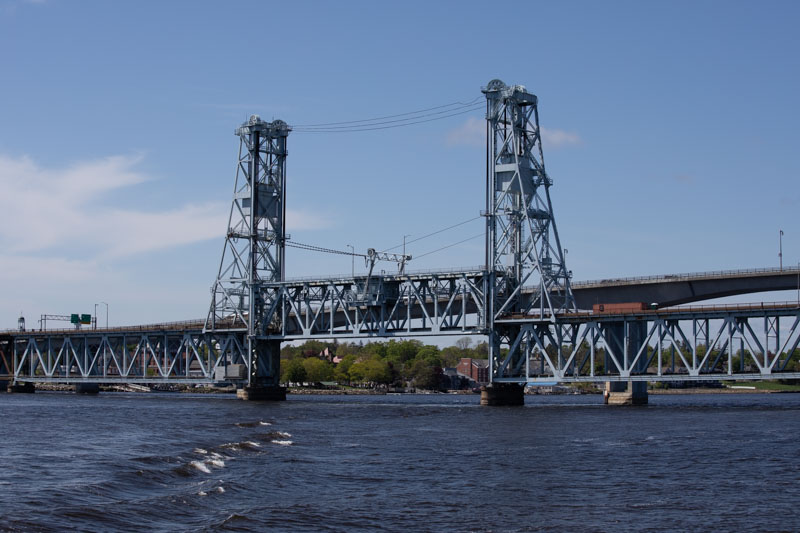 Carlton Bridge — Bath, ME
Historic steel lift bridge spanning the Kennebec River beside Bath Iron Works.
Completed in 1927, the Carlton Bridge once carried both rail traffic and U.S. Route 1 across the Kennebec River between Bath and Woolwich. Since the opening of the neighboring Sagadahoc Bridge in 2000, highway traffic has shifted to the newer span, leaving the Carlton Bridge as a rail crossing and a visible reminder of Bath’s industrial waterfront.
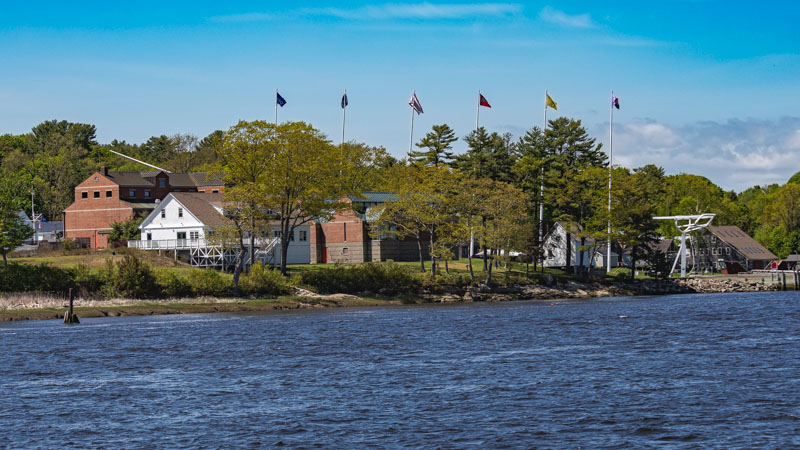 Maine Maritime Museum — Bath, ME
Historic shipbuilding grounds overlooking the Kennebec River.
Founded on the site of the historic Percy & Small Shipyard, the Maine Maritime Museum preserves the state’s shipbuilding legacy through exhibits, workshops, and outdoor displays along the riverfront. In this view, the flagpoles represent the masts of Wyoming, the six-masted schooner built here in 1909. The bow structure appears at left, while the stern framing stands to the right, giving the former shipyard a full-scale memory of the vessels once launched into the Kennebec.
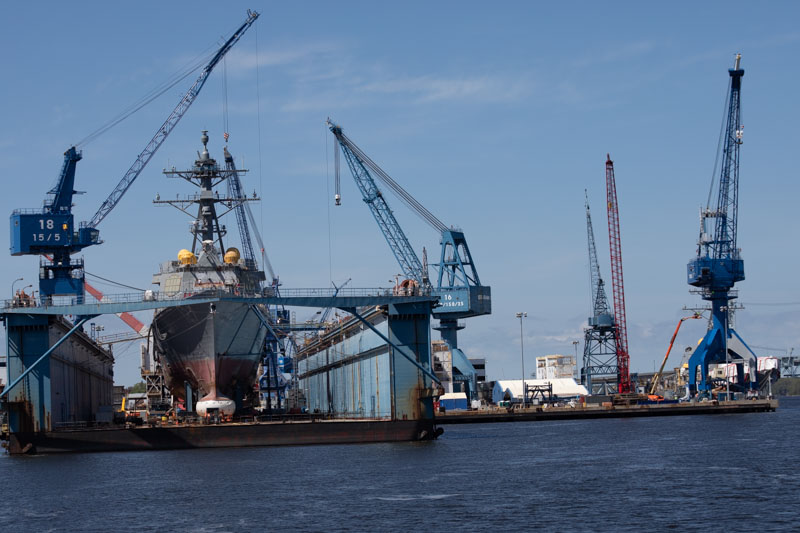 Bath Iron Works — Bath, ME
An Arleigh Burke–class destroyer in dry dock surrounded by cranes.
The Bath Iron Works yard continues Maine’s shipbuilding legacy with U.S. Navy destroyers built along the same river that once carried wooden schooners to sea. Cranes, dry docks, and steel hulls now define the working waterfront, extending the Kennebec’s shipbuilding story into the modern era.
Photo Notes
The gallery brings together views from the Kennebec River corridor near Bath, Maine, including Arrowsic, Doubling Point, Fiddler’s Reach, Maine Maritime Museum, Bath Iron Works, and Carlton Bridge. The photographs keep the river’s overlapping stories in view: navigation, shipbuilding, wildlife, transportation, and the tidal landscape.
Cameras and lenses vary by image, with most landscape views photographed on a Canon EOS 5D Mark IV using EF24-70mm, EF70-300mm, or EF70-200mm lenses. Individual camera settings are included in the source notes for each image.