Agelaius phoeniceus
Red-winged Blackbirds perch prominently among reeds and cattails, their glossy black forms set off by flashes of red and gold at the shoulder. In early spring, they arrive before the landscape has fully awakened, calling across marshes still touched by frost or lingering snow. Their upright stance and bold display make them one of the most recognizable presences in wetland habitats, a signal that the season is shifting.
For identification details and comparison with similar species, see
the Agelaius phoeniceus in the Field Notes section.

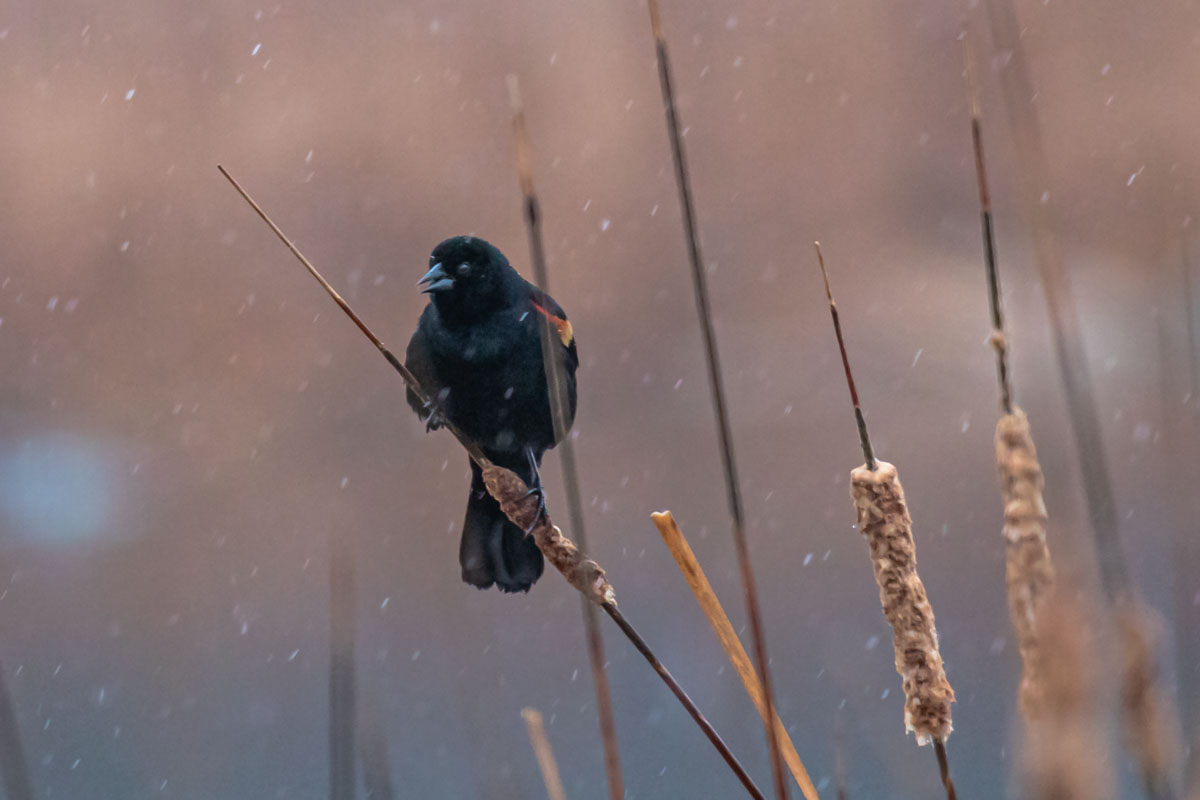
Red-winged Blackbird — First Spring Snow
A sentinel of the marsh, holding his ground as winter lingers.
Perched high on a bending reed, the male Red-winged Blackbird surveys the wetland, his crimson epaulet glowing against the muted tones of snow and water.
Camera: Canon EOS 5D Mk IV
Lens: EF100-400mm f/4-5.6L IS USM
Settings: ISO 4000 • Aperture f/6.3 • Shutter 1/320 s
E22A0287 • Size: 4198x2799
Overview
Among the most recognizable voices of North American wetlands, the Red-winged Blackbird returns early in spring—sometimes before winter has fully released its grip. Males establish territories immediately, perching prominently and calling into the cold air, their red-and-yellow shoulder patches flashing as both warning and display.
This sequence captures a brief snowfall at the edge of the season, where the bird’s bold coloration contrasts sharply with the subdued landscape.
In the Snow

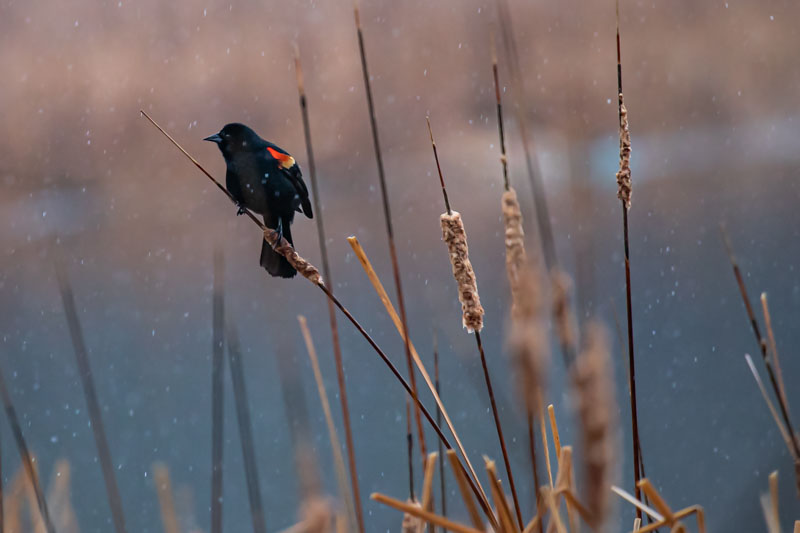
Side Profile — Quiet Watch
Stillness between calls, the marsh held in suspension.
Camera: Canon EOS 5D Mk IV
Lens: EF100-400mm f/4-5.6L IS USM
Settings: ISO 4000 • Aperture f/6.3 • Shutter 1/320 s
E22A0288 • Size: 4198x2799
The snowfall softened the entire scene—muting the background and isolating the bird against a quiet palette of browns and grays. In that stillness, the red epaulet became the focal point, a signal of persistence and territory even as winter briefly returned.

Turning into the Wind
A subtle shift as snow drifts through the reeds.
Camera: Canon EOS 5D Mk IV
Lens: EF100-400mm f/4-5.6L IS USM
Settings: ISO 4000 • Aperture f/6.3 • Shutter 1/320 s
E22A0289 • Size: 4198x2799

Balancing Act
The reed bends, but the bird remains steady.
Camera: Canon EOS 5D Mk IV
Lens: EF100-400mm f/4-5.6L IS USM
Settings: ISO 4000 • Aperture f/6.3 • Shutter 1/320 s
E22A0290 • Size: 4198x2799

Fleeting Flash of Color
A glimpse of red before it disappears again.
Camera: Canon EOS 5D Mk IV
Lens: EF100-400mm f/4-5.6L IS USM
Settings: ISO 4000 • Aperture f/6.3 • Shutter 1/320 s
E22A0291 • Size: 4198x2799

Looking Back
A pause, attentive to movement across the marsh.
Camera: Canon EOS 5D Mk IV
Lens: EF100-400mm f/4-5.6L IS USM
Settings: ISO 4000 • Aperture f/6.3 • Shutter 1/320 s
E22A0292 • Size: 4198x2799
Photographer’s Perspective
The sequence reveals small shifts in posture and balance—moments that might go unnoticed at a distance, but define the character of the bird at close range.
Territorial Call
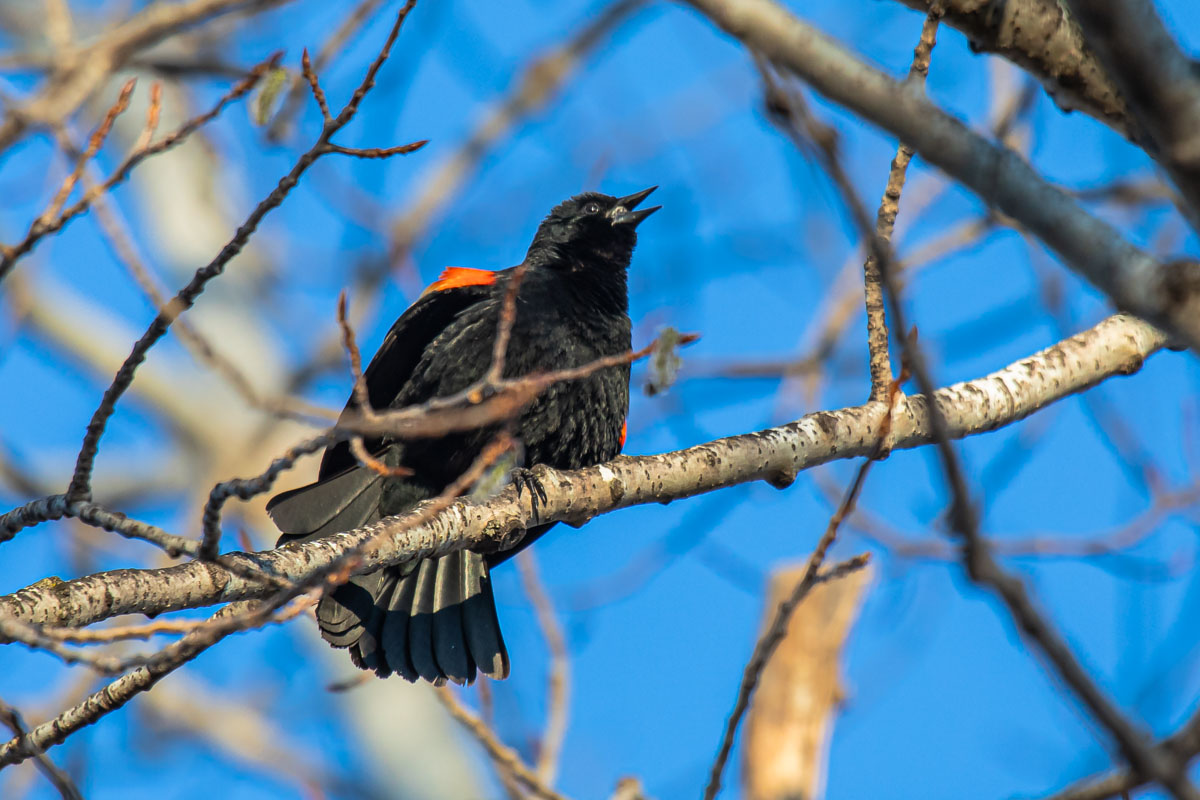
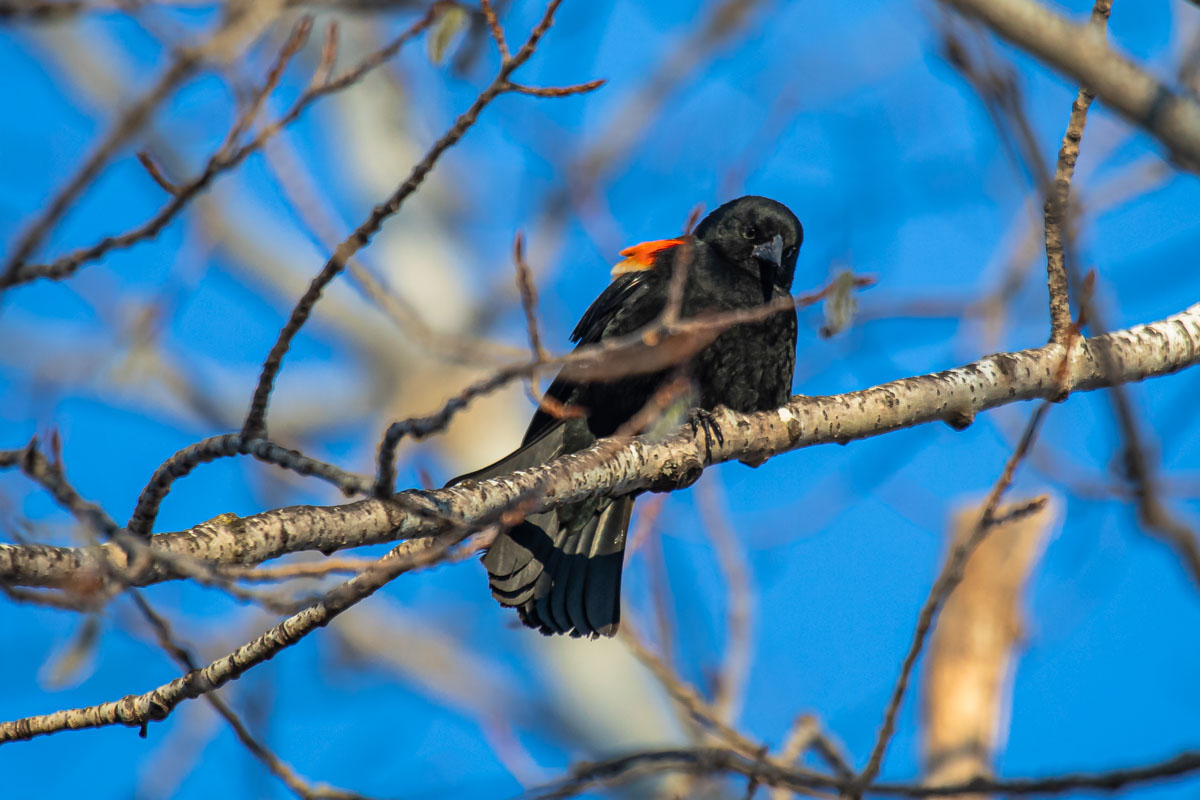
Perched high among bare branches, the male Red-winged Blackbird lifts his head and calls into the open air, the red epaulet flashing as both signal and warning. In these moments, posture and voice define the territory as much as the landscape itself.

Calling from the Branch
Head lifted, voice carried into the open sky.
Camera: Canon EOS 5D Mk IV
Lens: EF100-400mm f/4-5.6L IS USM
Settings: ISO 800 • Aperture f/8.0 • Shutter 1/500 s
E22A0434 • Size: 3659x2439
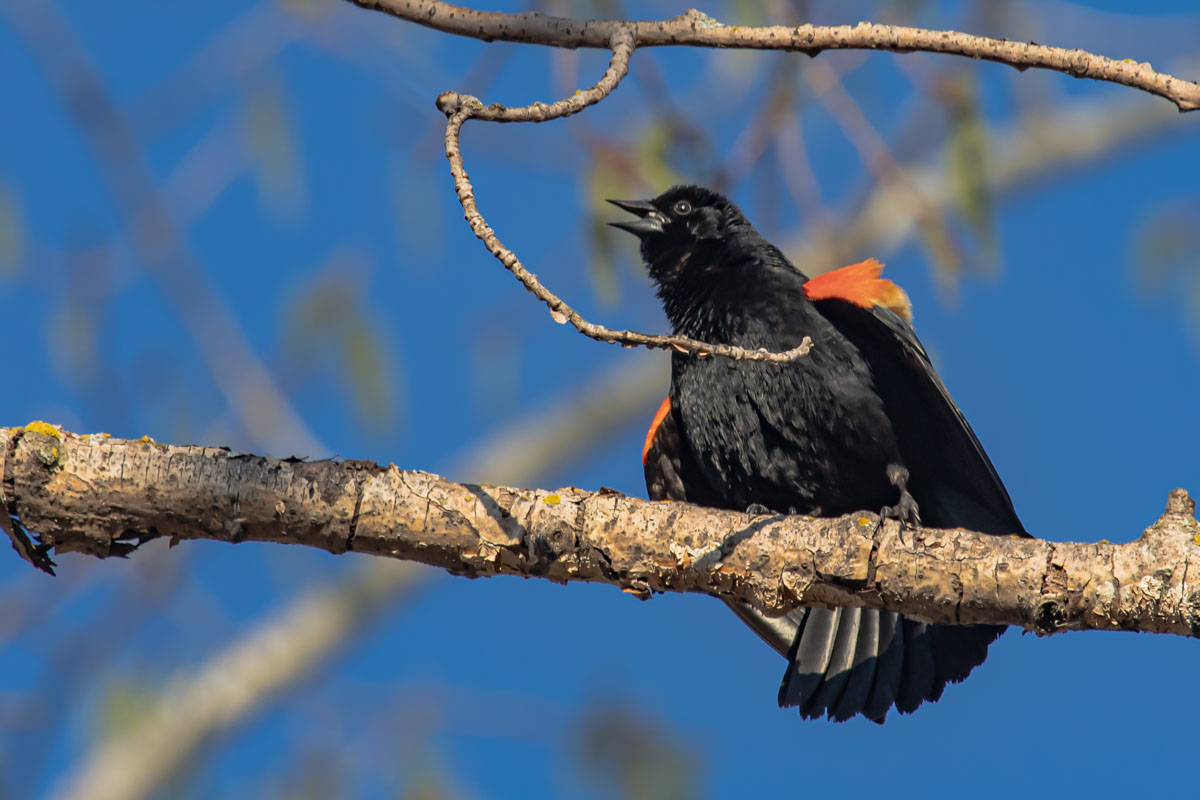
In a brief pause between calls, the posture shifts. The head lowers, the body settles, and the outward display gives way to something more measured. The gaze turns inward—or perhaps toward the observer—revealing a different aspect of the bird’s presence. No longer projecting across the marsh, he holds his position with quiet certainty, alert and aware within the space he has claimed.

Direct Gaze
A brief pause—aware of your presence within his territory.
Camera: Canon EOS 5D Mk IV
Lens: EF100-400mm f/4-5.6L IS USM
Settings: ISO 800 • Aperture f/5.6 • Shutter 1/1000 s
E22A0444 • Size: 3659x2439
Plumage Detail
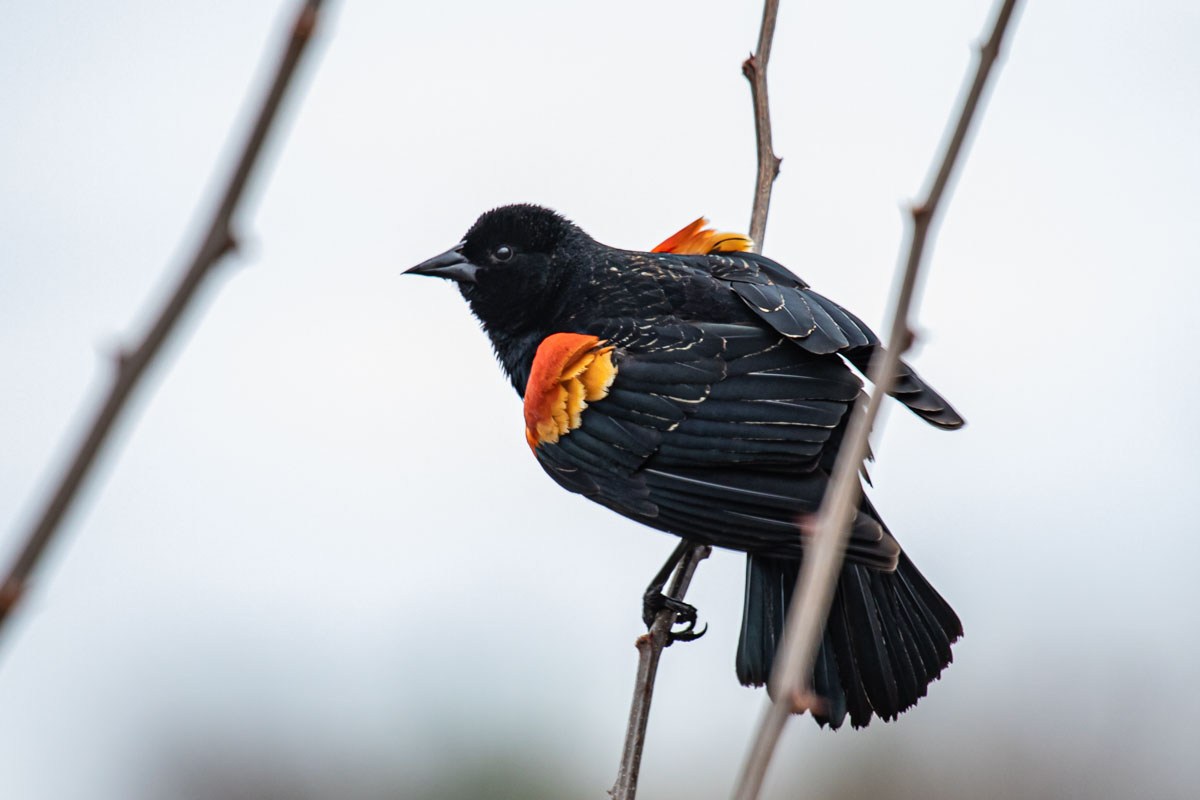
At close range, the structure of the plumage becomes more apparent. The glossy black feathers reveal subtle layering and sheen, while the red-and-yellow epaulet sits folded along the shoulder, expanding only during display.

Shoulder and Wing Detail
Layered feathers and the folded epaulet reveal the structure beneath the display.
Camera: Canon EOS 5D Mk IV
Lens: EF100-400mm f/4-5.6L IS USM
Settings: ISO 800 • Aperture f/6.3 • Shutter 1/1000 s
E22A0535 • Size: 3337x2225

Calling at Close Range
The voice carries outward, but the detail holds close.
Camera: Canon EOS 5D Mk IV
Lens: EF100-400mm f/4-5.6L IS USM
Settings: ISO 800 • Aperture f/8.0 • Shutter 1/80 s
E22A0531 • Size: 3168x2112
Female Red-winged Blackbird
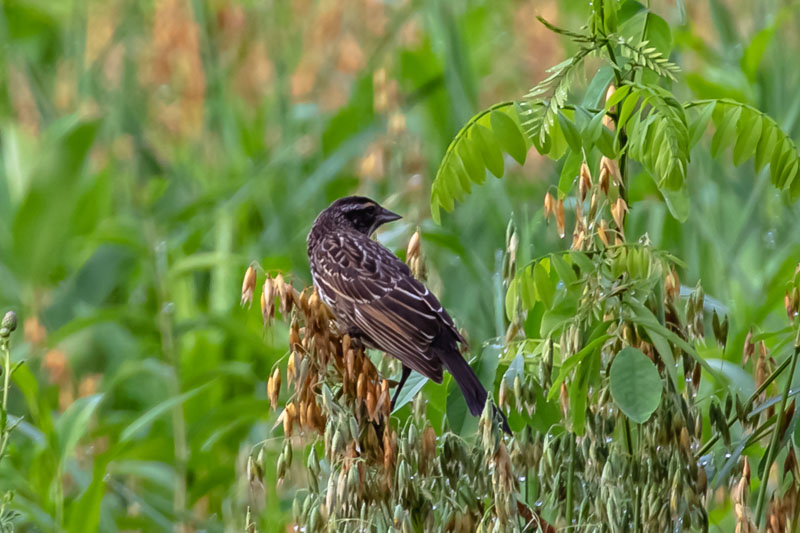
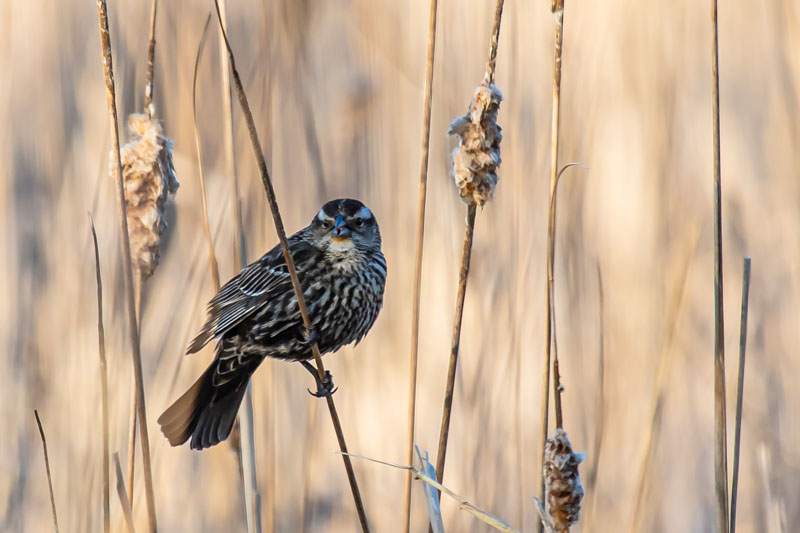
While the male commands attention with bold color and display, the female Red-winged Blackbird moves through the marsh with quiet precision. Her streaked brown plumage blends seamlessly into grasses and seed heads, an adaptation that offers protection while nesting low among reeds.

Among Seed Heads
Streaked and subdued, she disappears into the texture of the field.
Camera: Canon EOS 5D Mk IV
Lens: EF70-200mm f/2.8L IS II USM 2x
Settings: ISO 250 • Aperture f/8.0 • Shutter 1/160 s
E21A2028 • Size: 1391x927
Perched lightly on ripened grasses, the female’s intricate patterning provides perfect camouflage among the seed heads.

Frontal Presence
A direct and watchful stance facing forward on cattail, marking territory.
Camera: Canon EOS 5D Mk IV
Lens: EF100-400mm f/4-5.6L IS USM
Settings: ISO 4000 • Aperture f/6.3 • Shutter 1/320 s
E22A0286 • Size: 4198x2799

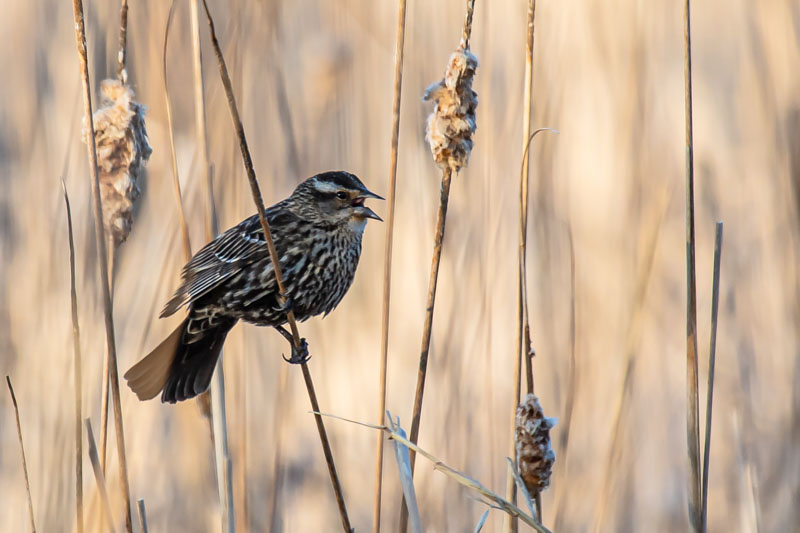
Marsh Camouflage
In warm light, her pattern echoes the grasses that surround her.
Camera: Canon EOS 5D Mk IV
Lens: EF70-200mm f/2.8L IS II USM 2x
Settings: ISO 200 • Aperture f/13.0 • Shutter 1/250 s
E21A1864 • Size: 2758x1839
Unlike the male, her presence is often revealed only through movement or soft calls. Together, the contrast between bold display and subtle concealment defines the rhythm of the marsh.