Scolopacidae (Sandpipers, Snipes, Woodcock, and Allies)
Scolopacidae (Sandpipers, Snipes, Woodcock, and Allies)
Scolopacidae is a diverse family of shorebirds that includes sandpipers, snipes, woodcock, yellowlegs, dowitchers, phalaropes, and related birds. Members of this family are recognized by a combination of bill shape, leg length, body posture, feeding motion, and wetland or shoreline habitat.
They are most often associated with mudflats, marsh edges, flooded fields, pond margins, wet meadows, shorelines, and shallow freshwater edges, where they may be seen walking, probing, picking, bobbing, or feeding in loose groups during migration.
In the field, they are frequently identified by shape, movement, habitat, bill length, leg color, and seasonal plumage as much as by color alone.
Orientation
These notes emphasize field recognition, behavior, and comparison across species, rather than a complete taxonomic treatment.
General Characteristics
- Size: Small to medium shorebirds, ranging from very small “peeps” to larger yellowlegs, godwits, and curlews
- Bill: Highly variable; short, straight, long, curved, or probing, depending on feeding strategy
- Plumage: Often brown, gray, buff, white, or streaked; many species show strong seasonal and age-related variation
- Voice: Flight calls and contact notes are often important, especially during migration
- Flight: Usually direct, quick, and pointed-winged; many species show distinctive wing or rump patterns in flight
Habitat and Range
Members of this family are most often encountered in:
- Mudflats, marshes, and shallow wetlands
- Flooded fields, wet meadows, and pond edges
- Lake shores, river margins, bogs, and freshwater pools
Seasonal patterns may include:
- Spring and fall migration through Minnesota
- Brief appearances in temporary wet habitat
- Breeding associations with boreal wetlands, grasslands, tundra, or forested wet areas, depending on species
- Wintering far south of Minnesota for many species
Birds are often detected first by movement, feeding behavior, flight calls, or habitat context, especially when plumage is distant, transitional, or similar among species.
Field Recognition
Key features for identifying this family:
- Shape: Small-to-medium shorebird form, often with a horizontal body and active feeding posture
- Bill: One of the most important traits; length, thickness, curvature, and color help separate species
- Plumage: Streaking, spotting, breast pattern, supercilium, eye-ring, wing pattern, and tail/rump pattern may all be important
- Movement: Probing, picking, teetering, bobbing, wading, walking, or rapid flocking flight
- Voice: Sharp flight calls, whistled notes, or display sounds may confirm identification
- Behavior: Many feed at wet edges, but some use grassland, woodland, bog, or open water habitats
In many cases, behavior and habitat are more reliable than color alone, especially during migration when shorebirds may show worn, juvenile, or nonbreeding plumage.
Movement and Flight
- Flight: Fast and direct, often with pointed wings and quick wingbeats
- Posture: Usually horizontal while feeding, but some species stand more upright when alert
- Foraging: Probing mud, picking prey from shallow water, sweeping, bobbing, or walking steadily along wet edges
- Display: Some species use aerial displays, flight songs, or dramatic territorial sounds during the breeding season
Movement patterns are often diagnostic and can allow identification before plumage details are visible. A teetering Spotted Sandpiper, a probing snipe, a deliberate yellowlegs, and a solitary freshwater sandpiper may all be recognized first by behavior.
Similar Families
This family may be confused with:
- Charadriidae: Plovers are usually more compact, shorter-billed, and often feed by running, stopping, and visually picking prey rather than probing.
- Recurvirostridae: Avocets and stilts are longer-legged and more strikingly patterned, with distinctive sweeping or wading behavior.
- Laridae: Gulls and terns are generally more aerial, longer-winged, and often larger, with very different feeding behavior and flight profiles.
Distinction is often based on structure, behavior, bill form, leg length, and habitat, rather than plumage alone.
Species
Tringa solitaria (Solitary Sandpiper)
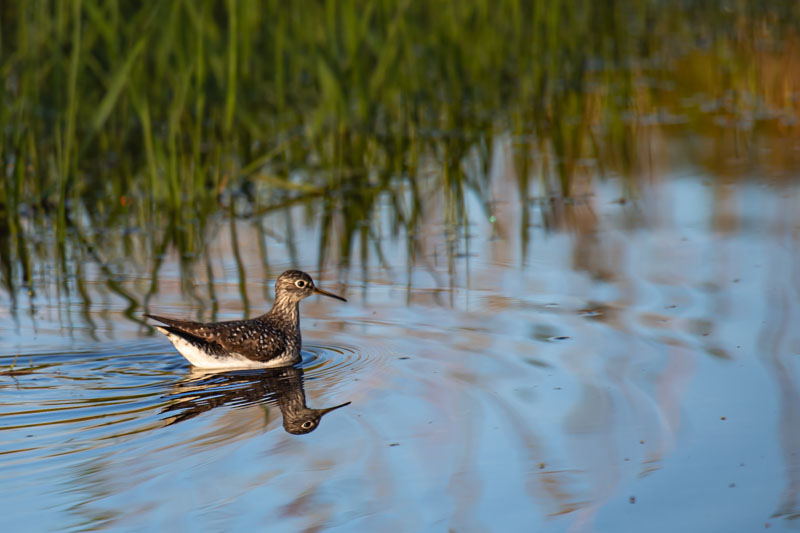
A small migratory shorebird of shallow freshwater edges, often seen alone around flooded grass, pond margins, marsh edges, and wet ditches. Recognized by its bold white eye-ring, dark spotted upperparts, pale belly, slim straight bill, and greenish legs.
Notes
- Migration is central to this family. Many Scolopacidae species appear in Minnesota mainly during spring and fall migration.
- Temporary habitat matters. Flooded fields, pond edges, exposed mud, and shallow marsh margins can become productive shorebird locations for only a few days.
- Bill length and leg color are key field marks. These traits often narrow the identification before plumage details are clear.
- Behavior helps separate similar species. Probing, teetering, bobbing, picking, and wading styles are often as useful as color or pattern.
- Solitary Sandpiper is currently the documented species for this family in this Field Notes section.
References
-
Cornell Lab of Ornithology – All About Birds
https://www.allaboutbirds.org -
eBird
https://ebird.org -
Birds of the World / regional atlas as needed
https://birdsoftheworld.org