Ardeidae (Herons, Egrets, Bitterns, and Allies)
Ardeidae (Herons, Egrets, Bitterns, and Allies)
Ardeidae is a family of long-legged wetland birds that includes herons, egrets, night-herons, and bitterns. Members of this family are recognized by a combination of long necks, long dagger-like bills, long legs, and deliberate hunting behavior around shallow water.
They are most often associated with marshes, ponds, lakeshores, river edges, wooded wetlands, and reed beds, where they may be seen standing still, stalking slowly, or striking quickly at fish, amphibians, insects, and other aquatic prey.
In the field, they are frequently identified by shape, posture, movement, habitat, and flight silhouette as much as by plumage.
Orientation
These notes emphasize field recognition, behavior, and comparison across species, rather than a complete taxonomic treatment.
General Characteristics
- Size: Medium to large wetland birds, from compact bitterns to tall herons and egrets
- Bill: Long, straight, and spear-like; adapted for striking at aquatic prey
- Plumage: Often gray, brown, white, or patterned for concealment; some species show seasonal breeding plumes or facial color changes
- Voice: Often quiet during casual observation; calls may be harsh, croaking, or guttural when flushed or at colonies
- Flight: Steady flight with broad wings; herons and egrets typically fly with the neck folded back
Habitat and Range
Members of this family are most often encountered in:
- Marshes, ponds, and lakeshores
- Rivers, wet meadows, and shallow wetlands
- Wooded wetland edges, reed beds, and deadwood perches near water
Seasonal patterns may include:
- Breeding colonies or nesting areas near wetlands
- Increased visibility during migration along lakes, rivers, and marsh systems
- Breeding-season color changes in lores, bill color, eye color, and ornamental plumes
Birds are often detected first by silhouette, slow movement, or sudden flight from the water’s edge, especially when they have been standing motionless in cover.
Field Recognition
Key features for identifying this family:
- Shape: Long-legged, long-necked wetland silhouette
- Bill: Straight, dagger-like bill used for striking prey
- Plumage: White, gray, brown, or streaked; breeding birds may show plumes and brighter bare-part colors
- Movement: Slow stalking, patient standing, or sudden spear-like strikes
- Voice: Often secondary to visual recognition; harsh calls may be heard when birds flush
- Behavior: Hunting in shallow water, standing at wetland edges, or perching on deadwood near ponds and marshes
In many cases, structure and behavior are more reliable than color alone, especially with white wading birds or birds in changing breeding condition.
Movement and Flight
- Flight: Broad, steady wingbeats; neck usually folded back against the body
- Perching: Often upright on shorelines, logs, dead branches, or shallow-water structures
- Foraging: Standing motionless, stalking slowly, or striking quickly at prey
- Display: Breeding birds may show ornamental plumes, brighter facial skin, and courtship postures
Movement patterns are often diagnostic. A heron or egret lifting from a marsh with its neck folded and legs trailing behind gives a very different impression from cranes, geese, gulls, or shorebirds.
Similar Families
This family may be confused with:
- Pelecanidae: Pelicans are much larger open-water birds with massive bills, throat pouches, and broader soaring flight.
- Threskiornithidae: Ibises and spoonbills have distinctive curved or flattened bills rather than straight spear-like bills.
- Gruidae: Cranes are larger, longer-winged birds that fly with the neck extended rather than folded back.
Distinction is often based on structure, posture, bill shape, flight silhouette, and habitat use, rather than plumage alone.
Species
Ardea alba (Great Egret)
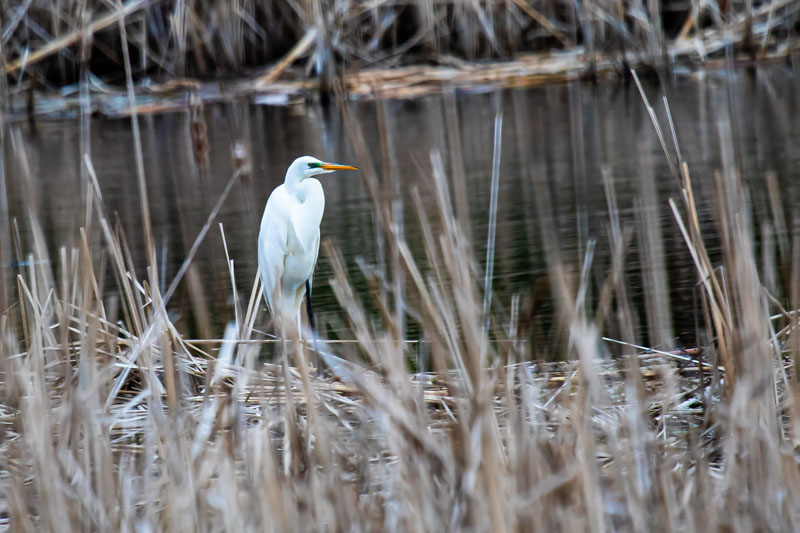
A tall white egret of marshes, ponds, lakeshores, and wooded wetland edges. Key field marks include large size, long S-curved neck, long dagger-like bill, black legs, and breeding-season changes such as green lores, ornamental plumes, and darkened bill tones.
Notes
- Great Egret is currently the strongest photographed representative of this family in the gallery.
- White egrets should be checked carefully for size, bill color, leg color, foot color, lores, and overall structure.
- Breeding condition can alter the appearance of facial skin, eye color, bill color, and plumes, especially in egrets.
- In Minnesota field work, marshes, pond edges, shallow lakes, and wooded wetlands are strong places to watch for Ardeidae.
- Flight posture is useful: herons and egrets usually fly with the neck folded, unlike cranes, which fly with the neck extended.
References
-
Cornell Lab of Ornithology – All About Birds
https://www.allaboutbirds.org -
eBird
https://ebird.org -
Birds of the World / regional atlas as needed
https://birdsoftheworld.org