Lepidoptera Field Notes
This section is a working field notebook focused on the observation and identification of butterflies and moths through photography, comparison, and repeated field encounters.
The emphasis here is on family-, genus-, and species-level recognition and diagnostic patterns—antennae, wing shape, color placement, resting posture, flight behavior, host plants, habitat, and seasonality—rather than identification by color alone. Photographs can leave important characters hidden; uncertainty is preserved when the available evidence does not support a definitive identification.
Content in this section may include:
- Comparative notes between similar families, genera, or species
- Field observations recorded across seasons and locations
- Identification frameworks drawn from regional field guides and taxonomic references
- Notes on adult behavior, larval host plants, and life stages
- Provisional or evolving identifications
This material is intentionally separated from the Gallery.
The Gallery presents butterflies and moths as photographic subjects; these field notes explore them as organisms and field characters.
Both perspectives inform one another.
Orientation
These notes are organized around form, life stage, habitat, and comparison rather than a complete regional species checklist.
Butterflies
Butterfly notes currently represent two families. Identification emphasizes wing pattern, antennae, body structure, behavior, habitat, and season.
Hesperiidae — Skippers
Nymphalidae — Brush-footed Butterflies
Moths
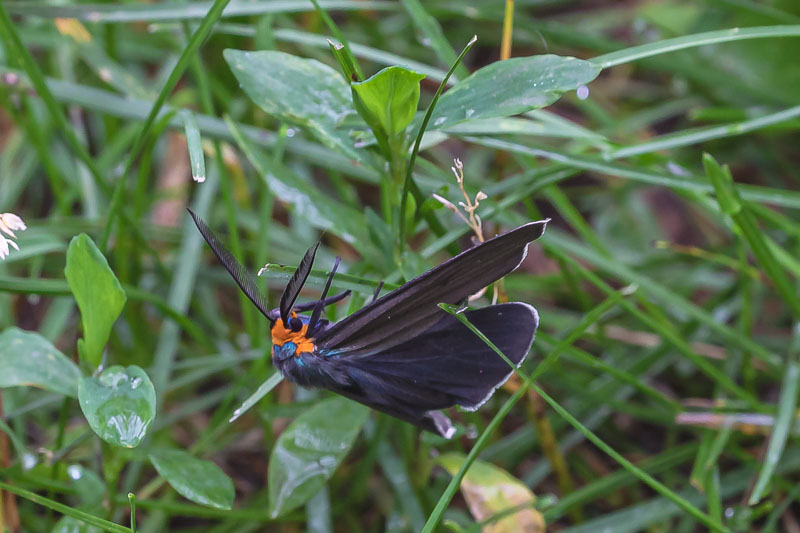
Moth notes emphasize antennae, wing shape and posture, body markings, time of activity, host associations, and comparison with butterfly or wasp-like species.
Erebidae — Tiger, Tussock, and Allied Moths
Current Coverage
- Families: 3
- Genera: 5
- Species: 5
- Total taxa represented: 13
Coverage reflects the developed species notes in this section and will change as new observations and identifications are added.