Autumn Meadowhawk — Photographic Sequence
Sympetrum vicinum
The Autumn Meadowhawk photographs collected here follow several low-perch views in meadow and understory vegetation: a curled leaf, a dry diagonal stem, a broad green leaf, a close face view, a dorsal view, and a grass-blade perch. For identification, habitat, and natural-history details, see the Sympetrum vicinum species page.
Taken separately, the photographs are modest late-season dragonfly portraits. Together, they show how much the character of an Autumn Meadowhawk image changes with angle, light, and perch. A small red-orange skimmer can become a leaf-edge portrait, a warm ember on a dry stem, or a nearly hidden shape among green blades.
Shadowlight in the Leaves
The strongest image in the set is E22A6674, where the meadowhawk rests along a curled leaf edge. The dark background gives the face and near wing better separation, while the pale face, reddish eyes, and fine wing venation remain readable.
D79A4948 carries a similar mood from a different angle. The broad leaf and deep shade make the image feel more like an understory encounter than an open meadow portrait. It is less direct than the newer frame, but the warm amber body against the shaded green still gives it a useful place in the sequence.
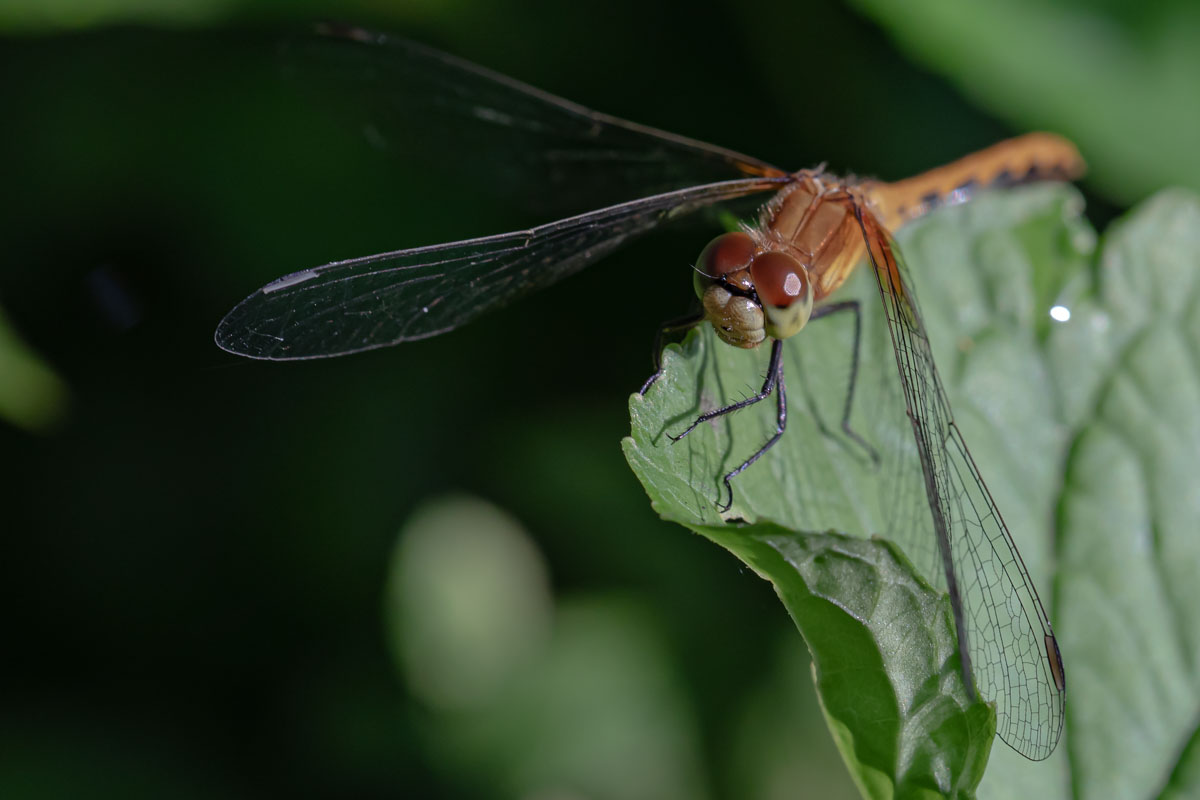
Meadowhawk in Shadowlight
An Autumn Meadowhawk rests along a curled green leaf, its reddish eyes and clear wings emerging from deep summer shade.
Camera: Canon EOS 5D Mark IV
Lens: EF100mm f/2.8L Macro IS USM
Settings: ISO 400 • Aperture f/8.0 • Shutter 1/100 s
E22A6674 • Size: 3200 x 2200
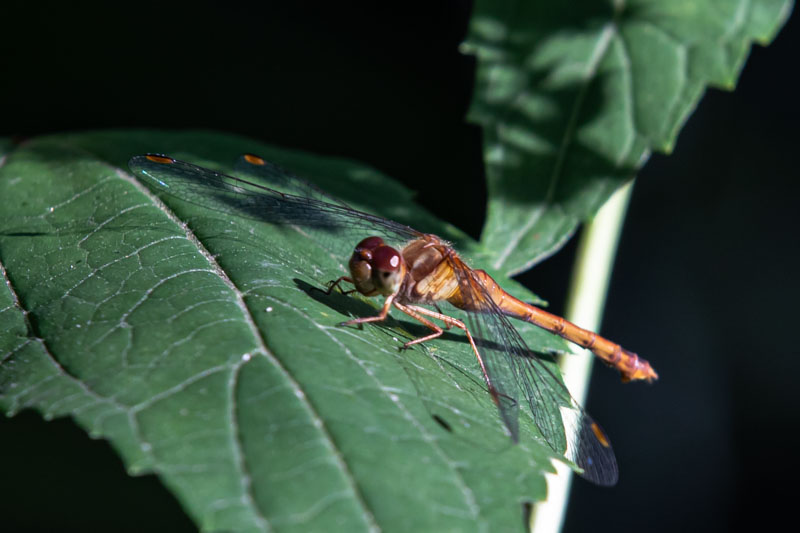
Amber in the Understory
An Autumn Meadowhawk pauses on a broad green leaf, its warm amber body and reddish eyes caught between bright sun and deep understory shade.
Camera: Canon EOS 5D Mark IV
Lens: EF70-200mm f/2.8L IS II USM
Settings: ISO 200 • Aperture f/8.0 • Shutter 1/125 s
D79A4948 • Size: 2000 x 1333
Dry Stem and Broad Leaf
D79A0448 is the cleanest full-body perch in the older group. The dragonfly is smaller in the frame than in the leaf-edge portraits, but the diagonal stem, warm backlight, and soft green background give the image a late-season quality that fits the species well.
D79A0209 works more as context. The red body is clear against the broad green leaf, and the full abdomen remains visible, but the bright leaf surface and spotted texture compete more strongly with the subject. It still helps document the low, leafy perch setting.
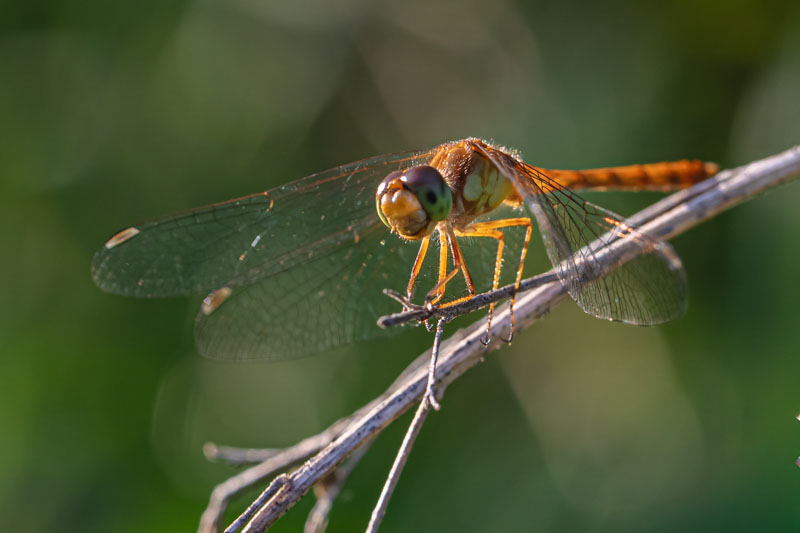
Late-Season Ember
An Autumn Meadowhawk glows from a dry diagonal stem, its red body set against a soft green meadow background.
Camera: Canon EOS 5D Mark IV
Lens: EF100mm f/2.8L Macro IS USM
Settings: ISO 200 • Aperture f/8.0 • Shutter 1/125 s
D79A0448 • Size: 2800 x 1867
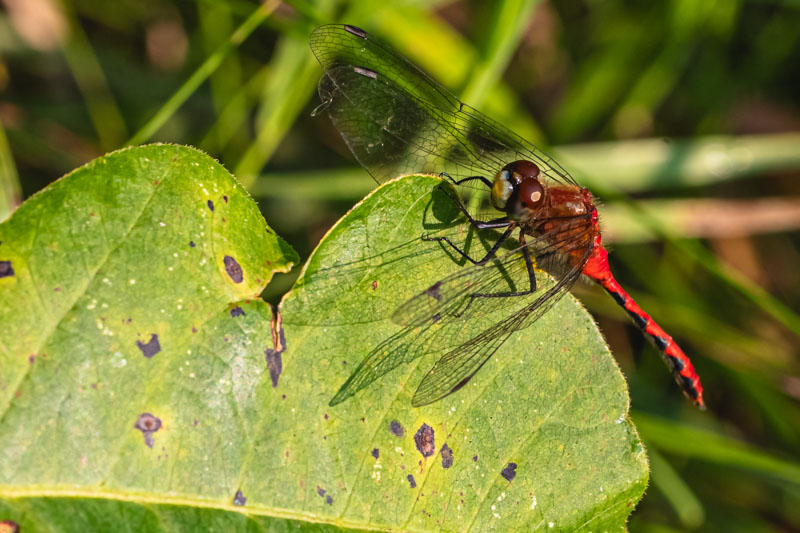
Red Over Green
A red Autumn Meadowhawk rests across a broad green leaf, its clear wings and long abdomen stretched through sunlit meadow grass.
Camera: Canon EOS 5D Mark IV
Lens: EF100mm f/2.8L Macro IS USM
Settings: ISO 800 • Aperture f/13.0 • Shutter 1/200 s
D79A0209 • Size: 2400 x 1600
Close Portrait and Dorsal View
D79A0216 brings the viewer closest to the face and wing structure. The abdomen is cropped out, so the image does not work as a complete field-mark view, but the reddish eyes, pale face, dark legs, wing venation, and red pterostigmata make it valuable as a detail study.
E22A6681 moves to the opposite viewpoint. From above, the slender abdomen and low perch among wet leaves are easier to see. The surrounding vegetation is busier, but the dorsal angle adds visual context that the face portraits do not provide.
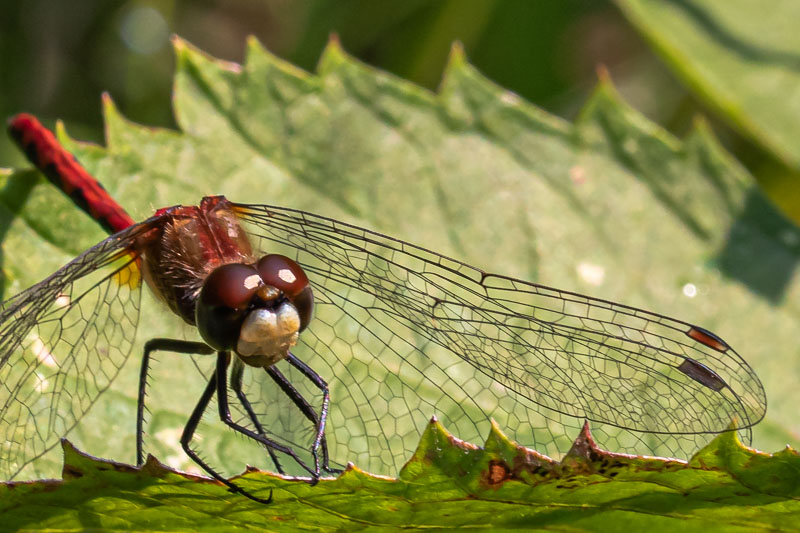
Face at the Leaf Edge
A close view of an Autumn Meadowhawk shows the reddish eyes, pale face, dark legs, clear wings, and red pterostigmata.
Camera: Canon EOS 5D Mark IV
Lens: EF100mm f/2.8L Macro IS USM
Settings: ISO 500 • Aperture f/13.0 • Shutter 1/200 s
D79A0216 • Size: 1400 x 933
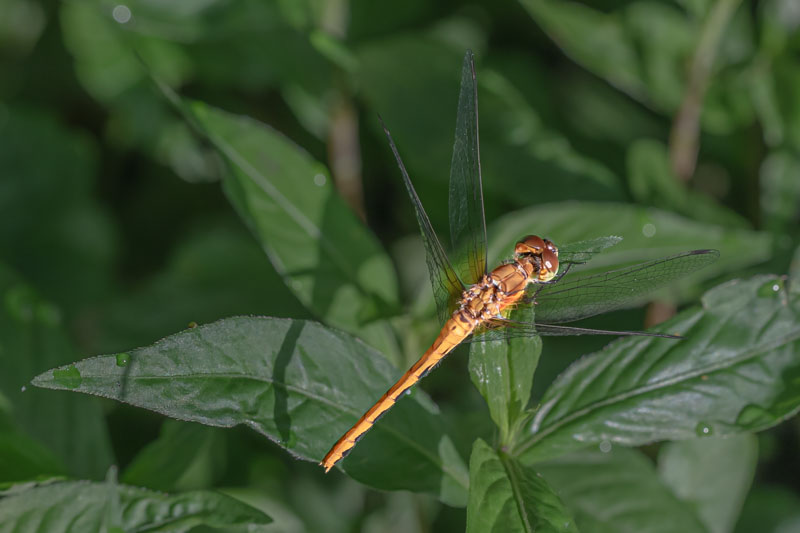
Amber from Above
Viewed from above, an Autumn Meadowhawk shows its slender orange abdomen, clear wings, and low perch among wet green leaves.
Camera: Canon EOS 5D Mark IV
Lens: EF100mm f/2.8L Macro IS USM
Settings: ISO 400 • Aperture f/8.0 • Shutter 1/100 s
E22A6681 • Size: 3000 x 2000
Holding the Blade
D79A0443 is the most obstructed view, but it records a different behavior and perch type. The vertical blade partly hides the dragonfly, and the wings and abdomen fall away from the sharpest plane of focus. Even so, the forward-facing head, leg placement, and shadow on the grass blade make the frame worth keeping as a field-note image.
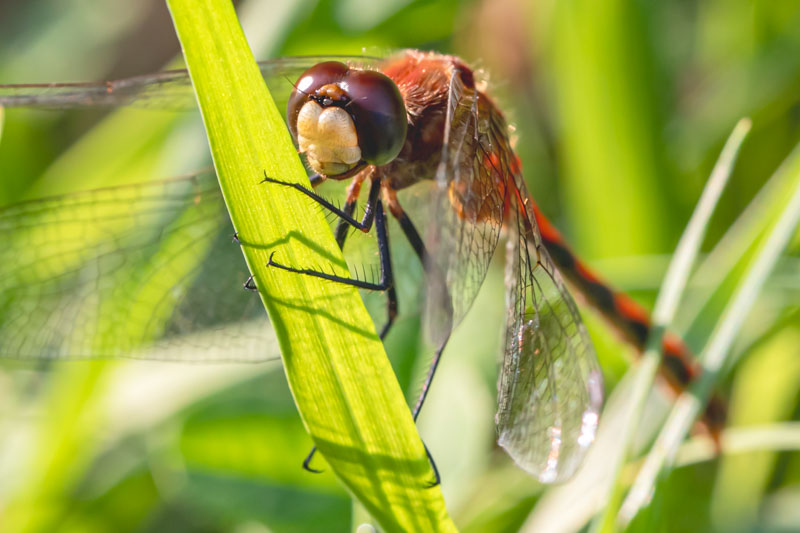
Holding the Blade
An Autumn Meadowhawk clings to a vertical blade of grass, its face turned forward through bright meadow light.
Camera: Canon EOS 5D Mark IV
Lens: EF100mm f/2.8L Macro IS USM
Settings: ISO 200 • Aperture f/8.0 • Shutter 1/125 s
D79A0443 • Size: 2200 x 1467
Oak-Leaf Perches
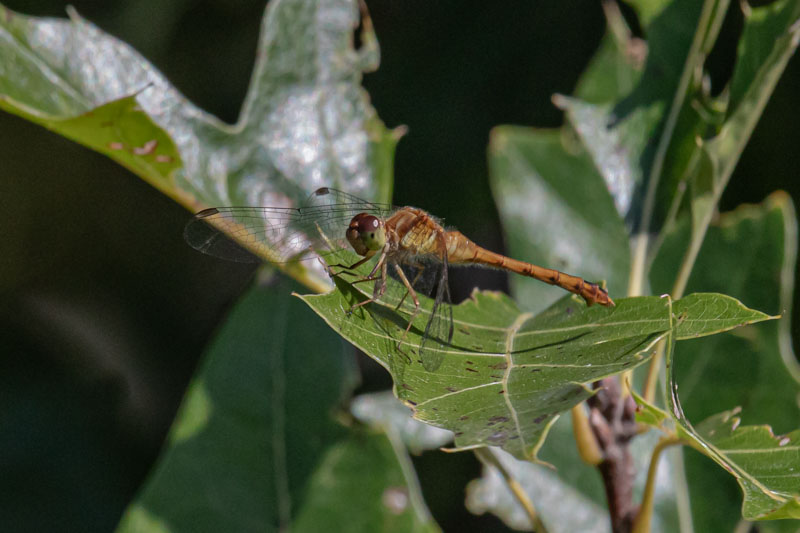
A later encounter found an Autumn Meadowhawk using low oak leaves as repeated perches. These frames are better suited to the Photographic Sequence page than the main Gallery, but they show useful behavior and setting: the dragonfly settling into layered foliage, nearly disappearing among sunlit greens, dark gaps, reflective leaf surfaces, and jagged leaf edges.
The EF100-400mm lens worked well for most of this sequence because the longer working distance allowed a fuller view of the perch setting without crowding the subject. The result is less intimate than the close macro views, but it records how the meadowhawk used the oak leaves as low lookout points.
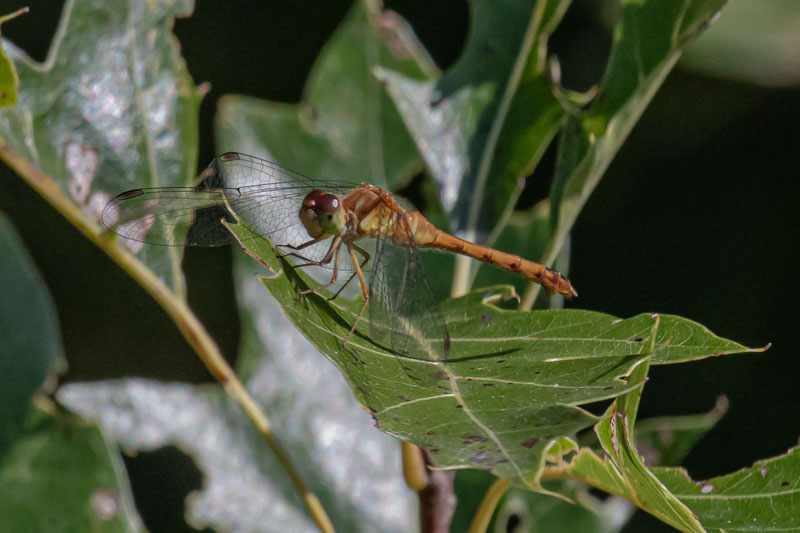 Oak-Leaf Perch
An Autumn Meadowhawk holds a low oak-leaf perch, its amber body set among jagged green leaves and dark understory shade.
Camera: Canon EOS 5D Mark IV
Lens: EF100-400mm f/4.5-5.6L IS USM
Settings: ISO 1250 • Aperture f/13.0 • Shutter 1/1600 s
E22A8884 • Size: 1800 x 1200
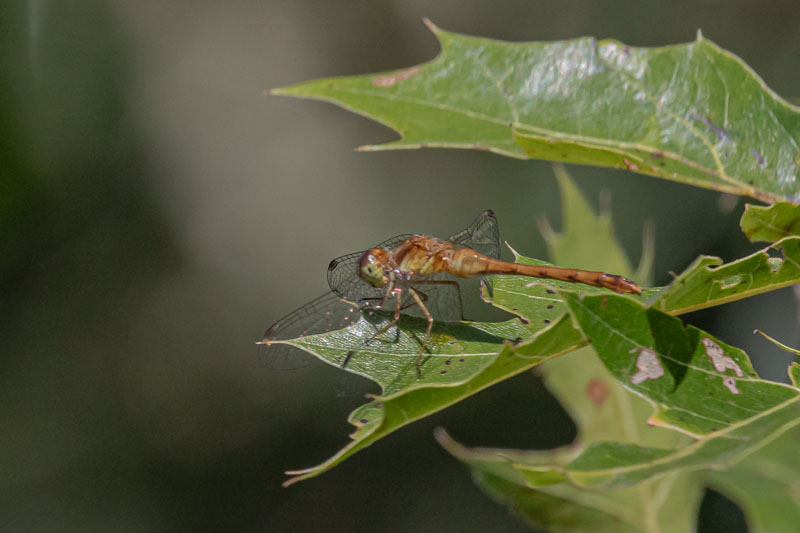
 Side Profile in the Leaves
A side view shows the slender orange abdomen, clear wings, and low perch position that can make meadowhawks easy to miss in foliage.
Camera: Canon EOS 5D Mark IV
Lens: EF100-400mm f/4.5-5.6L IS USM
Settings: ISO 1250 • Aperture f/13.0 • Shutter 1/1600 s
E22A8878 • Size: 2200 x 1467
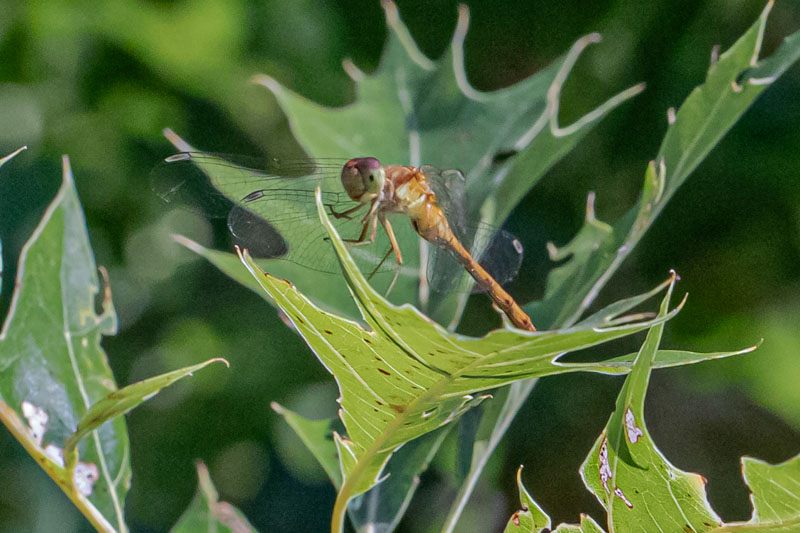
 Under the Leaf Edge
The meadowhawk rests beneath a sheltering oak leaf, using the layered foliage as both perch and cover.
Camera: Canon EOS 5D Mark IV
Lens: EF100-400mm f/4.5-5.6L IS USM
Settings: ISO 1250 • Aperture f/13.0 • Shutter 1/1600 s
E22A8875 • Size: 2200 x 1467
 Among Jagged Leaves
Partly hidden by serrated oak leaves, the meadowhawk blends into the fractured pattern of green edges, shadows, and wing reflections.
Camera: Canon EOS 5D Mark IV
Lens: EF100mm f/2.8L Macro IS USM
Settings: ISO 4000 • Aperture f/10.0 • Shutter 1/800 s
E22A8887 • Size: 1400 x 933
The first three images were made with the EF100-400mm lens, which gave more working distance and helped preserve the natural perch behavior. The final image returns to the EF100mm Macro lens, with a closer but more obstructed view through the surrounding leaves.
Perspective
The Autumn Meadowhawk page began with older photographs that felt more useful than exciting. They documented the species, but several of them were limited by bright leaf surfaces, busy vegetation, or partial obstruction. The later E22A6674 image changed the balance of the page by giving the set a stronger lead: the same low-leaf setting, but with cleaner separation, better facial detail, and a more atmospheric background.
The sequence is strongest when the photographs are not treated only as ranked images. The best portrait leads, the dry-stem view adds season and perch structure, the close portrait shows the face and wing venation, and the dorsal and grass-blade views broaden the record of how these small dragonflies use low vegetation.
The result is a progression:
shadowed leaf portrait → dry-stem perch → understory light → face detail → broad-leaf context → dorsal view → grass-blade field note
That progression also explains why some photographs belong here even if they are not strong enough to lead the Gallery page. In the Field Notes section, their value comes from context, comparison, and the way they show the meadowhawk from different angles.