Spizella pusilla
Field Sparrows often reveal themselves not through bold plumage, but through posture and voice. In spring and early summer, they rise into shrubs, saplings, and weed stalks to sing, their pale faces and warm rufous crowns catching the light above the surrounding growth. Their quiet coloring suits the field edge well, yet the song perch gives them away.
For identification details and comparison with similar species, see
the Spizella pusilla in the Field Notes section.
Perched near the tip of a slender branch, the Field Sparrow seems almost suspended between the emerging canopy and the open blue sky. The exposed perch, lifted voice, and soft colors all fit the species at its most characteristic in spring.
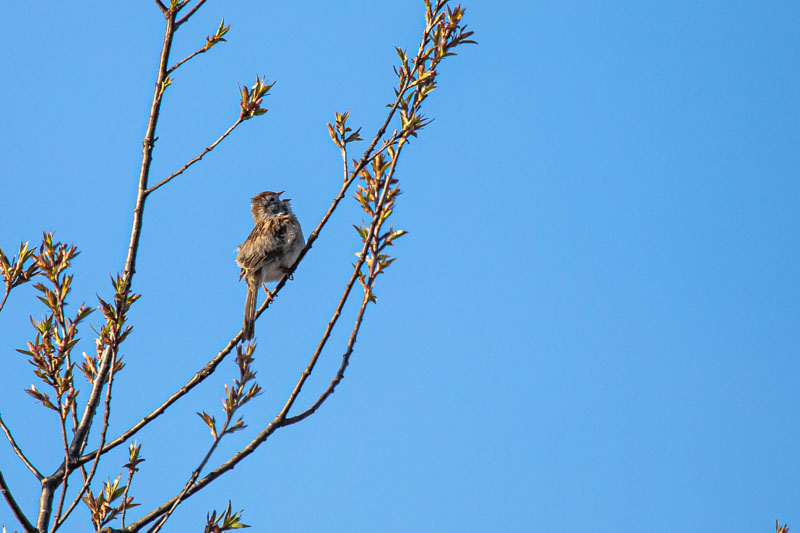
Singing into Open Sky
A clear song carried above the fresh leaves of spring.
Camera: Canon EOS 5D Mk IV
Lens: EF100-400mm f/4.5-5.6L IS II USM
Settings: ISO 640 • Aperture f/6.3 • Shutter 1/1600 s
E22A1035 • Size: 2773x1849
Overview
Field Sparrows belong to the quieter side of spring color. Their pink bill, pale eye ring, and gently patterned face do not stand out at a glance the way brighter songbirds do, but in open country and brushy margins they become one of the season’s most recognizable presences. More than many sparrows, they seem defined by exposed singing perches—small birds rising above the cover that conceals them.
Spring Song Perches
Many of these photographs show the Field Sparrow in its typical spring posture: upright, watchful, and singing from the ends of branches. Even when partly screened by twigs, the shape remains delicate and balanced, with the long tail and soft facial pattern helping it hold its identity in difficult light.
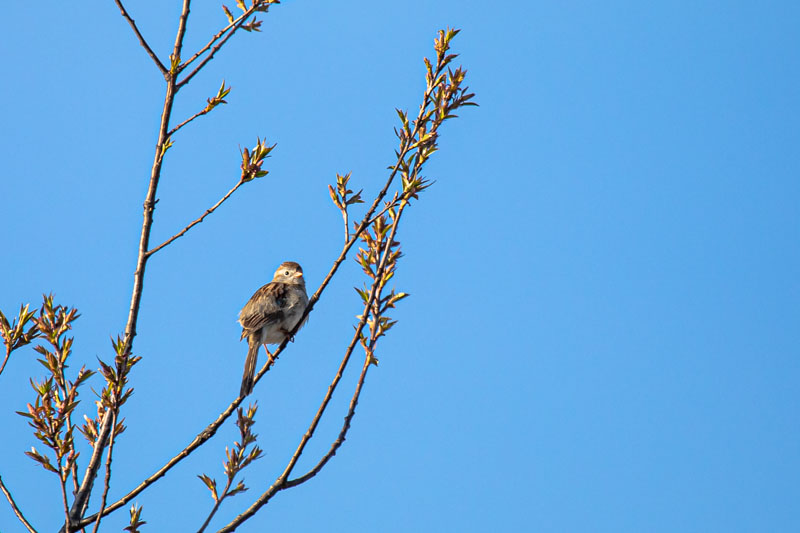
Morning Singer
A brief pause between phrases in early light.
Camera: Canon EOS 5D Mk IV
Lens: EF100-400mm f/4.5-5.6L IS II USM
Settings: ISO 640 • Aperture f/6.3 • Shutter 1/1600 s
E22A1026 • Size: 2773x1849
In this kind of open perch, the bird’s soft face, pink bill, and warm crown become more apparent. The simplicity of the pattern is part of what makes the species distinctive.
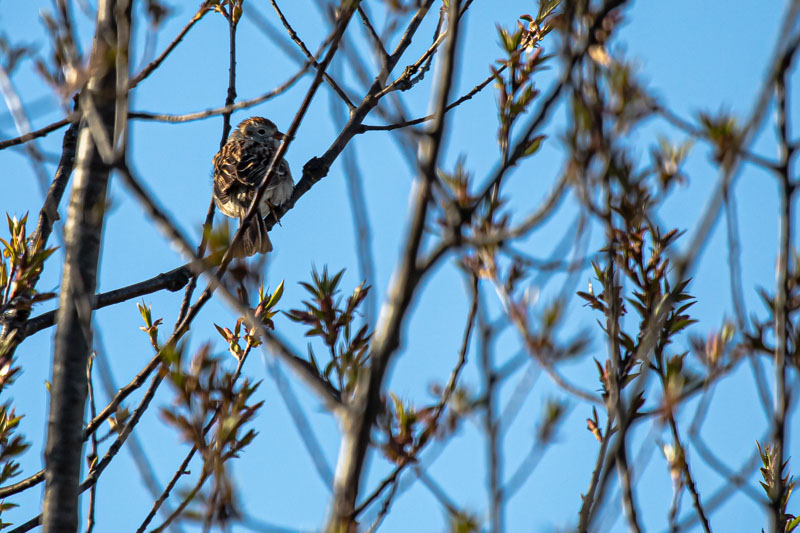
Through the Branches
Partly hidden, but still held in song posture.
Camera: Canon EOS 5D Mk IV
Lens: EF100-400mm f/4.5-5.6L IS II USM
Settings: ISO 640 • Aperture f/6.3 • Shutter 1/1600 s
E22A1036 • Size: 2773x1849
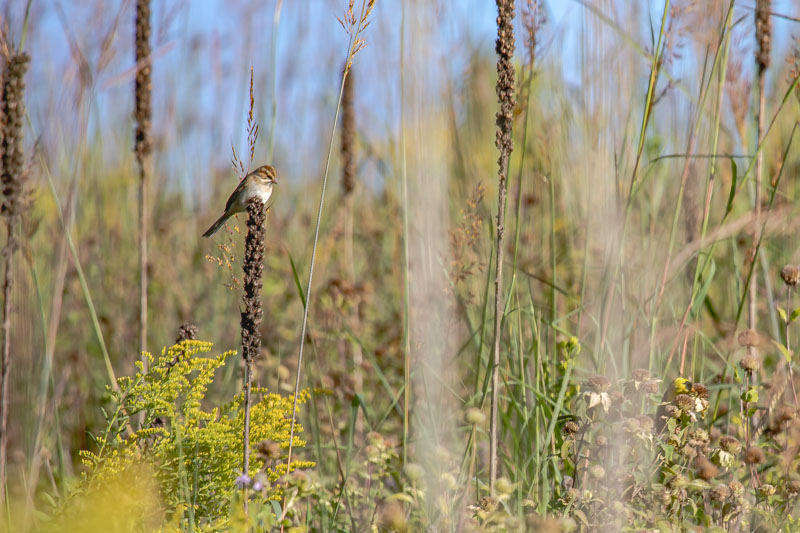
Prairie Perch
A small singer rising from the late-season field.
Camera: Canon EOS 5D Mk IV
Lens: EF100-400mm f/4.5-5.6L IS II USM
Settings: ISO 100 • Aperture f/8.0 • Shutter 1/60 s
E21A3942 • Size: 4039x2693
Seen together, these images show how naturally the species belongs to field edges and open growth. Whether against bare spring branches or seedheads in taller cover, the bird keeps to narrow, elevated perches from which song carries outward.
Among the New Leaves
As foliage thickens, the Field Sparrow becomes less obvious, but not necessarily less visible. Instead of standing against open sky, it blends into soft greens and filtered light, where its pale face and warm crown emerge more gradually.
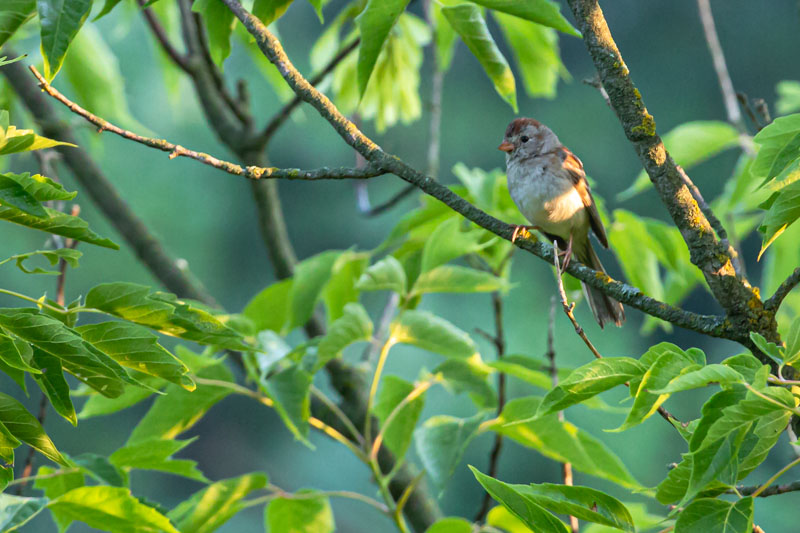
Among the New Leaves
A quiet pause in fresh spring foliage.
Camera: Canon EOS 5D Mk IV
Lens: EF70-200mm f/4.5-5.6L IS II USM +2x Extender
Settings: ISO 3200 • Aperture f/8.0 • Shutter 1/250 s
E21A2053 • Size: 2618x1745
Here the bird appears less like a distant singer and more like part of the living structure around it. The setting softens everything—edges, contrast, and even the bird’s already understated plumage.
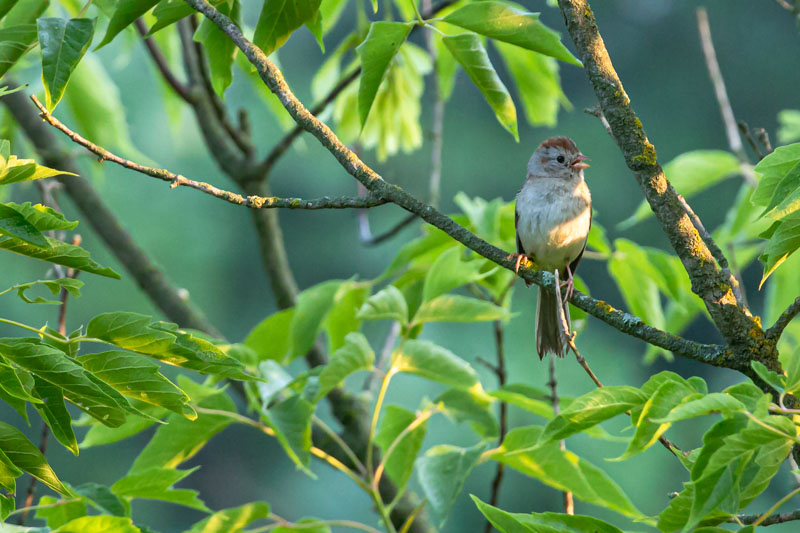
Singing from the Green
The song resumes from within the canopy.
Camera: Canon EOS 5D Mk IV
Lens: EF70-200mm f/4.5-5.6L IS II USM +2x Extender
Settings: ISO 3200 • Aperture f/8.0 • Shutter 1/250 s
E21A2055 • Size: 2618x1745
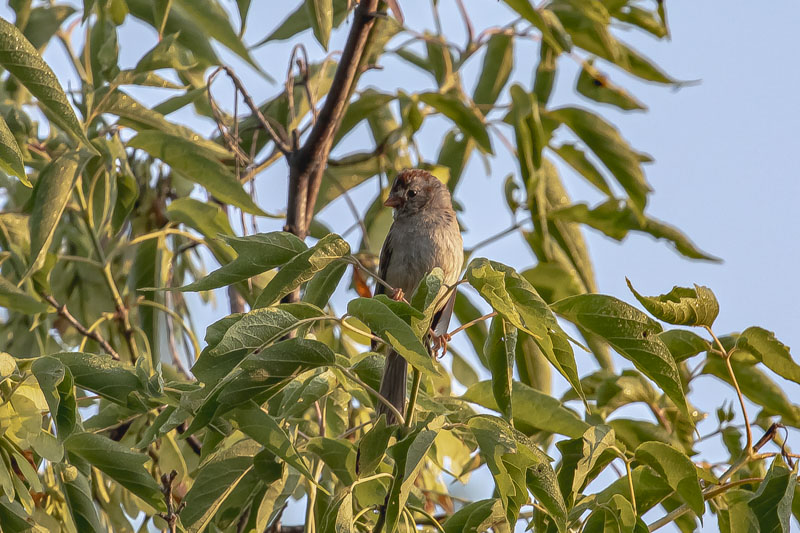
High Leafy Perch
Subtle colors held in warm evening light.
Camera: Canon EOS 5D Mk IV
Lens: EF70-200mm f/4.5-5.6L IS II USM +2x Extender
Settings: ISO 400 • Aperture f/10.0 • Shutter 1/250 s
E21A2056 • Size: 2280x1520
The contrast between these images and the open-sky perches is part of what makes the species rewarding to follow. It remains the same bird, but the setting changes its whole visual character.
Upper Branches in Warm Light
Even in fuller foliage, the Field Sparrow often chooses elevated, exposed positions. In warm light the pale underparts and pink bill brighten, while the rufous crown becomes more pronounced.
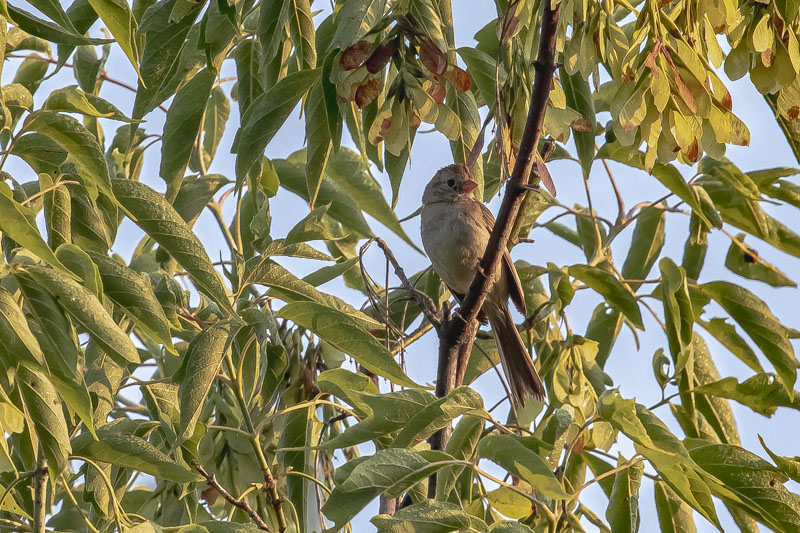
Warm Light Perch
A small form lit softly above the leaves.
Camera: Canon EOS 5D Mk IV
Lens: EF70-200mm f/4.5-5.6L IS II USM +2x Extender
Settings: ISO 800 • Aperture f/13.0 • Shutter 1/250 s
E21A2061 • Size: 2618x1745
The more time spent watching Field Sparrows, the more their appeal comes from restraint. They do not depend on bright contrast or heavy patterning. Instead, the species holds together through proportion, posture, and a face that remains open and uncomplicated in nearly every view.
In Flight
Most photographs of Field Sparrows show them perched, singing, or pausing. A flight image adds a different note—less about detail and more about the bird’s lightness and quick movement through open cover.
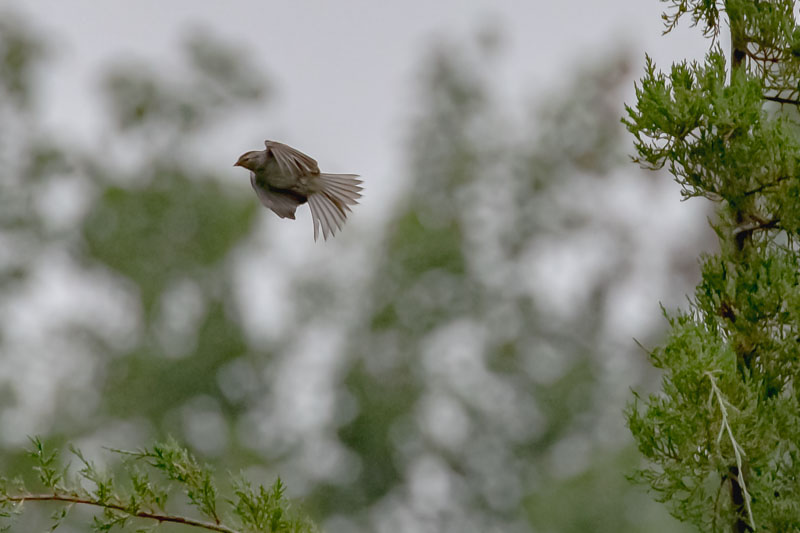
Leaving the Perch
A brief crossing between one song post and the next.
Camera: Canon EOS 5D Mk IV
Lens: EF70-200mm f/4.5-5.6L IS II USM +2x Extender
Settings: ISO 3200 • Aperture f/9.0 • Shutter 1/3200 s
E21A2940B • Size: 2295x1530
Even blurred by motion and distance, the impression remains slight and graceful. The species seems built for these short movements through shrubs, field edges, and scattered trees.
Photographer’s Perspective
Field Sparrows do not force attention the way brighter birds do. They reward slower looking. Across these images, what becomes most noticeable is consistency: the exposed perch, the lifted song, the soft face, and the way the bird belongs equally to open sky, brushy field, and fresh spring foliage. Their beauty is less in spectacle than in clarity—a quiet species made memorable by voice, posture, and season.