Turkey Vulture — Photographic Sequence
Cathartes aura
The Turkey Vulture photographs collected here show two complementary views of the same bird: a perched individual interrupted after feeding nearby, and a later flight sequence showing the long-winged soaring profile more typical of field encounters. For identification, habitat, and natural-history details, see the Cathartes aura species page.
Taken together, the photographs move from close-range detail to field silhouette: bare red head, pale hooked bill, layered dark plumage, long wings, and the shallow V-shaped flight posture that makes Turkey Vulture recognizable at a distance.
Interrupted Breakfast
The perched photographs show the Turkey Vulture in a less common photographic situation. Instead of circling high overhead, the bird was settled among spring branches after feeding nearby. The interruption left it alert and watchful, with the red head turned toward the observer.
E22A1088 gives the sequence its strongest close-range introduction. The broad perch, early buds, and open blue sky frame the bird while still allowing the head, bill, and feather texture to carry the identification.
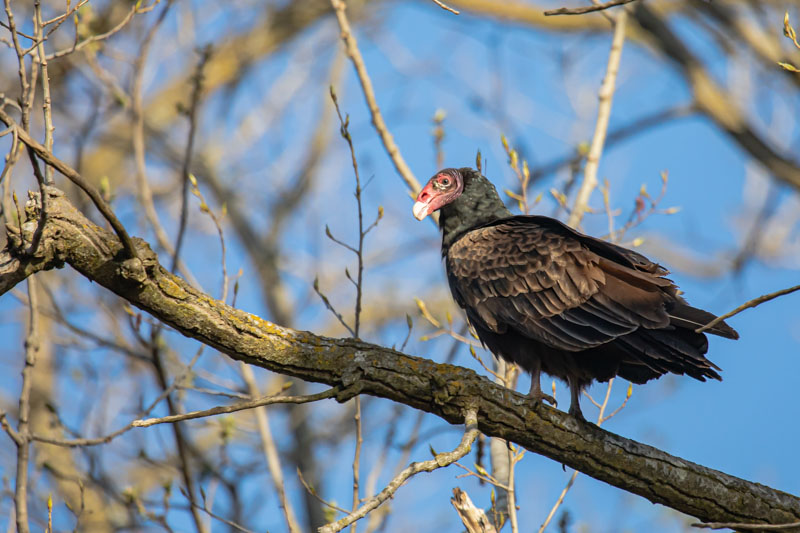
Interrupted Breakfast
A Turkey Vulture pauses after being disturbed from feeding nearby.
Camera: Canon EOS 5D Mark IV
Lens: EF100-400mm f/4.5-5.6L IS USM
Settings: ISO 1600 • Aperture f/5.6 • Shutter 1/4000 s
E22A1088 • Size: 5165 x 3443
The following frames hold the same encounter but shift the emphasis. From farther back, the bird blends more into the surrounding limbs; closer views bring out the dark brown feather edges, wrinkled red skin, and pale bill.
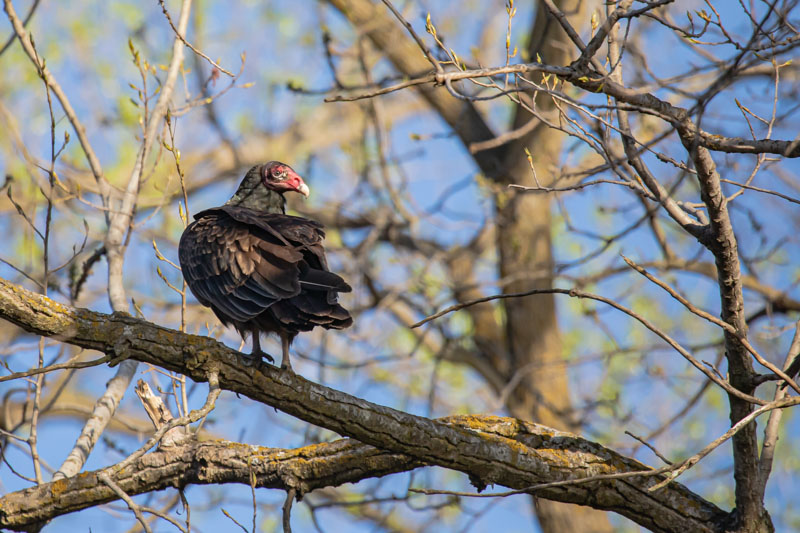
Watching from the Branch
Alert posture among leafing branches.
Camera: Canon EOS 5D Mark IV
Lens: EF100-400mm f/4.5-5.6L IS USM
Settings: ISO 1600 • Aperture f/5.6 • Shutter 1/4000 s
E22A1082 • Size: 5165 x 3443
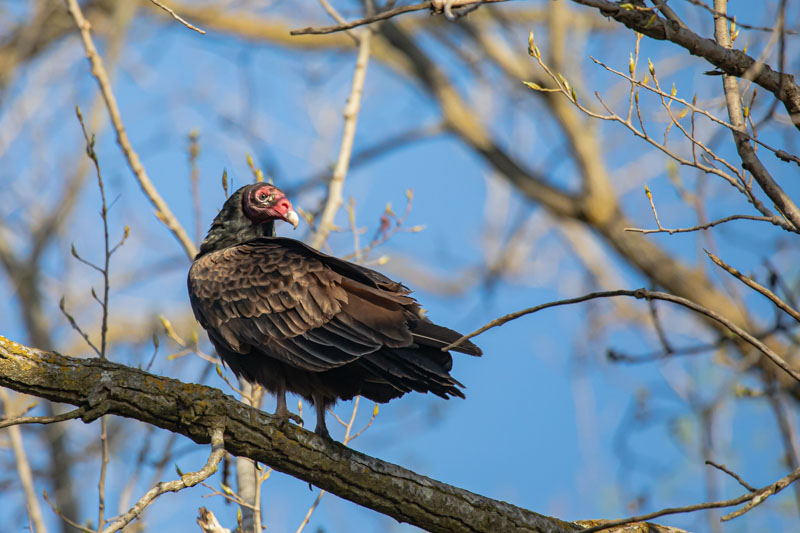
Red Head in Morning Light
The bare red head and pale bill stand out against dark plumage.
Camera: Canon EOS 5D Mark IV
Lens: EF100-400mm f/4.5-5.6L IS USM
Settings: ISO 1600 • Aperture f/5.6 • Shutter 1/4000 s
E22A1086 • Size: 5165 x 3443
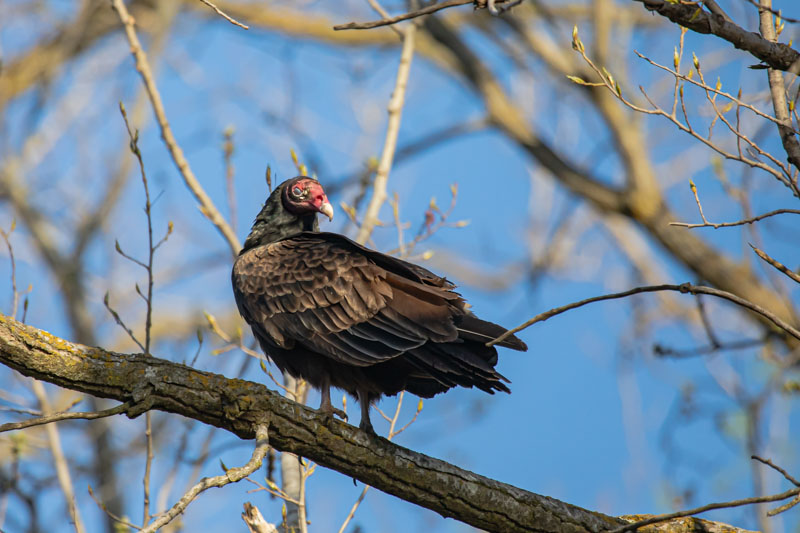
Layered Wing Feathers
Dark brown feather edges catch the light across the folded wing.
Camera: Canon EOS 5D Mark IV
Lens: EF100-400mm f/4.5-5.6L IS USM
Settings: ISO 1600 • Aperture f/5.6 • Shutter 1/4000 s
E22A1087 • Size: 5165 x 3443
Soaring Profile
A later encounter added the flight view missing from the perched sequence. In the air, the Turkey Vulture becomes a bird of outline and motion: long wings, spread primaries, a small head, and a gliding posture that separates it from most hawks and eagles before color is visible.
E22A9237 is the strongest flight frame in this group. The bird is banking enough to show the spread primaries and paler flight feathers, while the red head remains visible against the dark body.
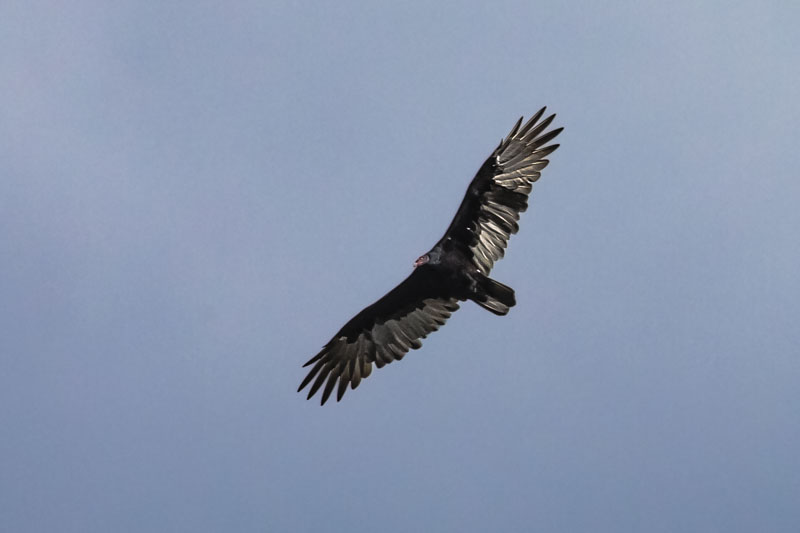
Banking in Open Sky
Long wings, spread primaries, and a glimpse of the red head in flight.
Camera: Canon EOS 5D Mark IV
Lens: EF100-400mm f/4.5-5.6L IS USM
Settings: ISO 1250 • Aperture f/13 • Shutter 1/2500 s
E22A9237 • Size: 1800 x 1200
The next two frames continue the turn. They are useful less as portraits than as field-shape studies: the small head projects from a dark body, the wings remain broad and fingered, and the bird holds the air with little suggestion of flapping.
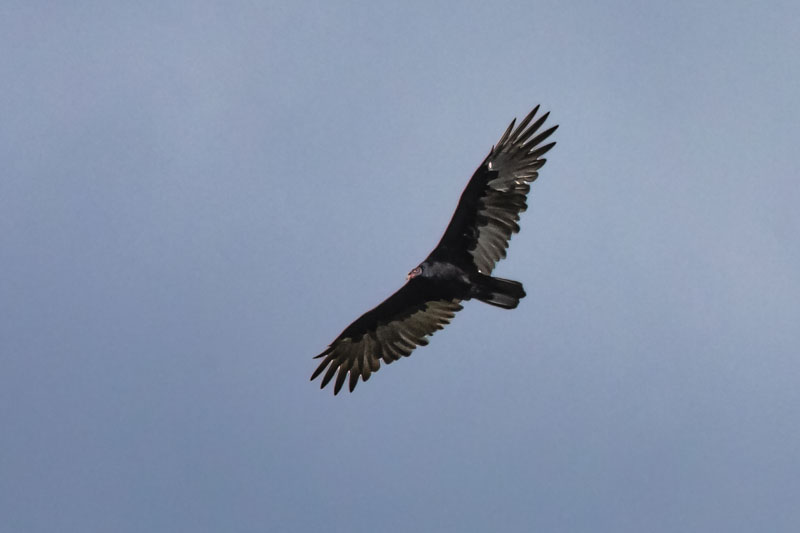
Wing Fingers in the Glide
The spread primaries mark the slow, controlled turn.
Camera: Canon EOS 5D Mark IV
Lens: EF100-400mm f/4.5-5.6L IS USM
Settings: ISO 1250 • Aperture f/13 • Shutter 1/2500 s
E22A9238 • Size: 1800 x 1200
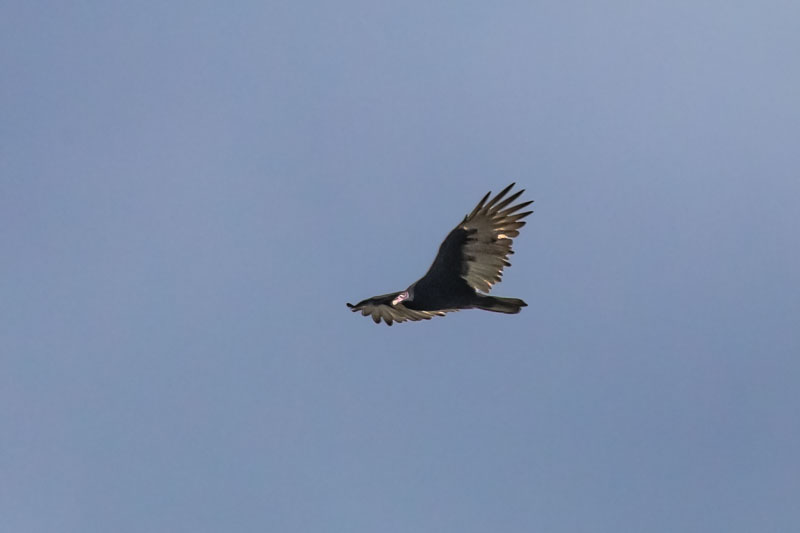
Shallow V Across the Sky
The classic Turkey Vulture profile begins to read even at a distance.
Camera: Canon EOS 5D Mark IV
Lens: EF100-400mm f/4.5-5.6L IS USM
Settings: ISO 1250 • Aperture f/13 • Shutter 1/2500 s
E22A9239 • Size: 1800 x 1200
Silhouette and Field Marks
The last soaring frame is darker and less detailed, but it has value as a field-recognition image. The bird becomes almost a silhouette, leaving shape and flight posture to carry the identification.
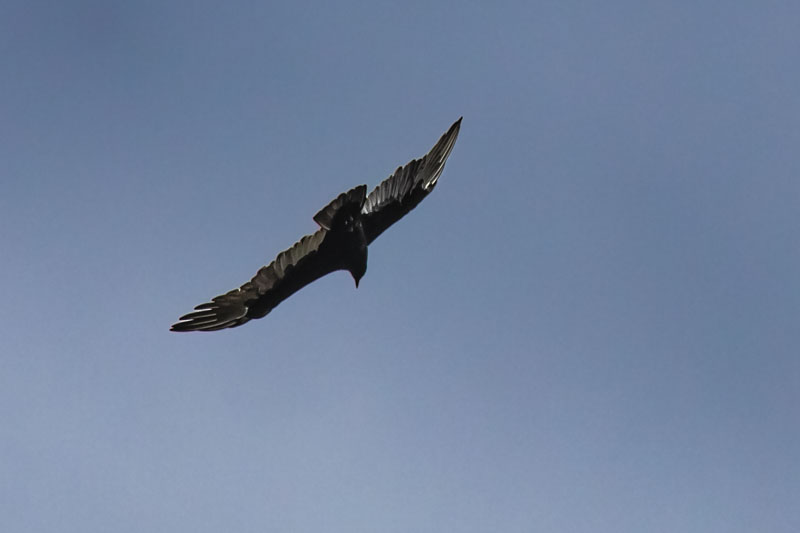
Soaring Silhouette
When detail falls away, the long wings and small head still identify the bird.
Camera: Canon EOS 5D Mark IV
Lens: EF100-400mm f/4.5-5.6L IS USM
Settings: ISO 1250 • Aperture f/13 • Shutter 1/2500 s
E22A9240 • Size: 1800 x 1200
This frame connects the page back to ordinary field experience. Many Turkey Vulture observations begin this way: a dark bird circling overhead, too distant for feather detail but clear enough in posture and movement.
Photographer’s Perspective
The Turkey Vulture sequence changed once the flight photographs were added. The perched encounter supplied the close detail: red head, pale bill, dark brown feather texture, and the heavy posture of a scavenger resting in the branches. The later soaring frames supplied the field view: long wings, fingered primaries, shallow V, and a bird built to move across broad open air.
The photographs now form a progression:
interrupted feeding → perched alertness → plumage detail → banking flight → soaring silhouette
That progression works well for a Photographic Sequence page. The Gallery can remain centered on the strongest perched image, while this page preserves the broader visual context: the same bird as both close-range subject and distant shape in the sky.