Red-winged Blackbird — Photographic Sequence
Agelaius phoeniceus
The Red-winged Blackbird photographs collected here span several encounters and changing conditions: a brief early spring snowfall, territorial calling from low branches, close-range views of the male’s epaulet and plumage, and females moving among grasses and cattails. For identification, habitat, and natural-history details, see the Agelaius phoeniceus species page.
Taken together, the photographs show two very different visual strategies within the same species. The male announces his presence through exposed perches, voice, posture, and color; the female is more easily absorbed into the vertical pattern and muted tones of the marsh.
First Spring Snow
The snowfall softened the wetland, muting the background and isolating the male among reeds and cattails. Against that subdued palette, even a partly visible epaulet becomes conspicuous.
E22A0287 gives the sequence its strongest environmental introduction. The bird remains relatively small within the frame, allowing the falling snow, cattails, and bending perch to carry as much of the atmosphere as the bird itself.
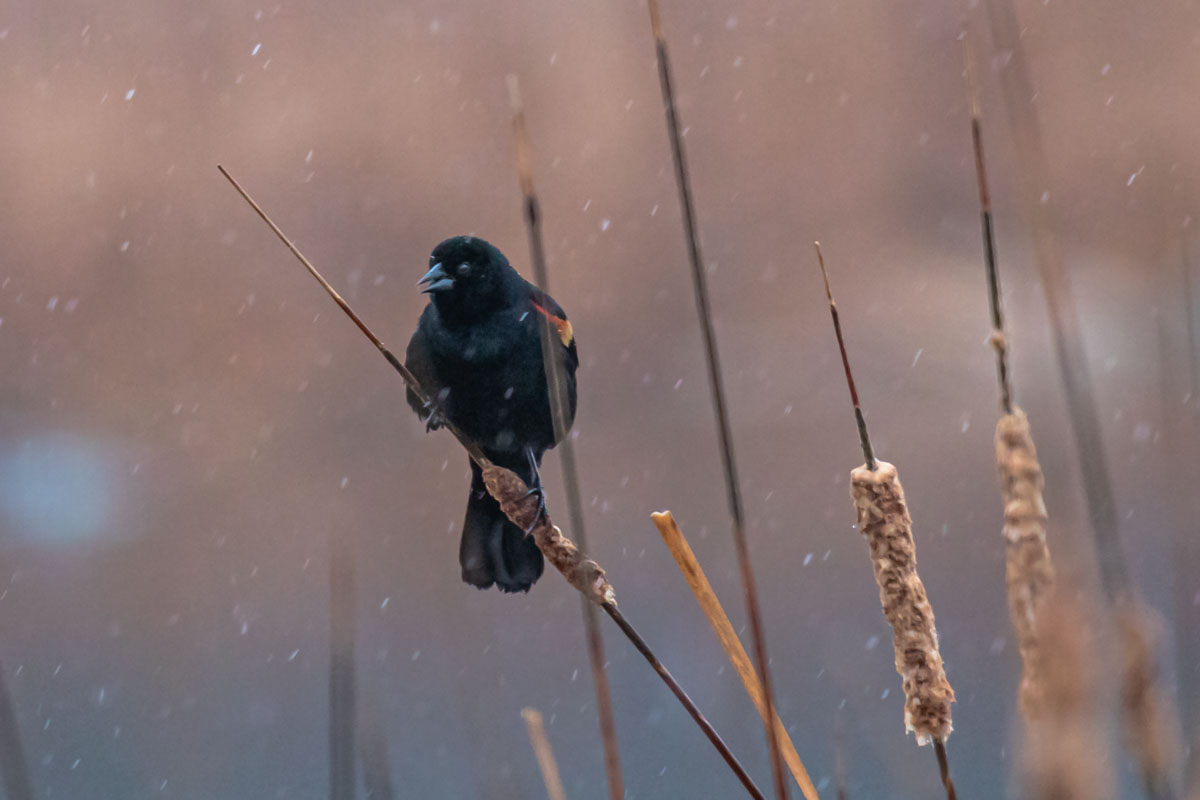
Red-winged Blackbird — First Spring Snow
A sentinel of the marsh, holding his ground as winter lingers.
Camera: Canon EOS 5D Mark IV
Lens: EF100-400mm f/4-5.6L IS USM
Settings: ISO 4000 • Aperture f/6.3 • Shutter 1/320 s
E22A0287 • Size: 2700 x 1800
The following frames record small changes in posture and balance while the setting remains nearly unchanged. The continuity of snow, perch, and background makes them read as a short behavioral sequence rather than unrelated portraits.
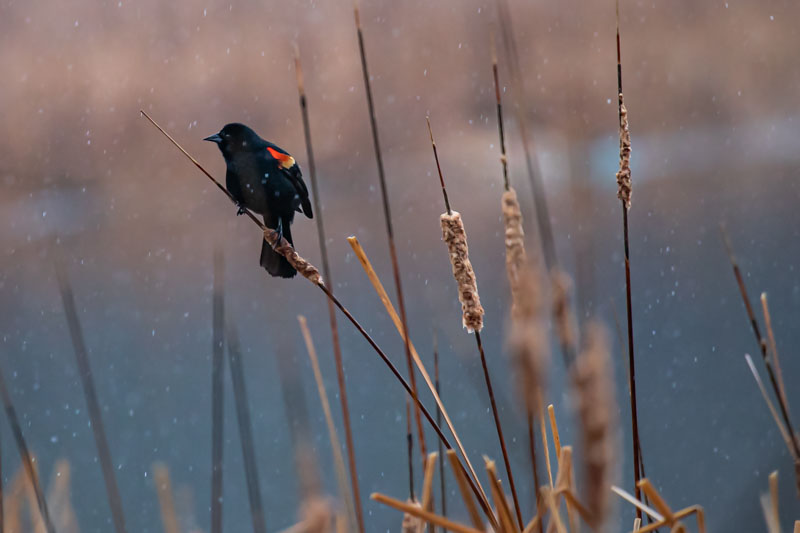
Side Profile — Quiet Watch
Stillness between calls, the marsh held in suspension.
Camera: Canon EOS 5D Mark IV
Lens: EF100-400mm f/4-5.6L IS USM
Settings: ISO 4000 • Aperture f/6.3 • Shutter 1/320 s
E22A0288 • Size: 4198 x 2799
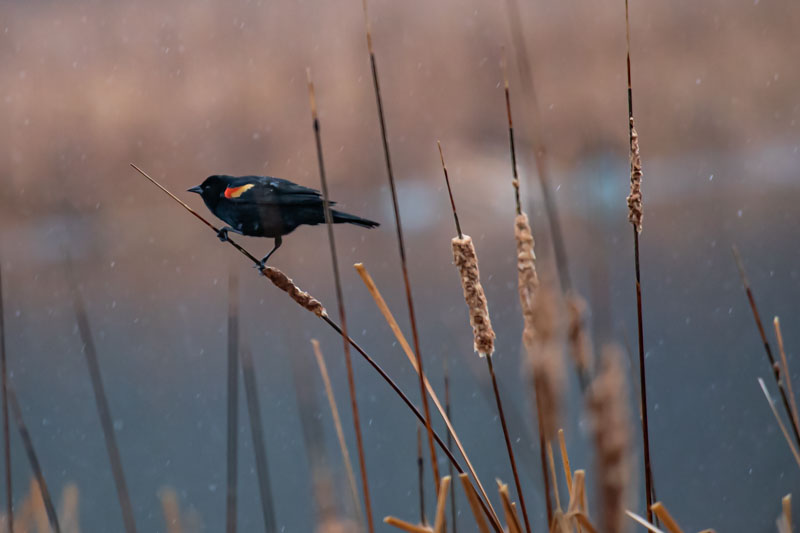
Balancing Act
The reed bends, but the bird remains steady.
Camera: Canon EOS 5D Mark IV
Lens: EF100-400mm f/4-5.6L IS USM
Settings: ISO 4000 • Aperture f/6.3 • Shutter 1/320 s
E22A0290 • Size: 4198 x 2799
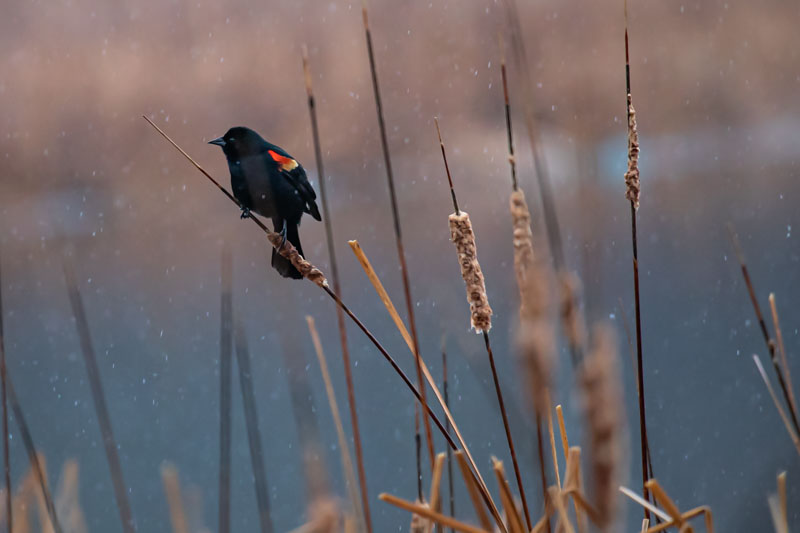
Turning into the Wind
A subtle shift as snow drifts through the reeds.
Camera: Canon EOS 5D Mark IV
Lens: EF100-400mm f/4-5.6L IS USM
Settings: ISO 4000 • Aperture f/6.3 • Shutter 1/320 s
E22A0289 • Size: 4198 x 2799
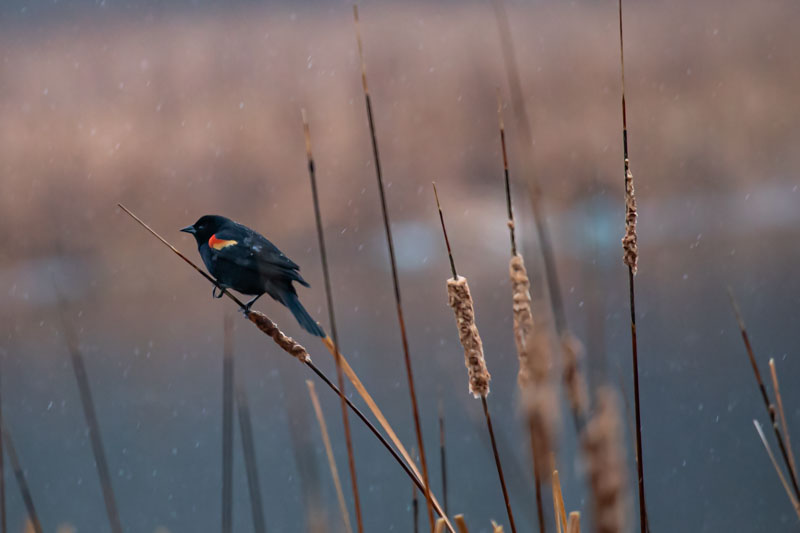
Fleeting Flash of Color
A glimpse of red before it disappears again.
Camera: Canon EOS 5D Mark IV
Lens: EF100-400mm f/4-5.6L IS USM
Settings: ISO 4000 • Aperture f/6.3 • Shutter 1/320 s
E22A0291 • Size: 4198 x 2799
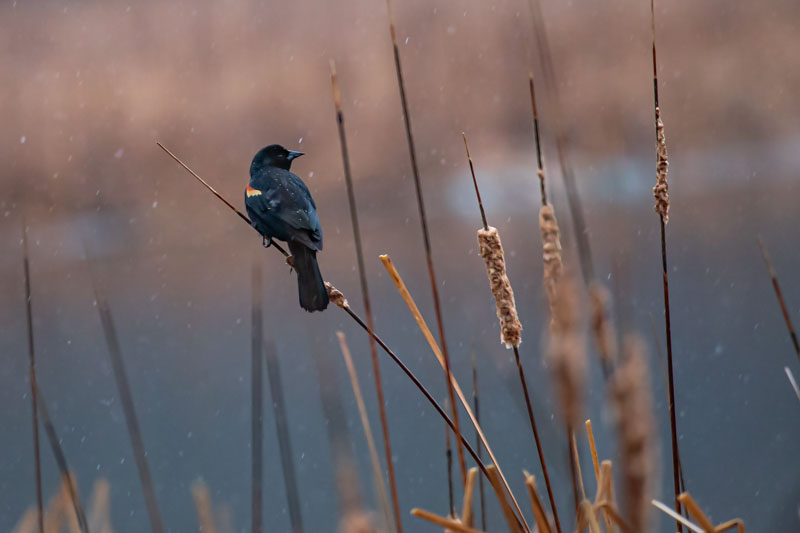
Looking Back
A pause, attentive to movement across the marsh.
Camera: Canon EOS 5D Mark IV
Lens: EF100-400mm f/4-5.6L IS USM
Settings: ISO 4000 • Aperture f/6.3 • Shutter 1/320 s
E22A0292 • Size: 4198 x 2799
Territorial Call
The later branch-perch photographs move much closer to the bird. Here the setting becomes secondary to posture, voice, and the red-and-yellow epaulet. E22A0784 is the clearest display frame; E22A0434 shows the same behavior from a slightly wider setting.
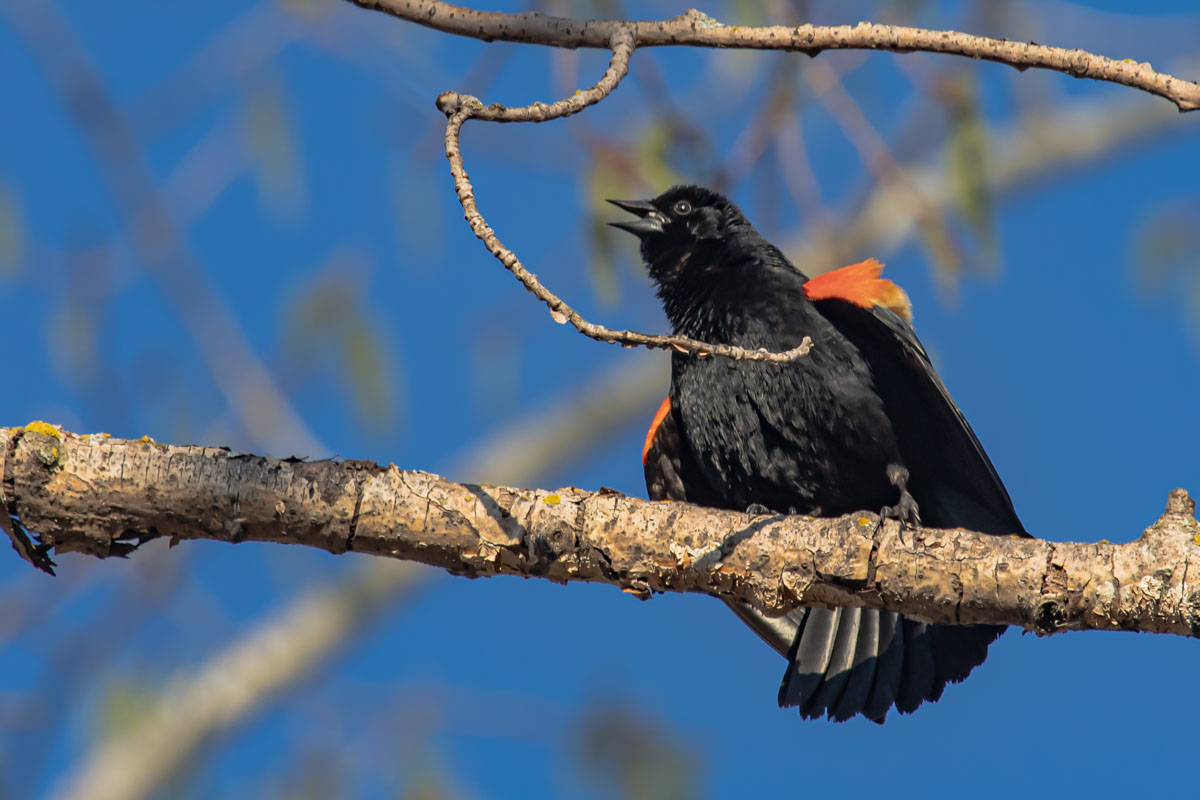
Close Range — Epaulet Raised
The red shoulder patch fully displayed during a territorial call.
Camera: Canon EOS 5D Mark IV
Lens: EF100-400mm f/4-5.6L IS USM
Settings: ISO 800 • Aperture f/10.0 • Shutter 1/640 s
E22A0784 • Size: 3100 x 2067
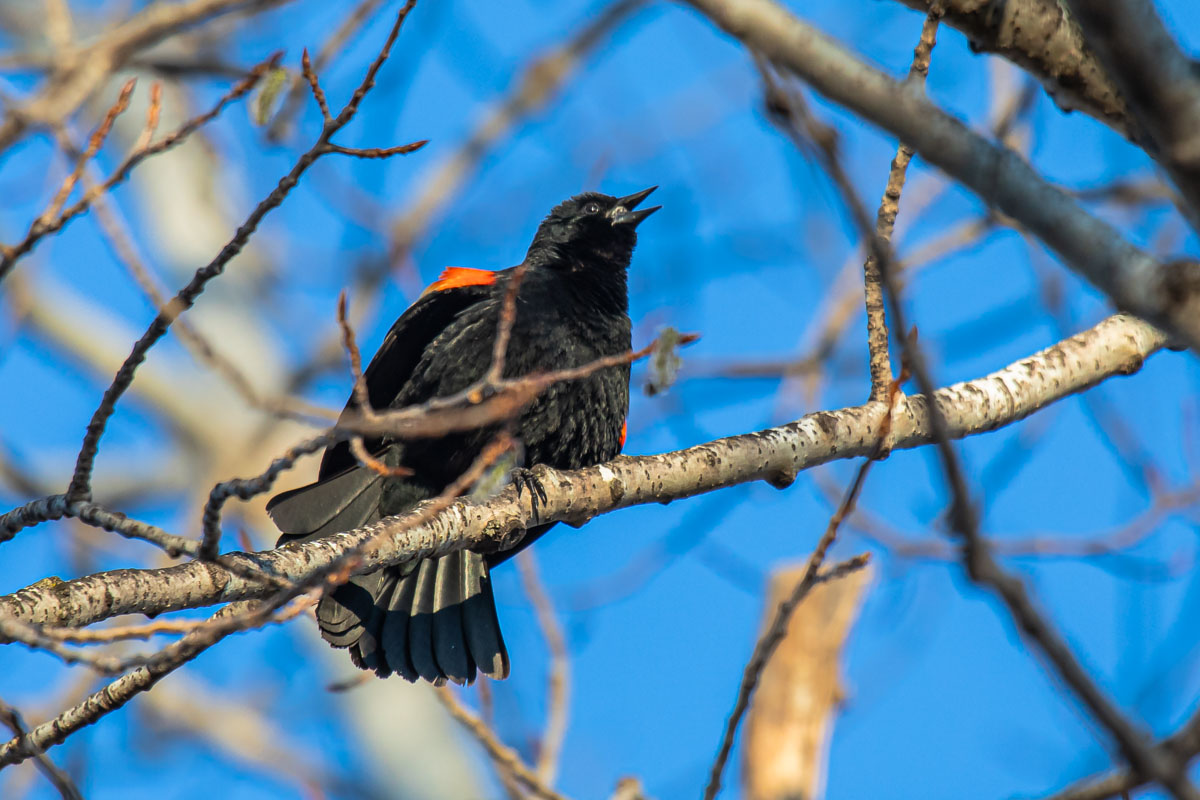
Calling from the Branch
Head lifted, voice carried into the open sky.
Camera: Canon EOS 5D Mark IV
Lens: EF100-400mm f/4-5.6L IS USM
Settings: ISO 800 • Aperture f/8.0 • Shutter 1/500 s
E22A0434 • Size: 3400 x 2267
In a brief pause between calls, E22A0444 changes the character of the sequence. The head lowers and the outward display gives way to direct attention. Instead of projecting across the territory, the bird appears aware of the observer within it.
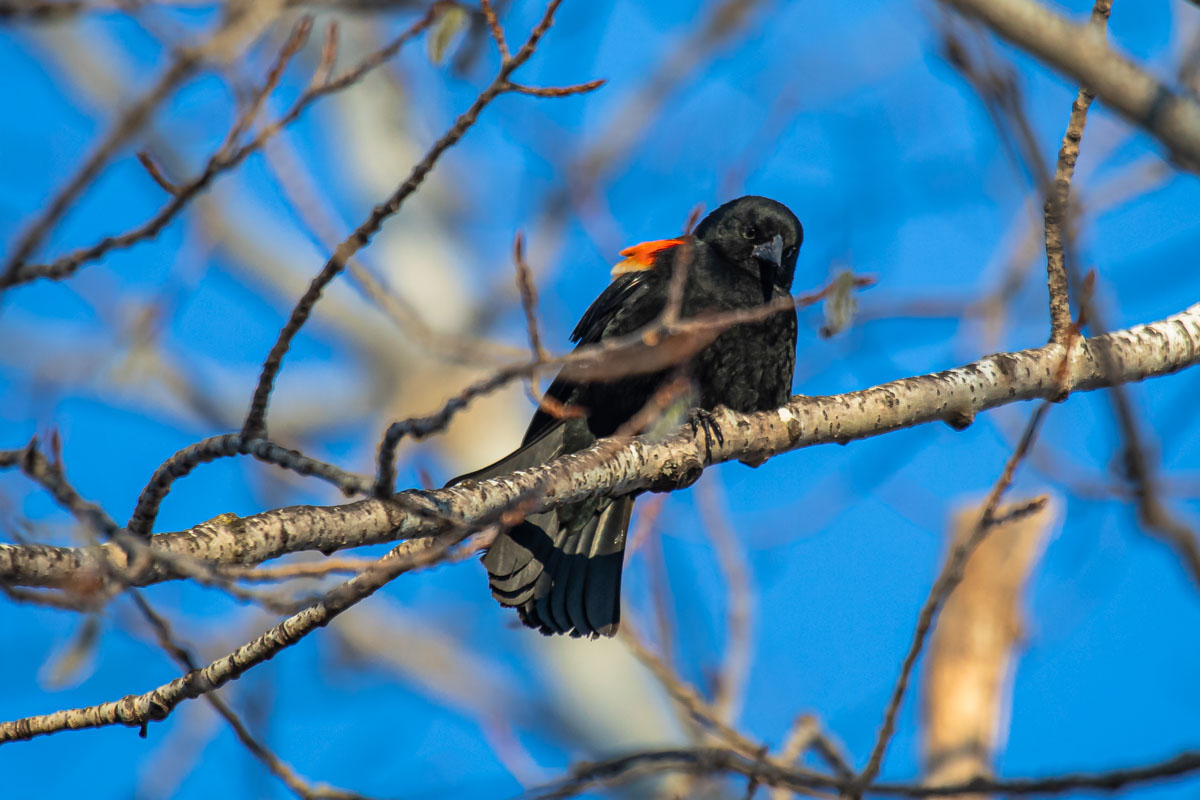
Direct Gaze
A brief pause—aware of your presence within his territory.
Camera: Canon EOS 5D Mark IV
Lens: EF100-400mm f/4-5.6L IS USM
Settings: ISO 800 • Aperture f/5.6 • Shutter 1/1000 s
E22A0444 • Size: 3400 x 2267
Plumage at Close Range
At close range, the male’s black plumage is no longer a single dark surface. Individual feather layers, subtle sheen, the folded wing, and the structure of the epaulet become visible.
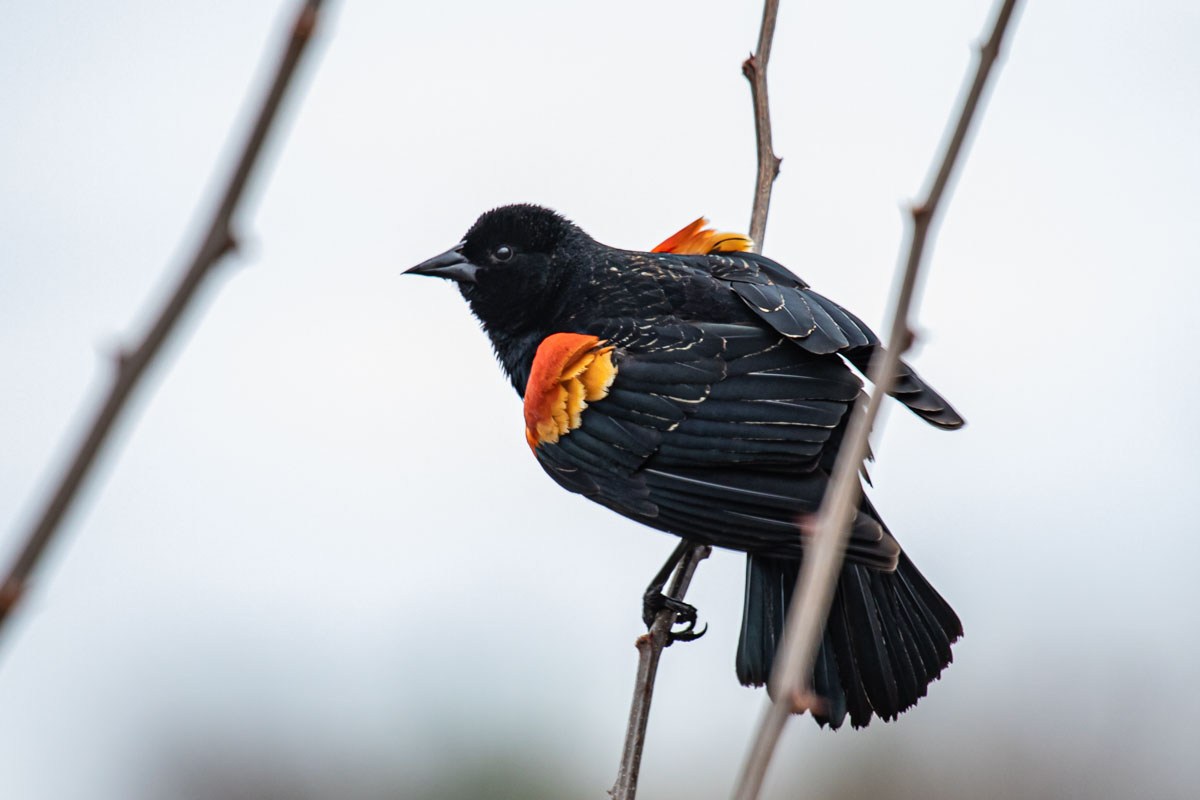
Shoulder and Wing Detail
Layered feathers and the folded epaulet reveal the structure beneath the display.
Camera: Canon EOS 5D Mark IV
Lens: EF100-400mm f/4-5.6L IS USM
Settings: ISO 800 • Aperture f/6.3 • Shutter 1/1000 s
E22A0535 • Size: 3337 x 2225
E22A0531 returns from structure to behavior. It is not as strong a display photograph as E22A0784, but the close working distance gives the call a different immediacy.
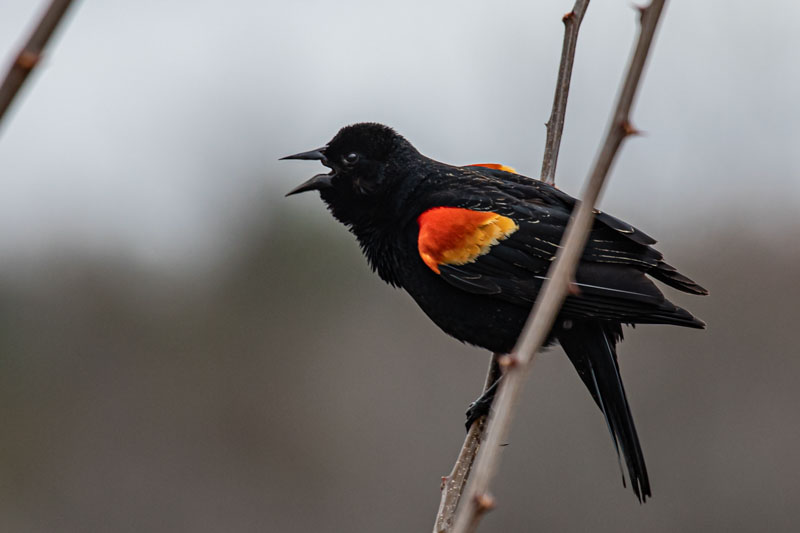
Calling at Close Range
The voice carries outward, but the detail holds close.
Camera: Canon EOS 5D Mark IV
Lens: EF100-400mm f/4-5.6L IS USM
Settings: ISO 800 • Aperture f/8.0 • Shutter 1/80 s
E22A0531 • Size: 3168 x 2112
Female Red-winged Blackbird
The female photographs change both the palette and the visual language of the page. Where the male is defined by glossy black plumage and conspicuous shoulder color, the female’s streaked brown pattern echoes grasses, seed heads, and cattails.
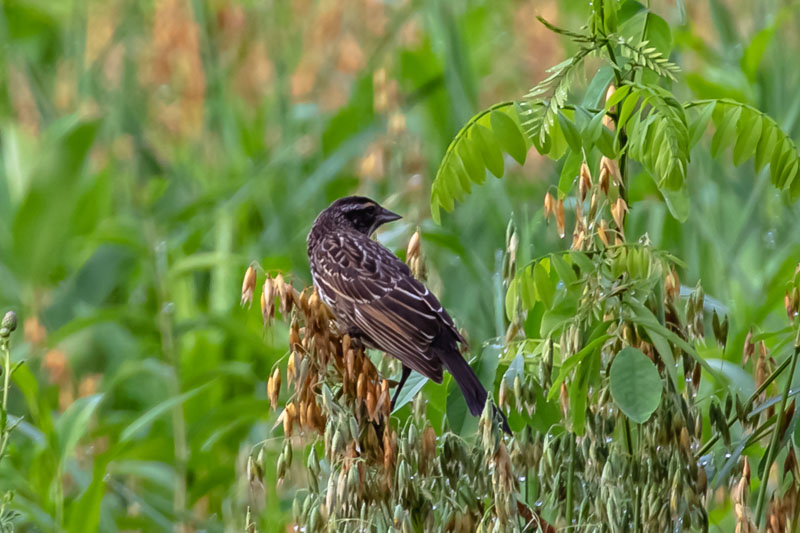
Among Seed Heads
Streaked and subdued, she disappears into the texture of the field.
Camera: Canon EOS 5D Mark IV
Lens: EF70-200mm f/2.8L IS II USM 2x
Settings: ISO 250 • Aperture f/8.0 • Shutter 1/160 s
E21A2028 • Size: 1391 x 927
The newer cattail photographs add behavior to that quieter presentation. E22A2212 records the female calling, while E22A2210 turns toward the camera. That direct gaze creates an understated counterpart to the male’s Direct Gaze.
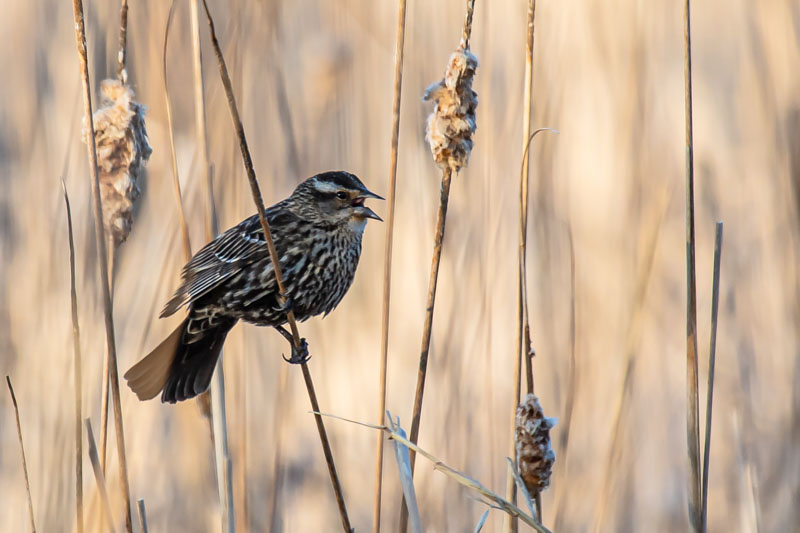
Calling from the Reeds
The softer voice of the marsh carried through the cattails.
Camera: Canon EOS 5D Mark IV
Lens: EF100-400mm f/4.5-5.6L IS II USM
Settings: ISO 500 • Aperture f/5.6 • Shutter 1/640 s
E22A2212 • Size: 2022 x 1348
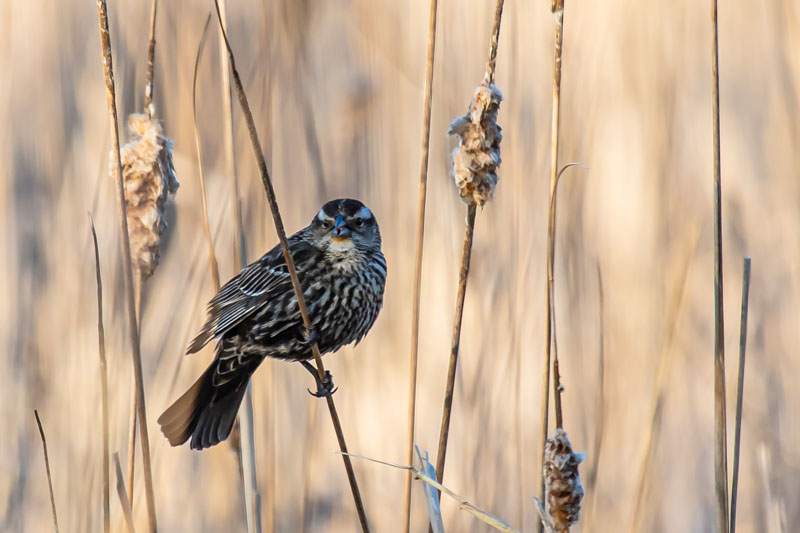
Among the Cattails
Watchful and still, she meets the lens from within cover.
Camera: Canon EOS 5D Mark IV
Lens: EF100-400mm f/4.5-5.6L IS II USM
Settings: ISO 500 • Aperture f/5.6 • Shutter 1/640 s
E22A2210 • Size: 2022 x 1348
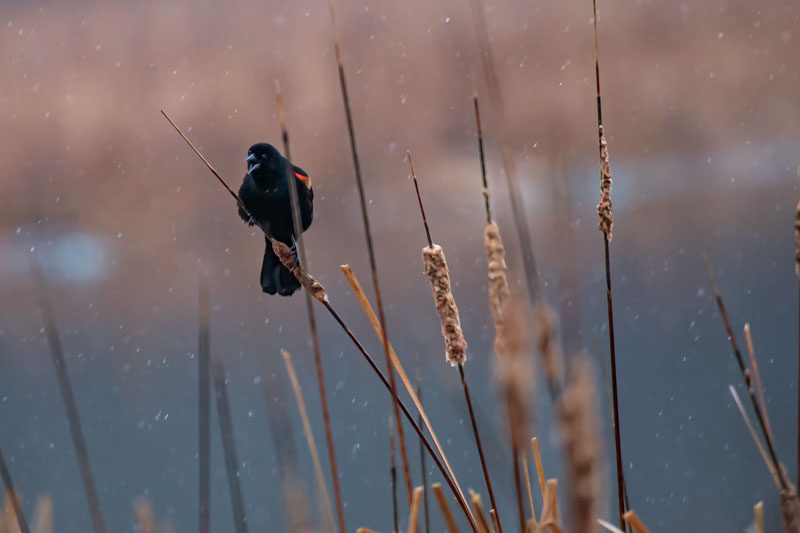
Frontal Presence
A direct and watchful stance facing forward on cattail, marking territory.
Camera: Canon EOS 5D Mark IV
Lens: EF100-400mm f/4-5.6L IS USM
Settings: ISO 4000 • Aperture f/6.3 • Shutter 1/320 s
E22A0286 • Size: 4198 x 2799
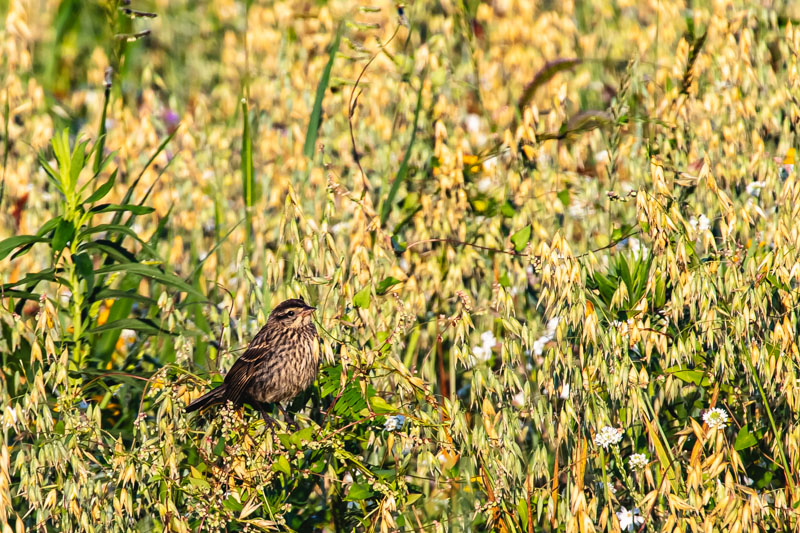
Marsh Camouflage
In warm light, her pattern echoes the grasses that surround her.
Camera: Canon EOS 5D Mark IV
Lens: EF70-200mm f/2.8L IS II USM 2x
Settings: ISO 200 • Aperture f/13.0 • Shutter 1/250 s
E21A1864 • Size: 2758 x 1839
Photographer’s Perspective
The Red-winged Blackbird collection changed as closer encounters accumulated. The snowfall sequence first established the bird within the marsh and gave the page its strongest sense of weather and habitat. Later photographs moved progressively closer: territorial calling, a fully raised epaulet, direct eye contact, and feather structure. The female photographs then broadened the collection again, returning attention to the reeds and grasses while showing a very different plumage pattern and a quieter form of presence.
The photographs now form a progression:
weather and habitat → territorial display → direct awareness → plumage detail → female voice and concealment
That progression is why the Gallery can remain selective. The strongest photographs can carry the portfolio there, while this Photographic Sequence preserves the smaller changes in posture, behavior, and setting that connect the individual frames.