Butterfly Milkweed — Photographic Sequence
Asclepias tuberosa
The Butterfly Milkweed photographs collected here form a short sequence with a natural change in emphasis. One photograph records the plant itself: bright orange flowers held above narrow leaves in open meadow vegetation. Two closer frames add a Monarch feeding among the flowers.
For identification, habitat, and natural-history details, see the Asclepias tuberosa species page.
Taken together, the three photographs move from the structure of the plant to one of the ecological relationships associated with milkweeds.
Butterfly Milkweed in Bloom
E22A8928 works best as the opening photograph because the plant remains the subject. The orange flower cluster is isolated clearly enough to show its rounded, many-flowered form, while the narrow leaves and surrounding meadow vegetation give the image useful identification and habitat context.
The background is active, but that works here. The photograph feels like a plant encountered within the meadow rather than a flower separated from its surroundings.
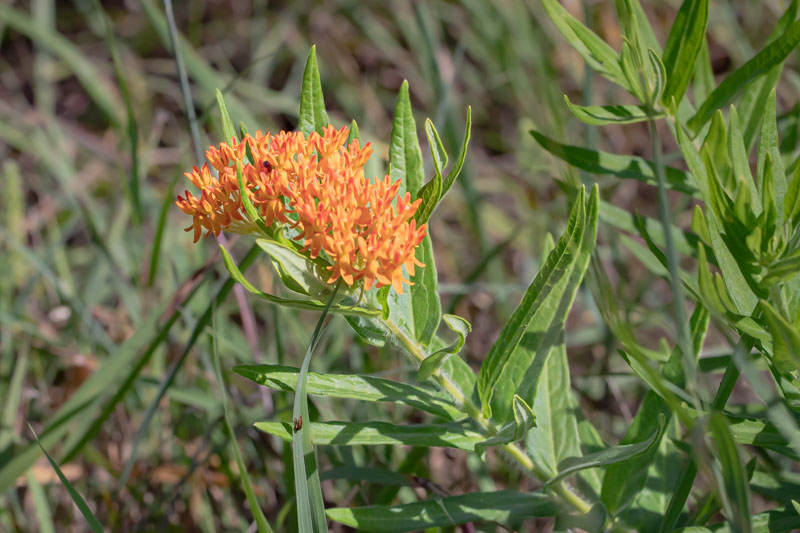
Butterfly Milkweed in Bloom
A bright orange flower cluster rises above narrow green leaves in the summer meadow.
E22A8928
When the Monarch Arrives
The next two photographs shift attention from plant structure to interaction.
E22A8904 is the closer study. The Monarch is partly cropped by the frame, but that tighter view brings the head, antennae, legs, and flower structure forward. The image is less about the complete outline of the butterfly than about its position among the individual flowers.
E22A8919 opens the view again. The spread wings immediately establish the Monarch’s orange-and-black pattern while the Butterfly Milkweed remains visible beneath it. Of the three photographs, this is the strongest visual expression of the relationship between the plant and its visitor.
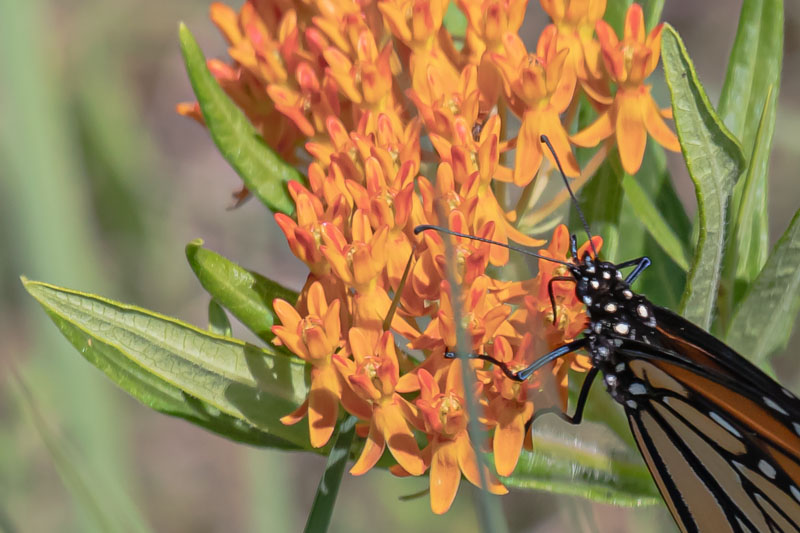
Monarch at the Flowers
A close feeding view brings the butterfly’s head, legs, and patterned wing against the orange flowers.
Camera: Canon EOS 5D Mark IV
Lens: EF100-400mm f/4.5-5.6L IS USM
Settings: ISO 800 • Aperture f/8.0 • Shutter 1/1600 s
E22A8904
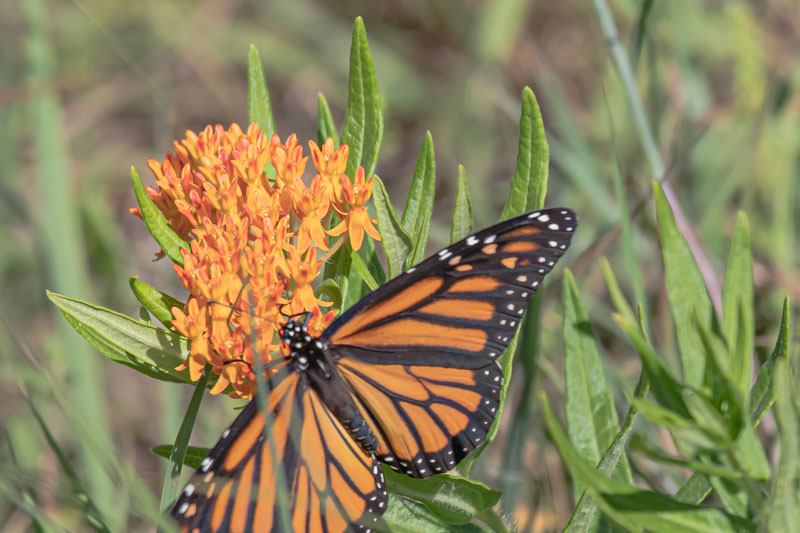
Wings over Orange
The Monarch opens its wings while feeding, spreading orange and black across the flower cluster.
Camera: Canon EOS 5D Mark IV
Lens: EF100-400mm f/4.5-5.6L IS USM
Settings: ISO 800 • Aperture f/8.0 • Shutter 1/1600 s
E22A8919
Photographer’s Perspective
This is a small photographic set, but the photographs do not duplicate one another.
E22A8928 establishes the plant and its meadow setting. E22A8904 moves close enough to show the Monarch working among the individual flowers. E22A8919 pulls those subjects together, with the open wings becoming the dominant shape while the orange milkweed remains an unmistakable part of the photograph.
The progression is simple:
plant structure → flower detail → nectar visitor → open-wing interaction
The Monarch photographs document adult nectar feeding. They do not by themselves document the other important milkweed relationship—the use of Asclepias as a larval host—but they give the sequence an immediate ecological connection that a plant portrait alone would not have.