Black-capped Chickadee
Poecile atricapillus
The Black-capped Chickadee (Poecile atricapillus) is a small northern songbird recognized by its black cap and throat, white cheeks, soft gray back, and pale underside. Its compact shape and inquisitive behavior make it a familiar presence in woodland edges, parks, and backyard feeding areas.
For identification details and comparison with similar species, see Poecile atricapillus in the Field Notes section. For photographic observations and visual context, see Photographic Sequence in the Field Notes section.
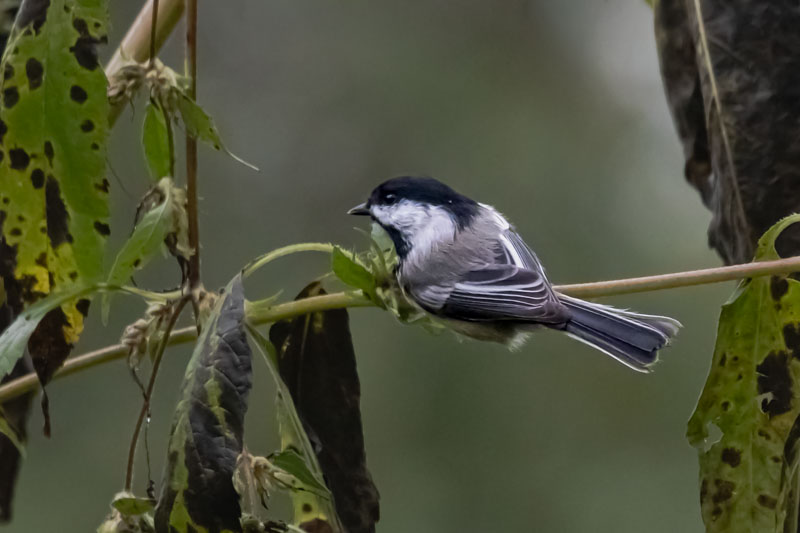
E22B0774
Kicker
Camera: Canon EOS 50D
Lens: EF100-400mm f/4.5-5.6L IS USM
Settings: ISO 10000 • Aperture f/7.1 • Shutter 1/800 s
E22B0774 • Size: 2600 x 1733
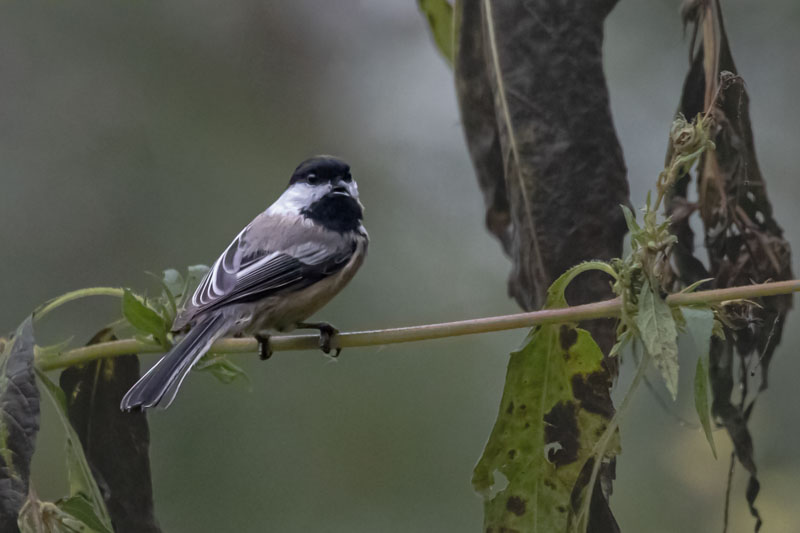
E22B0779
Kicker
Camera: Canon EOS 50D
Lens: EF100-400mm f/4.5-5.6L IS USM
Settings: ISO 10000 • Aperture f/7.1 • Shutter 1/800 s
E22B0779 • Size: 2600 x 1733
E21A2652 leads the page because the eye remains crisp beneath the dark cap. The slightly forward angle brings the bird's expression into view, while the ruffled breast and shoulder feathers give the portrait a restless, wind-tossed character. The curved perch also creates a strong visual line that rises directly toward the chickadee.
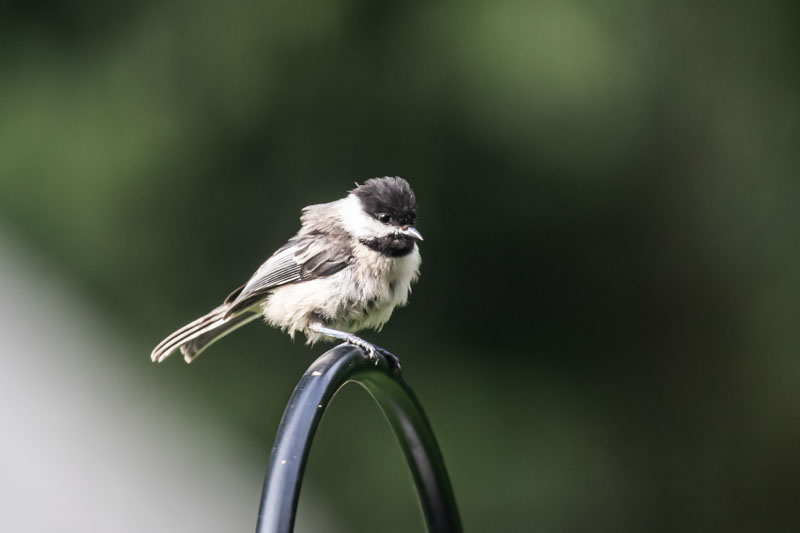
Ruffled Watch
A sharp eye holds steady beneath a wind-tossed cap.
Camera: Canon EOS 50D
Lens: EF70-200mm f/2.8L IS II USM +2x
Settings: ISO 800 • Aperture f/5.6 • Shutter 1/800 s
E21A2652 • Size: 3200 x 2133
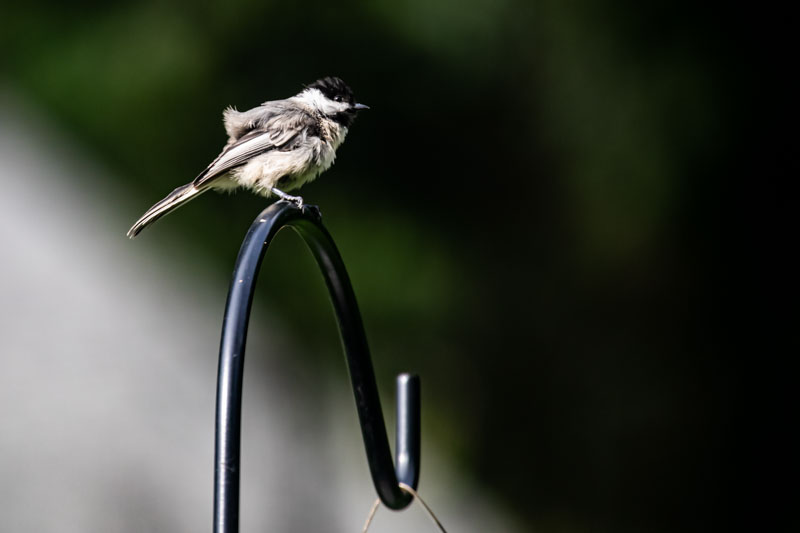
Windblown Profile
Lifted feathers and a parted bill animate the side view.
Camera: Canon EOS 50D
Lens: EF70-200mm f/2.8L IS II USM +2x
Settings: ISO 800 • Aperture f/5.6 • Shutter 1/800 s
E21A2654 • Size: 3200 x 2133
E21A2654 opens the pose into a fuller side profile, showing the long tail, folded wing, pale cheek, and slightly parted bill. The eye is not quite as sharply defined as in E21A2652, but a careful local adjustment may recover a little more separation and color without disturbing the soft character of the feathers.
Photographer's Perspective
These photographs are less about a polished, still portrait than about the chickadee's character in a passing moment. The wind has lifted and separated the plumage, making the small bird appear both disheveled and completely alert. E21A2652 supplies the stronger expression, while E21A2654 broadens the view into a lively profile.