Song Sparrow
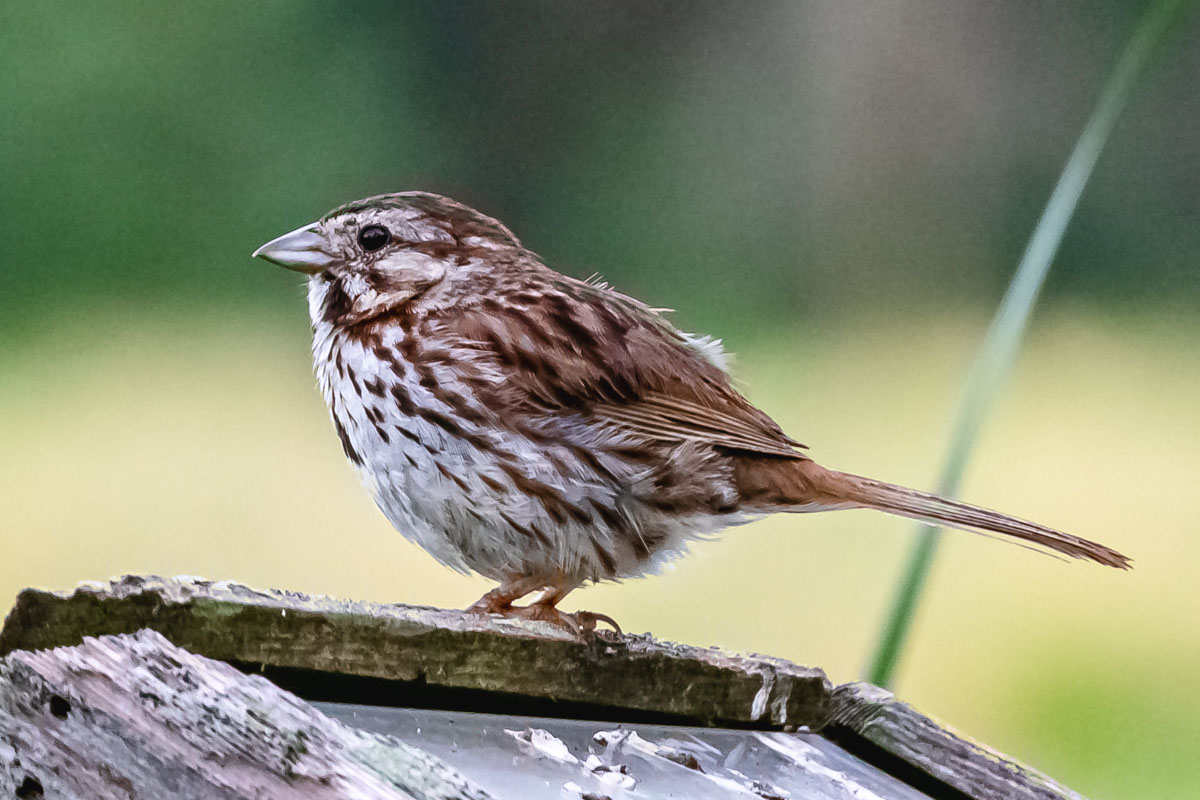
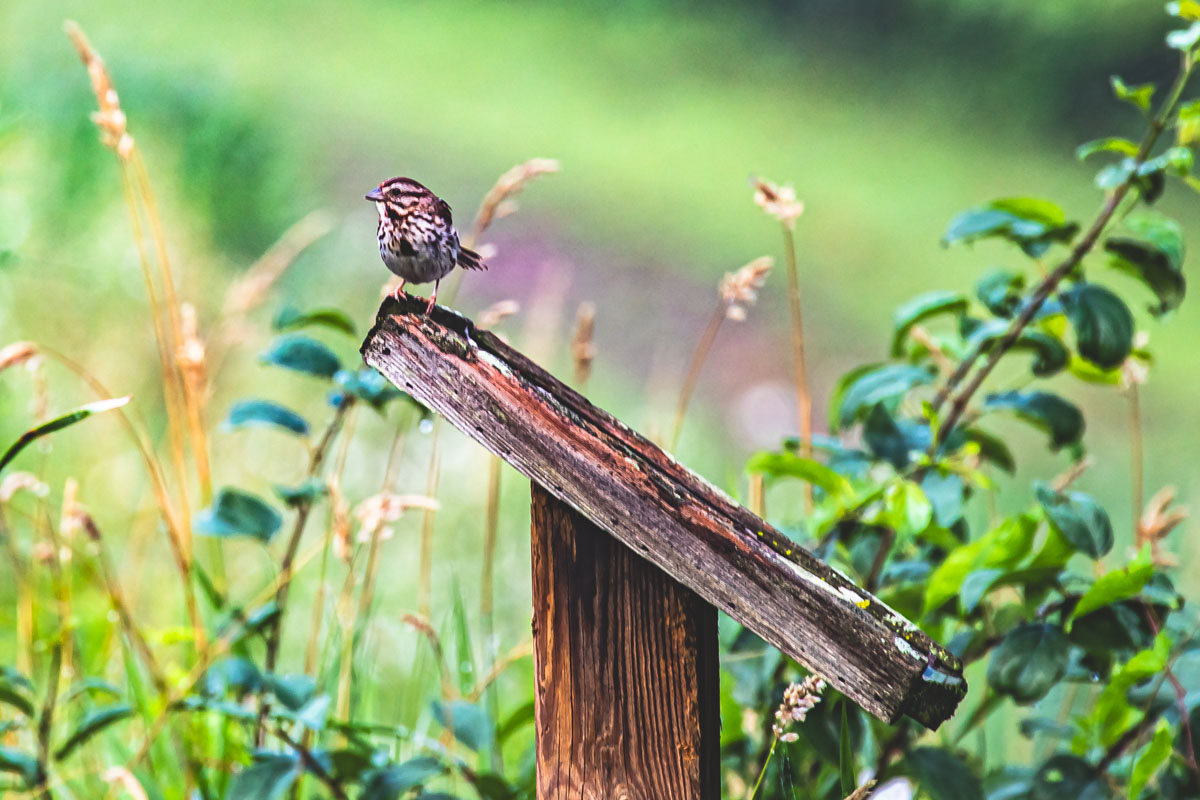
Melospiza melodia
For identification details and comparison with similar species, see the Melospiza melodia page in the Field Notes section. For photographic observations and visual context, see Photographic Sequence in the Field Notes section.
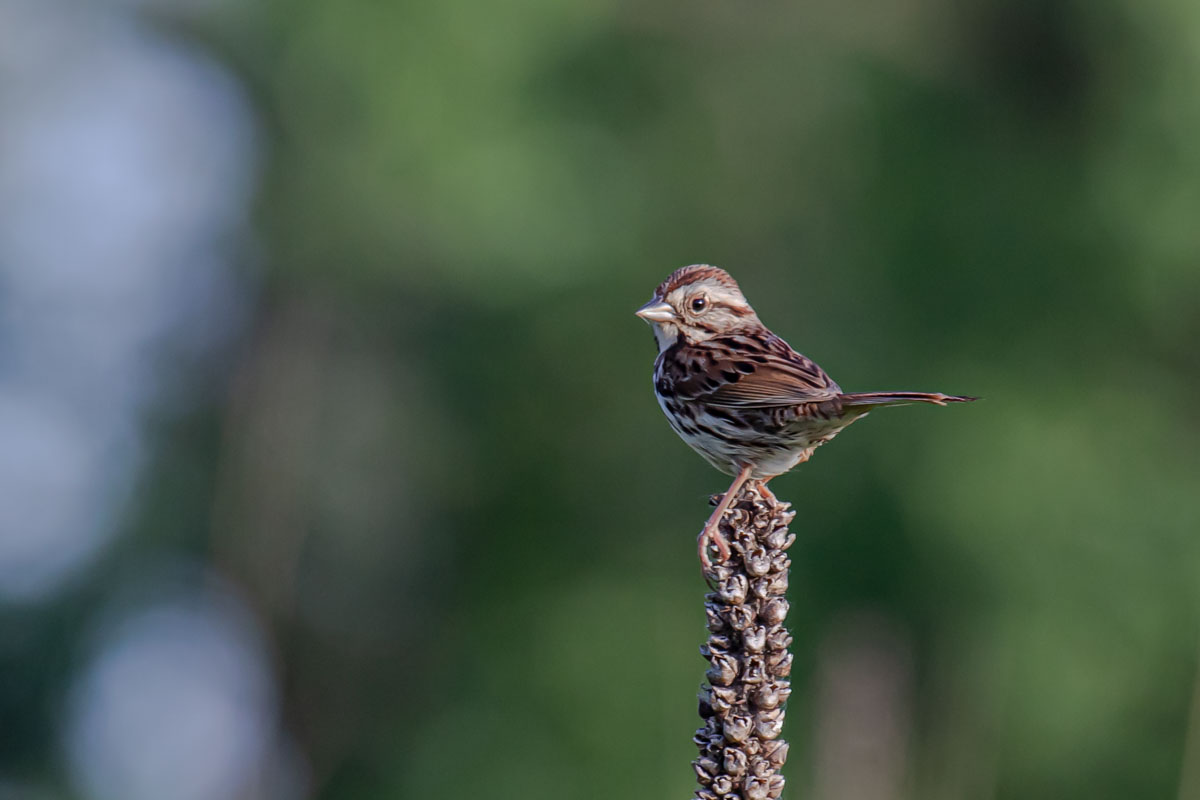
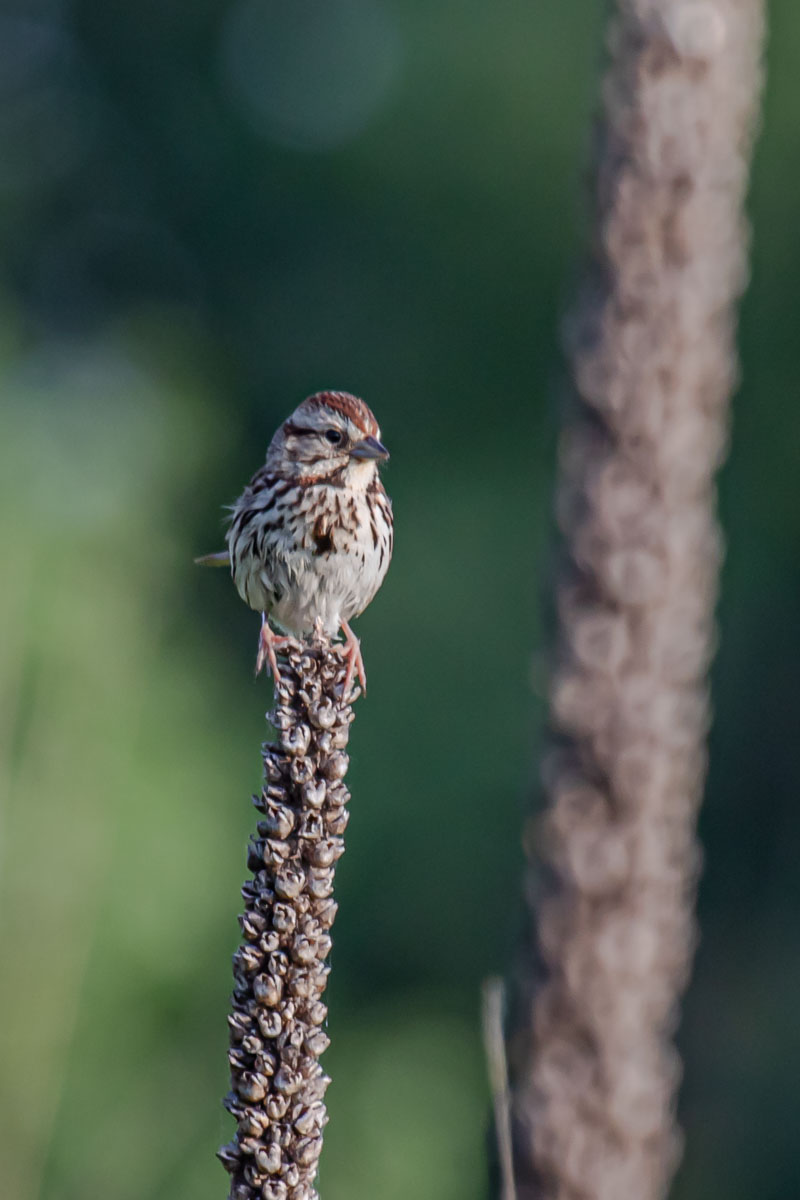
Standing Watch
Layered feathers, long legs, and an attentive posture.
Camera: Canon EOS 5D Mark IV
Lens: EF100-400mm f/4.5-5.6L IS II USM
Settings: ISO 400 • Aperture f/8.0 • Shutter 1/400 s
E22A3682 • Size: 2250 x 1500
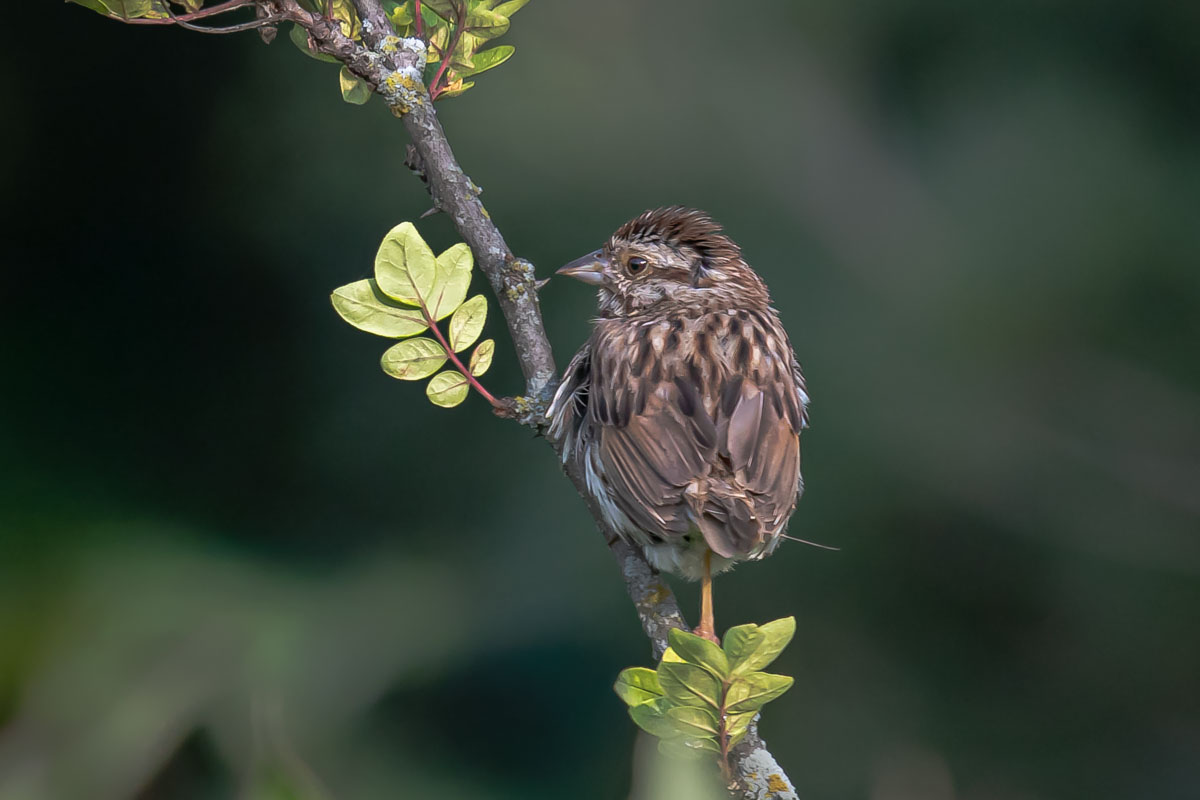
Moment of Stillness
Only for a moment, the busy morning comes to rest.
Camera: Canon EOS 5D Mark IV
Lens: EF100-400mm f/4.5-5.6L IS II USM
Settings: ISO 1000 • Aperture f/8.0 • Shutter 1/640 s
E22A7361 • Size: 2100 x 1400
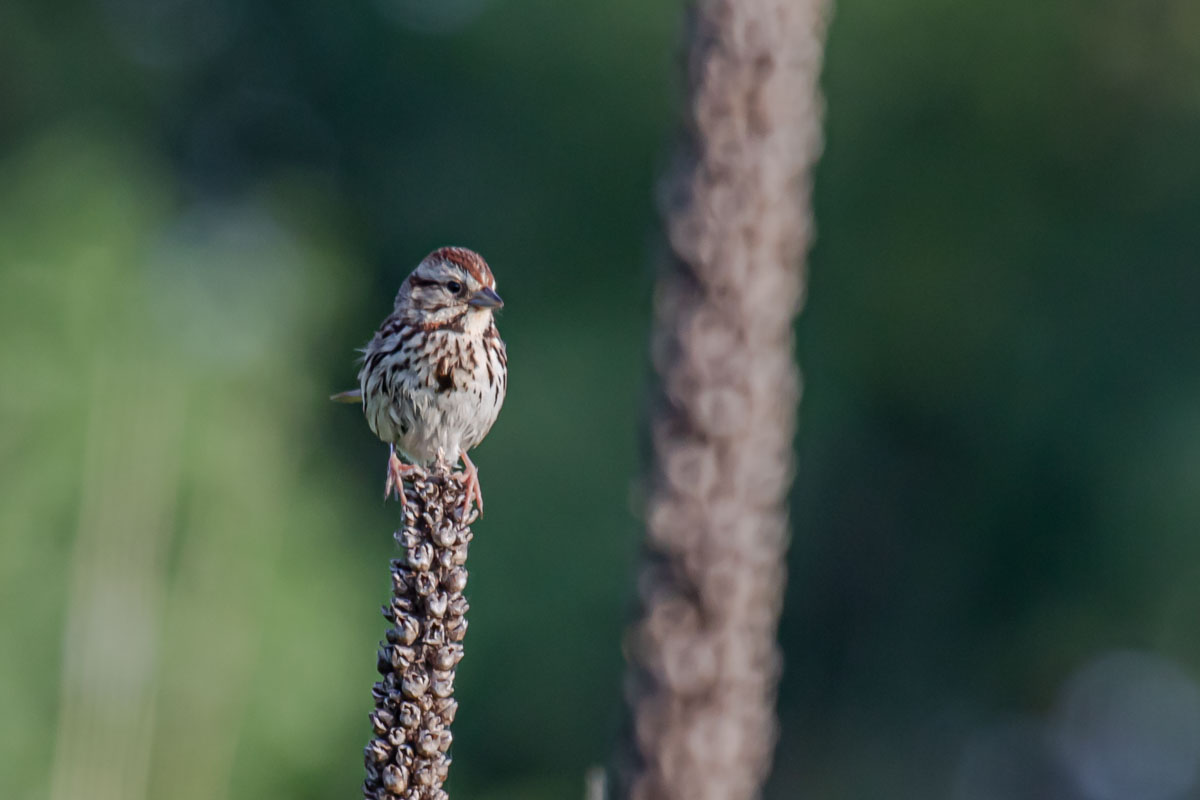
Holding the Perch
A closer look at the intricate breast pattern flowing from the throat to the shoulders.
Camera: Canon EOS 5D Mark IV
Lens: EF100-400mm f/4.5-5.6L IS II USM
Settings: ISO 400 • Aperture f/8.0 • Shutter 1/400 s
E22A3679 • Size: 1333 x 2000
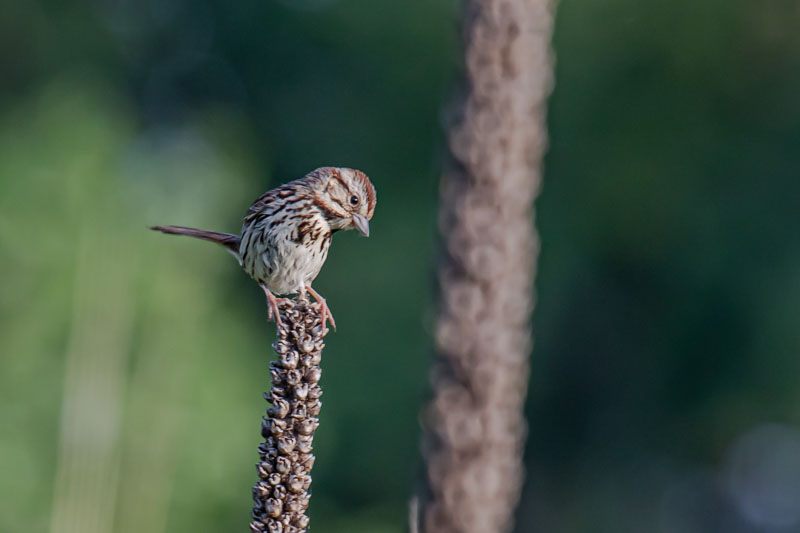
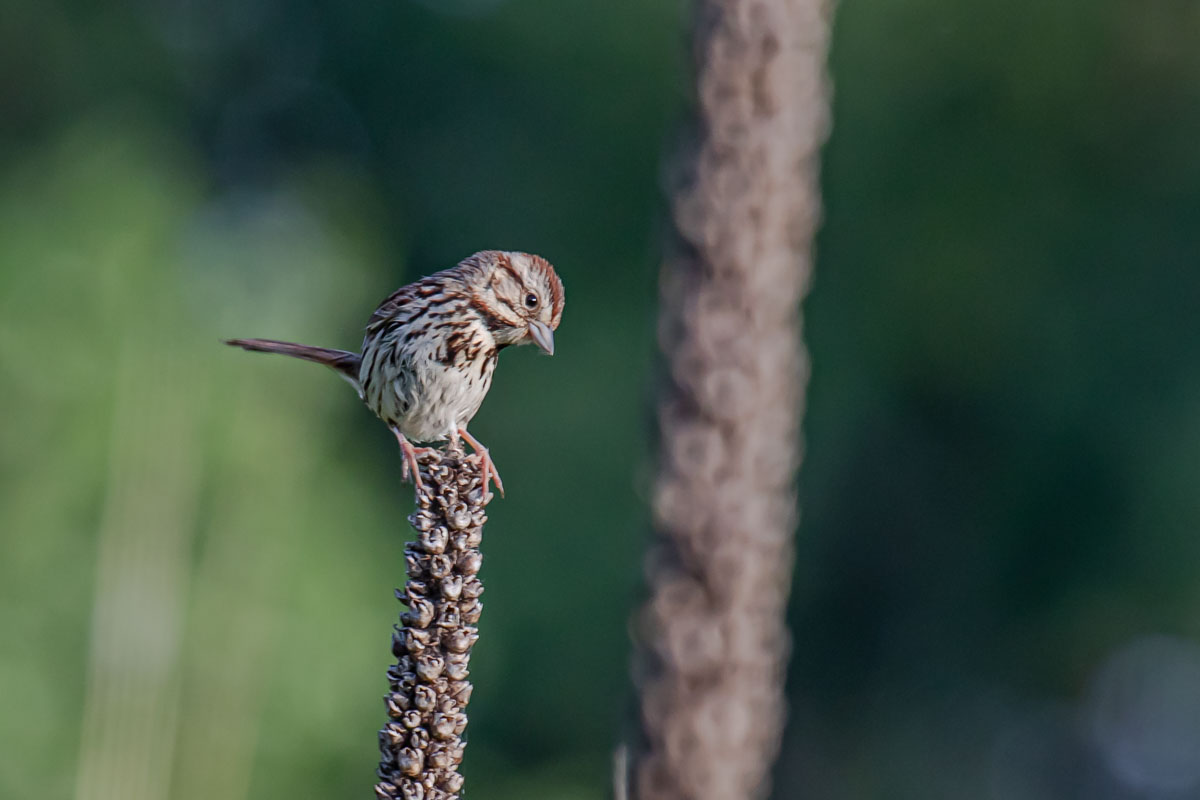
Something Below
A sudden focus on the brush below has its attention.
Camera: Canon EOS 5D Mark IV
Lens: EF100-400mm f/4.5-5.6L IS II USM
Settings: ISO 400 • Aperture f/8.0 • Shutter 1/400 s
E22A3681 • Size: 2250 x 1500
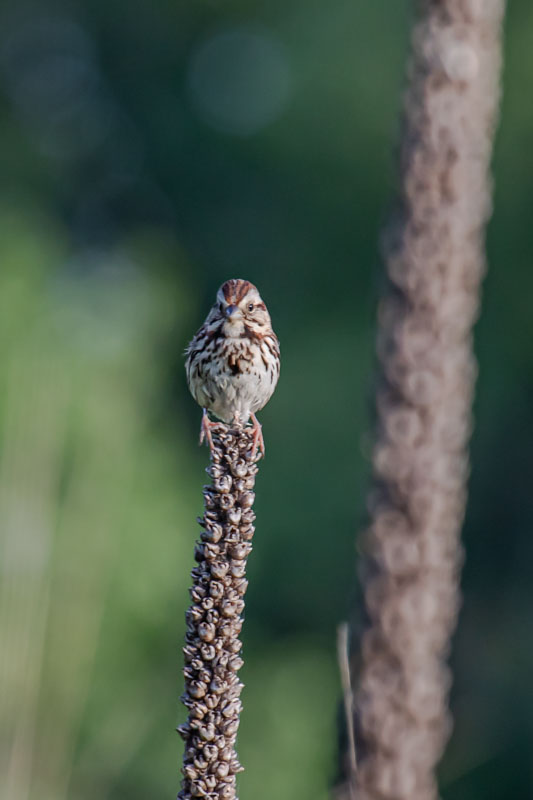
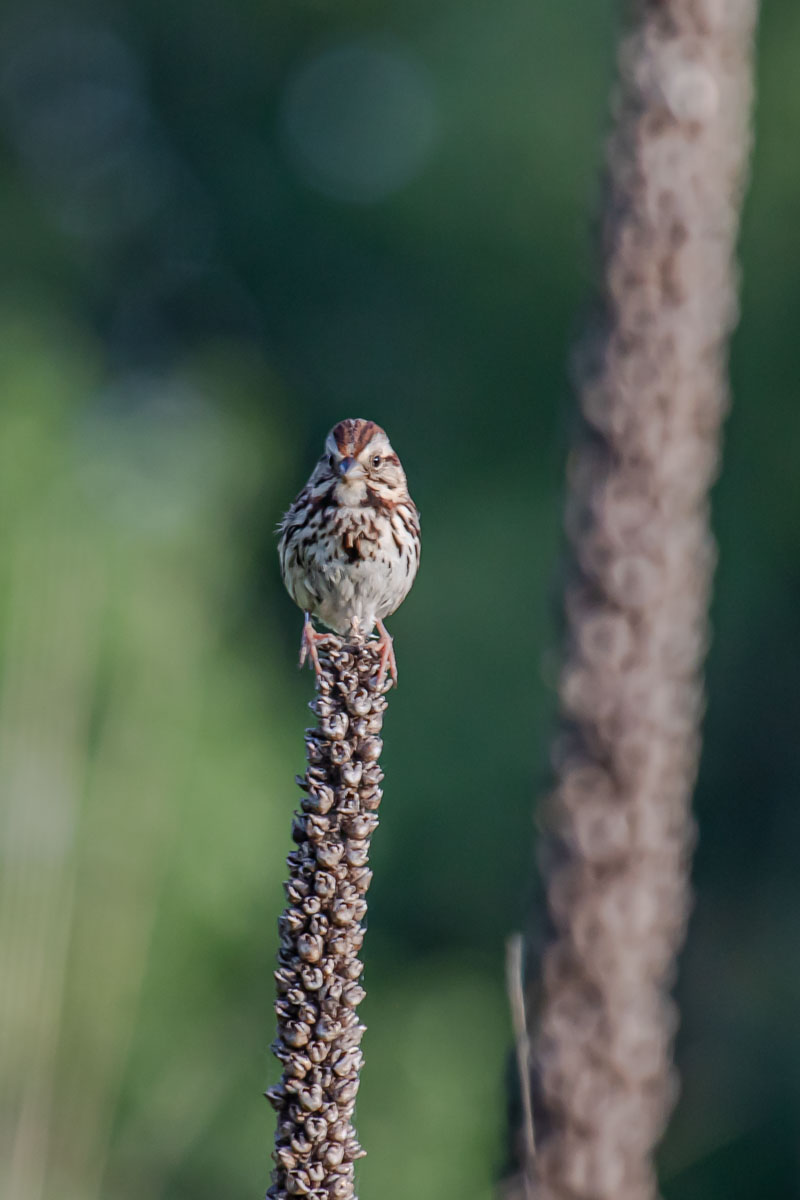
Front and Center
A small bird with a strong presence.
Camera: Canon EOS 5D Mark IV
Lens: EF100-400mm f/4.5-5.6L IS II USM
Settings: ISO 400 • Aperture f/8.0 • Shutter 1/400 s
E22A3680 • Size: 1333 x 2000
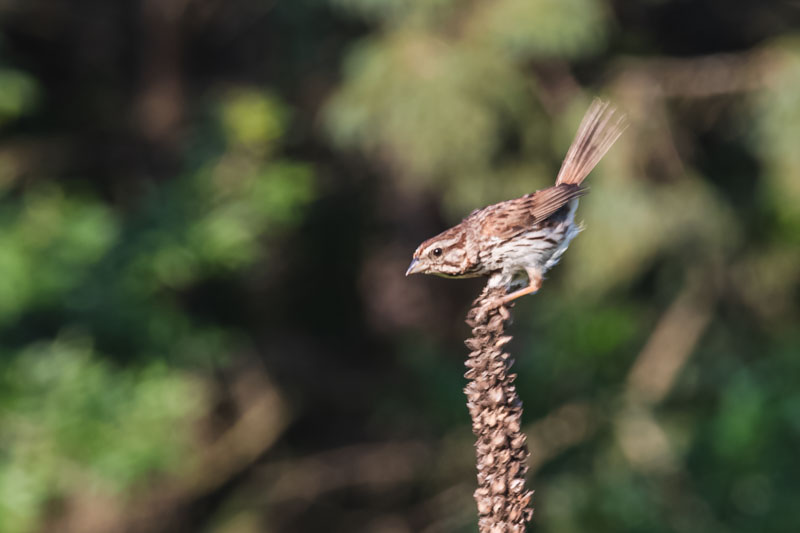
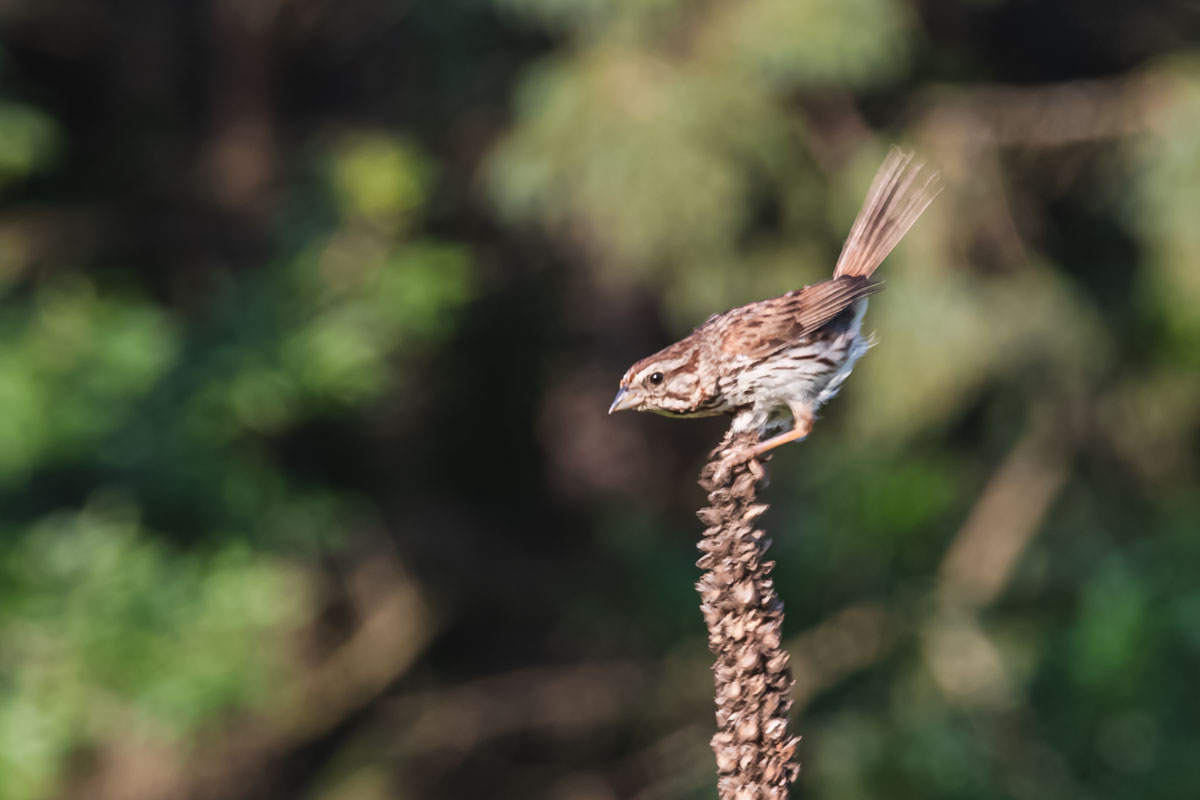
Pointing Sparrow
Tail in motion while the bird seems intent on something ahead.
Camera: Canon EOS 5D Mark IV
Lens: EF100-400mm f/4.5-5.6L IS II USM
Settings: ISO 400 • Aperture f/8.0 • Shutter 1/400 s
E21A1917 • Size: 1799 x 1199
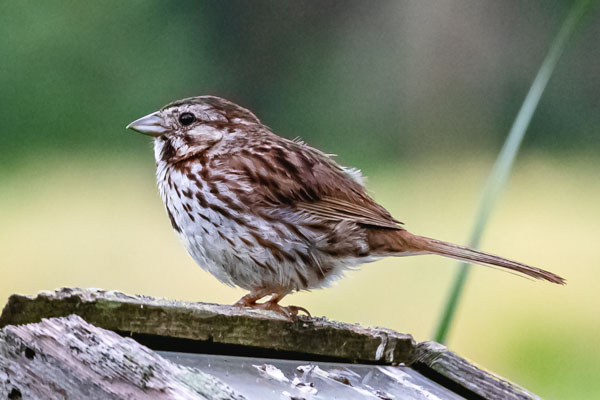
Weathered Board
Streaked plumage against rough wood.
Camera: Canon EOS 5D Mark IV
Lens: EF70-200mm f/2.8L IS II USM + EF2x teleconverter
Settings: ISO 1250 • Aperture f/13.0 • Shutter 1/200 s
E21A1931 • Size: 2109 x 1406