White-tailed Deer
Odocoileus virginianus
White-tailed Deer are familiar mammals of woodland edges, brushy wetlands, fields, and suburban green spaces. They often appear quietly, half-screened by stems and branches, before vanishing with a sudden bound and a flash of the white underside of the tail.
This page centers on a young buck photographed on May 6, 2026, during spring molt. His rough, patchy coat shows the seasonal change from the gray-brown winter pelage toward the sleeker reddish summer coat. Additional images show fawns, summer-coated deer, and the bounding movement that gives the species its familiar alarm signal.
For identification details and comparison with similar species, see Odocoileus virginianus in the Field Notes section.
A young buck pauses in brushy cover, facing the camera through a narrow opening. The setting gives the image much of its strength: the deer is visible, but still partly held by the surrounding stems, tree trunks, and early spring growth.
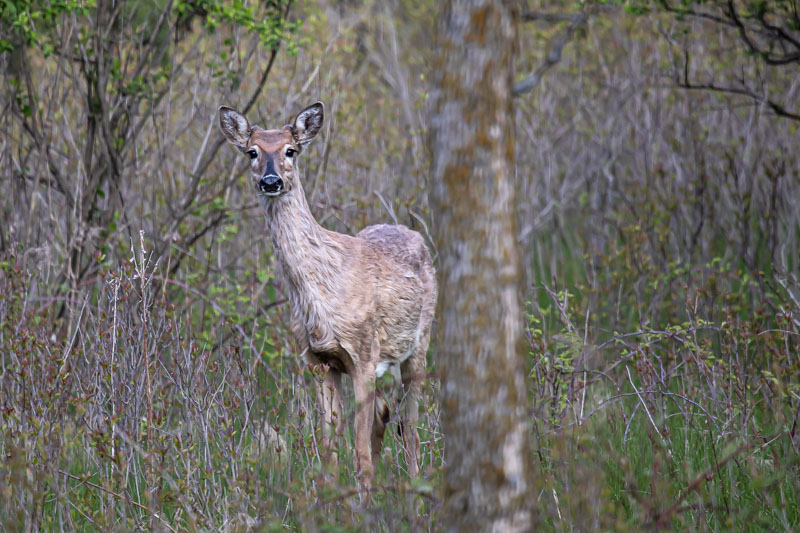
Spring Molt
A young buck shedding his winter coat in brushy cover.
Date: May 6, 2026
E22A2154 • Size: 800x533
Overview
The White-tailed Deer is Minnesota’s most familiar deer. Adults have long legs, large ears, a slender head, and a tail that is brown above and bright white below. When alarmed, a deer often raises the tail as it bounds away, creating the white flash that gives the species its common name.
The species changes appearance with age and season. Fawns are reddish brown with white spots. Adults carry a warmer reddish coat in summer and a grayer, heavier coat in winter. The May 6 photographs show the in-between stage, when a young buck is still carrying rough winter hair while new growth is coming in beneath it.
Spring Molt
The May 6 images are useful because they show more than a generic deer portrait. The uneven coat, shaggy neck, and patchy flanks mark the seasonal transition. This is the kind of detail that is easy to overlook in the field but gives the image a strong natural-history story.
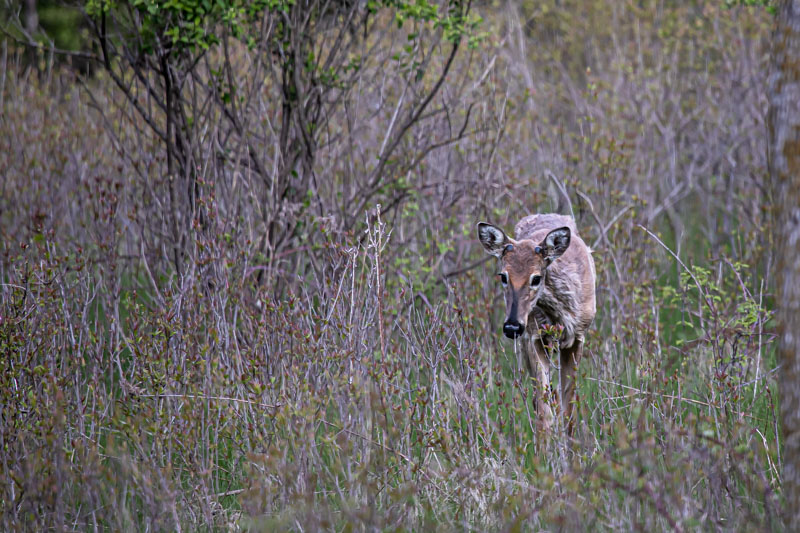
Through the Brush
Cautious movement at the wetland edge.
Date: May 6, 2026
Camera: Canon EOS 5D Mark IV
E22A2153 • Size: 800x533
In the second May 6 frame, the young buck is lower in the vegetation and moving forward. The image is less formal than the opening portrait, but it adds behavior and setting: a deer slipping through cover rather than standing in the open.
Summer Deer
By summer, White-tailed Deer show a warmer reddish brown coat that stands out against fresh green vegetation. The color is especially noticeable in open meadows and along brushy edges, where deer step between concealment and exposure.
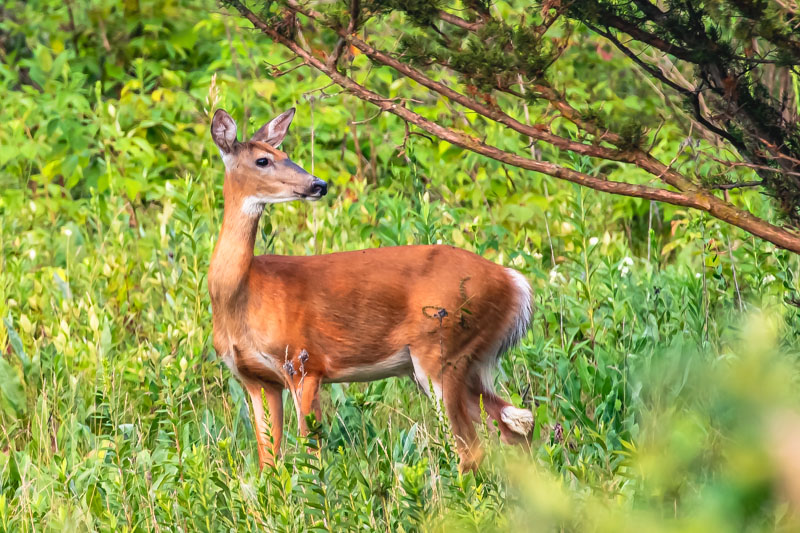
Summer Coat
Warm reddish brown against green cover.
Camera: Canon EOS 5D Mark IV
E21A2340 • Size: 800x533
This image gives a clean look at the summer pelage, with the deer framed by low branches and green wetland vegetation. The raised head and forward attention give the frame a quiet, alert presence.
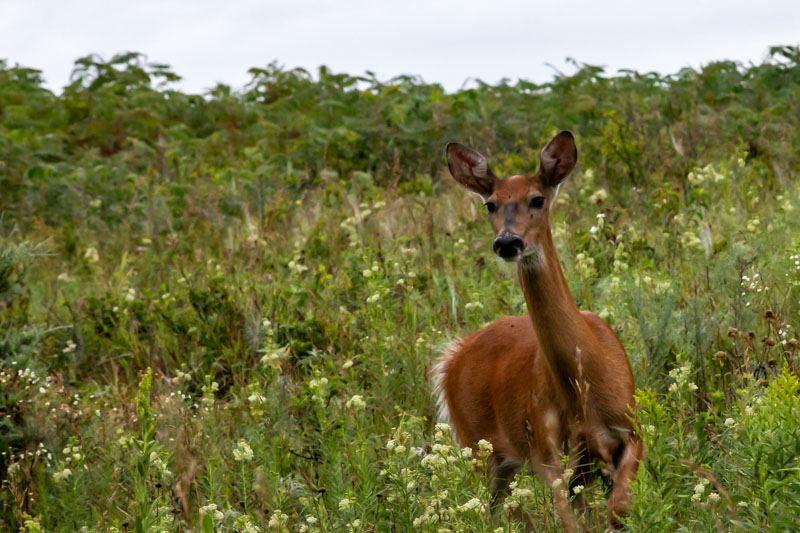
Alert in the Meadow
Ears forward, watching from tall growth.
Camera: Canon EOS 5D Mark IV
E21A2634 • Size: 800x533
The meadow image shows how easily a deer can blend into tall summer growth, even when the animal is looking directly toward the camera. The ears, dark nose, and long neck carry the identification.
Fawns
Young fawns rely on stillness and concealment. Their spotted coats break up the outline of the body in grass, leaves, and broken shade. Even in a mowed or open patch of grass, the pattern helps soften the shape of the animal.
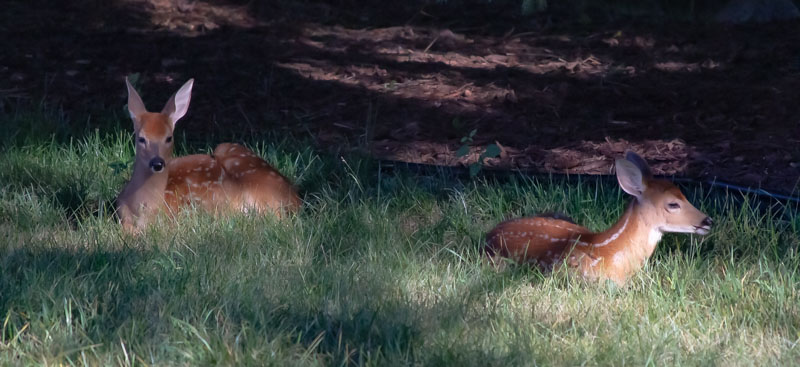
Resting Fawns
Spotted coats tucked low in shaded grass.
Camera: Canon EOS 7D
IMG_6300 • Size: 800x367
This wider frame works well as a behavioral image rather than a close portrait. The two fawns are quiet and low, with shade and grass doing much of the visual work.
Bounding Away
A White-tailed Deer can move from stillness to flight in an instant. When alarmed, the raised tail exposes the white underside, making a bright signal that is often visible even after the deer has turned away.
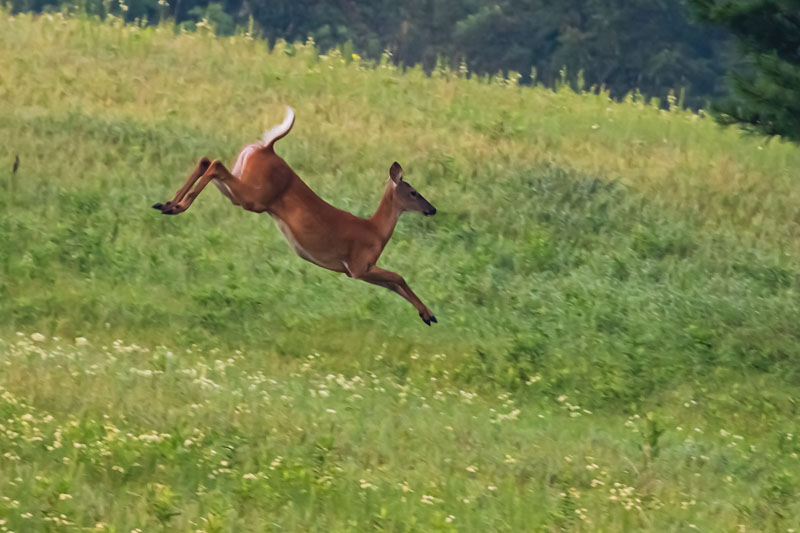
Bounding Away
The raised white tail signals alarm and movement.
Camera: Canon EOS 5D Mark IV
E21A2326 • Size: 800x533
This action frame is not the calm identification portrait, but it belongs on the page because it shows the behavior behind the name. The white tail, lifted high during the bound, is the field mark that often remains visible as the deer disappears into cover.
Photographer’s Perspective
E22A2154 is the strongest opening image. The deer is sharp enough to read clearly, the eye contact is direct, and the surrounding brush gives the frame a natural sense of discovery. The tree trunk crossing the foreground helps rather than hurts the image because it reinforces the feeling of seeing the animal through cover.
The supporting images broaden the page from one individual deer to the species as a whole. The second May 6 image adds spring movement and molt detail, the fawns show early life and concealment, the summer doe images show warm seasonal color, and the bounding frame shows the raised white tail that defines the species in motion.