Golden-eye Lichen
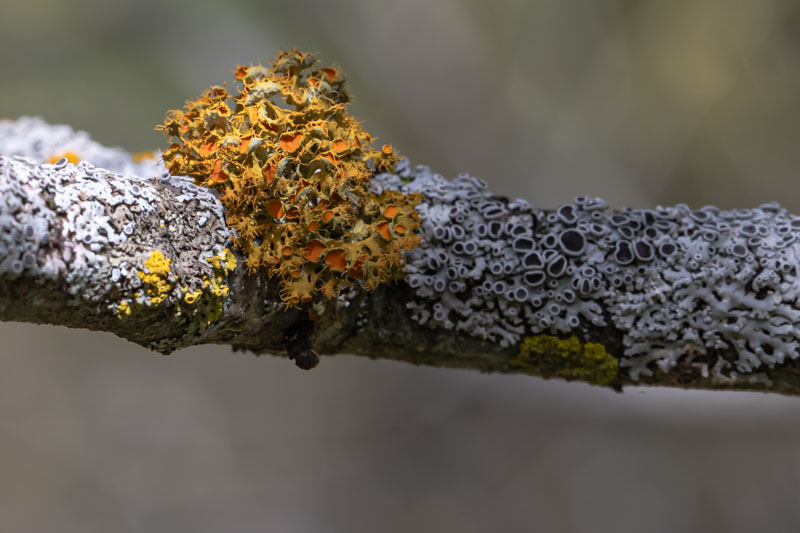
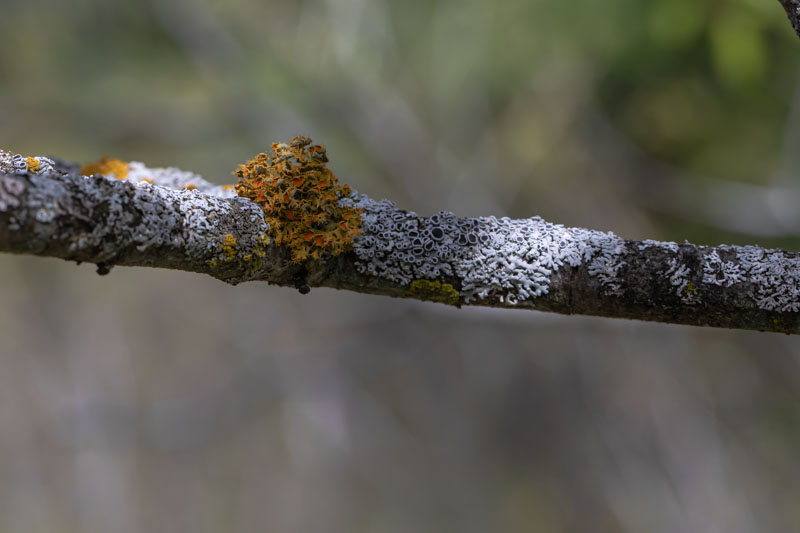
Teloschistes chrysophthalmus
For identification, habitat, and natural-history details, see the Teloschistes chrysophthalmus page in the Field Notes section. For photographic observations showing how light, moisture, magnification, and surrounding lichens change the appearance of the colony, see Photographic Sequence in the Field Notes section.
Natural Sunlight
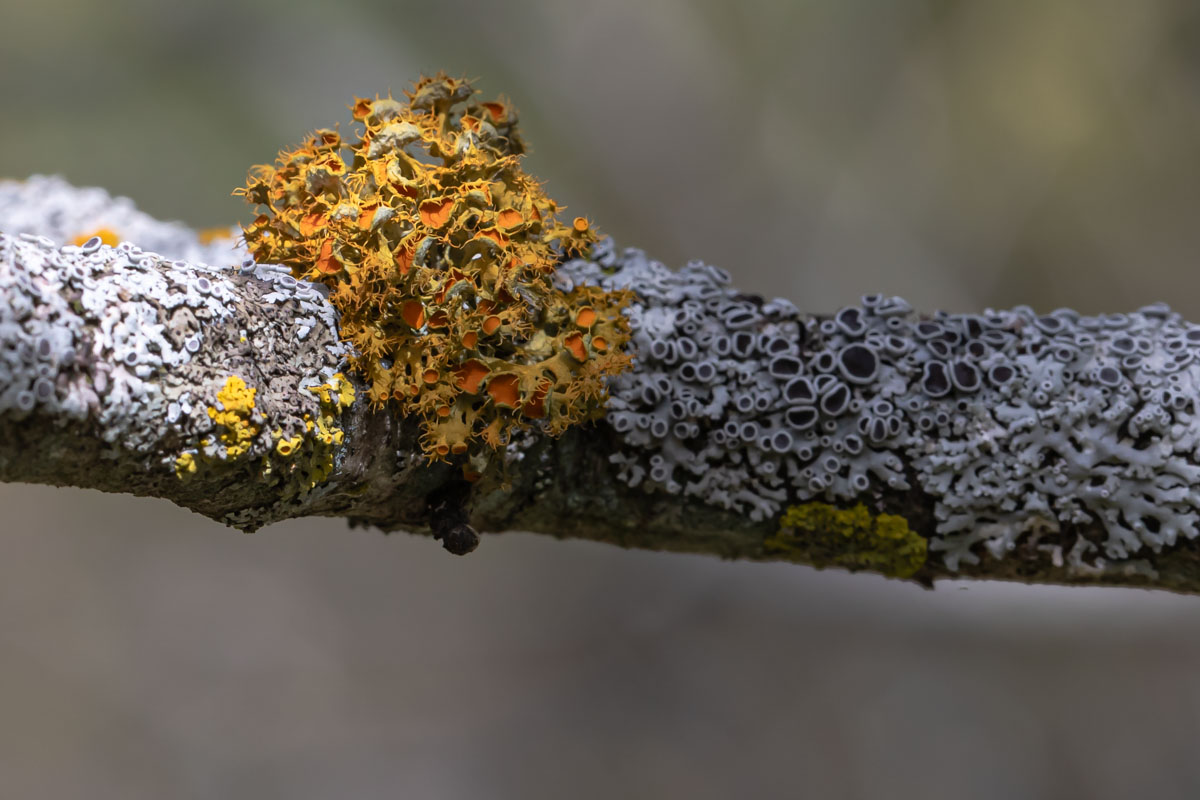
Golden-eye Lichen in Natural Sunlight
Low sunlight brings out the amber-orange tones and layered structure of the tuft.
E22A2624 • Size: 2638 x 1759
As the moving sunlight reached the colony, the Golden-eye shifted from a muted yellow-green tuft into a warmer, more dimensional subject. The orange apothecia catch the strongest light while curled lobes and cilia fall into softer shadow, giving the compact colony much more depth than the flash-lit views. The neighboring gray lichens remain comparatively neutral and help isolate the warm color of the Teloschistes.
Golden-eye Sunburst on Birch Twig
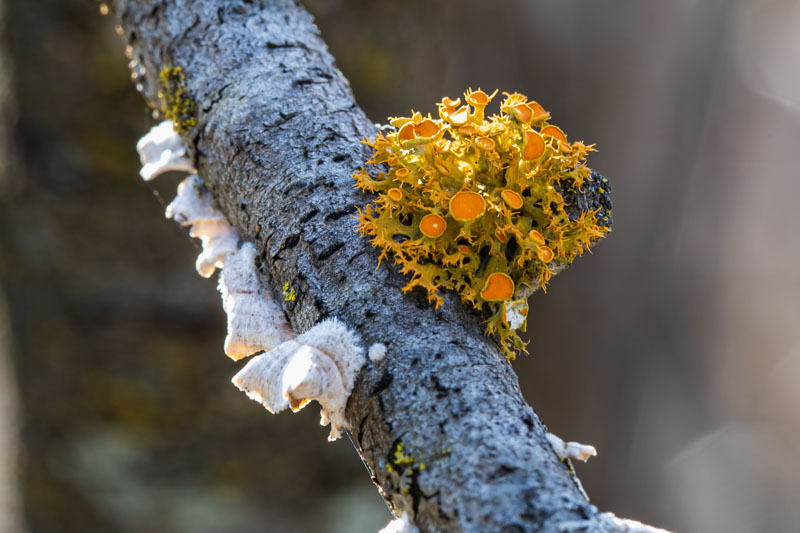
Golden-eye Sunburst on Birch Twig
A dense cluster of vivid orange apothecia rises from a slender birch twig, catching warm light against a backdrop of quiet decay.
E22A0106 • Size: 3198 x 2132
This earlier study isolates the lichen against the curve of a narrow twig. The colony reads as a compact burst of orange, with cup-shaped apothecia distributed through a tangled, lifting thallus. The smooth bark and subdued background keep attention on the tuft while preserving enough of the branch to show how lightly the fruticose growth stands away from its substrate.
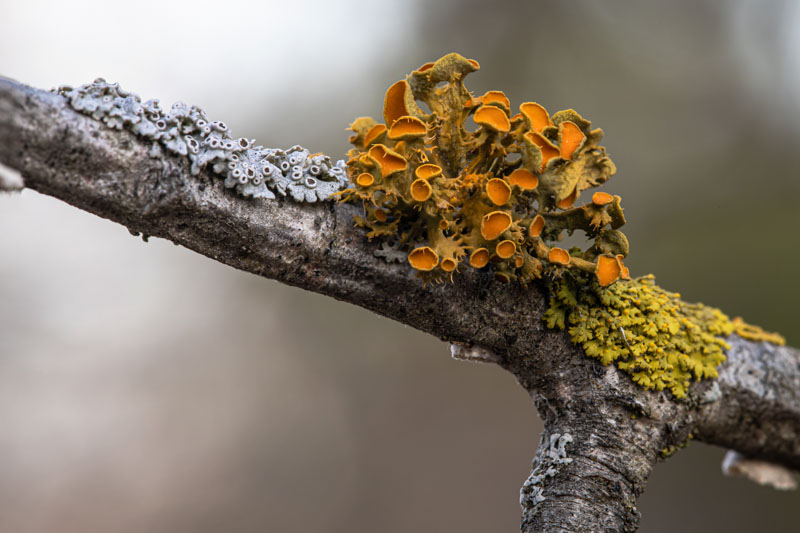
Golden-eye on Twig with Mixed Lichens
A dense cluster of orange apothecia surrounded by gray Physcia-like rosettes and yellow crusts.
E22A0184_85_88 • Size: 5448 x 3632
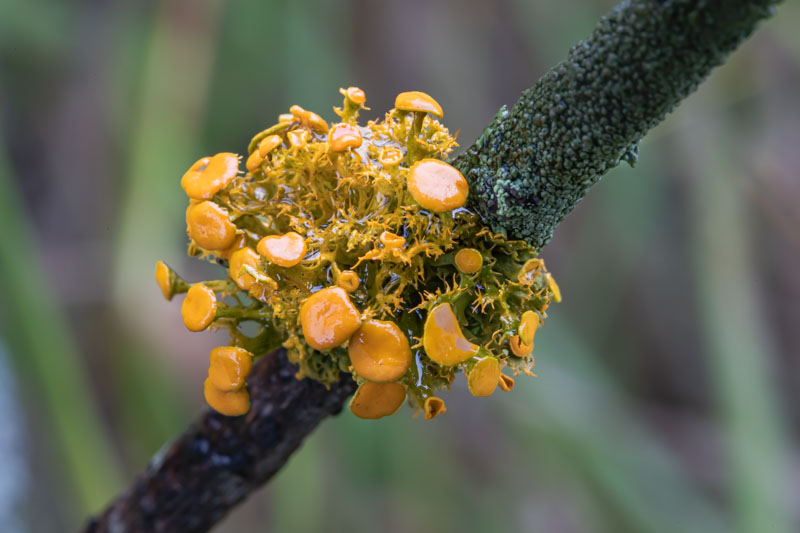
Saturated Golden-eye
Moisture deepens the thallus to olive green while the orange apothecia remain bright and glossy.
E22A9460 • Size: 6720 x 4480
The mixed-lichen view places Golden-eye within the miniature community of the branch, while E22A9460 moves in the opposite direction. At higher magnification, the humid, foggy conditions change both color and surface character: the thallus becomes darker and greener, the apothecia appear glossy and reflective, and the fine cilia become part of a much denser three-dimensional structure.
Waiting for the Light
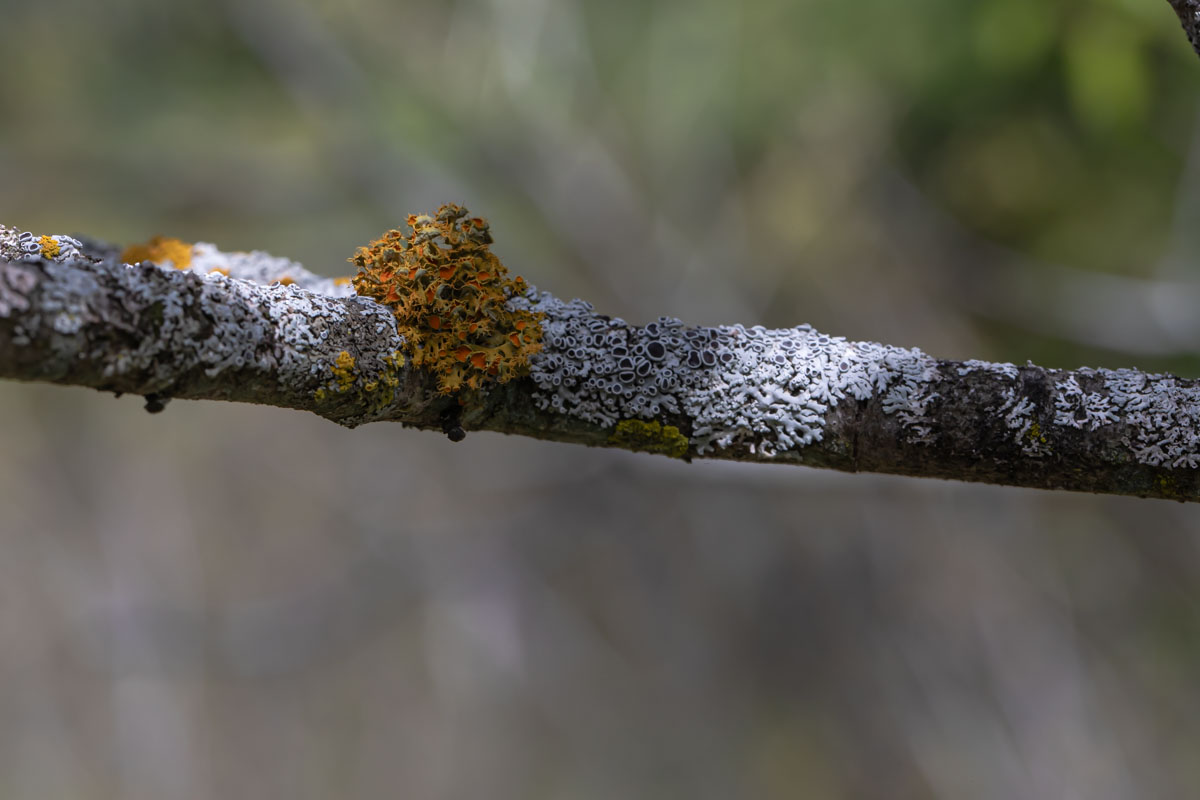
Waiting for the Light
A wider natural-light view showing the colony in place on a mixed lichen-covered branch.
E22A2623 • Size: 5375 x 3583
The wider frame preserves the circumstance behind the closer natural-light portrait. Sunlight was moving across the branch, first catching the surrounding lichens and then reaching the Golden-eye itself. The photograph keeps more of the branch and background in view, showing the small scale of the orange tuft within a much larger surface occupied by several different lichens.
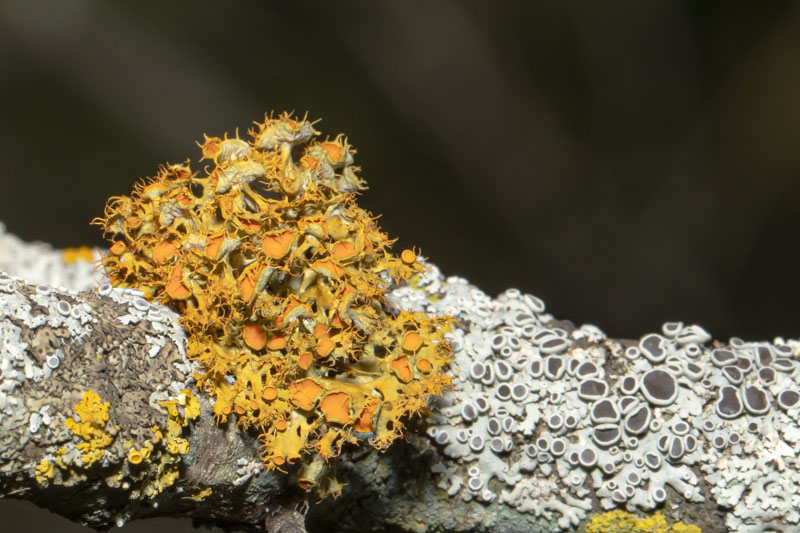
Flash-lit Detail
Flash reveals the dense cilia, orange apothecia, and tangled branching structure.
E22A2614 • Size: 5448 x 3632
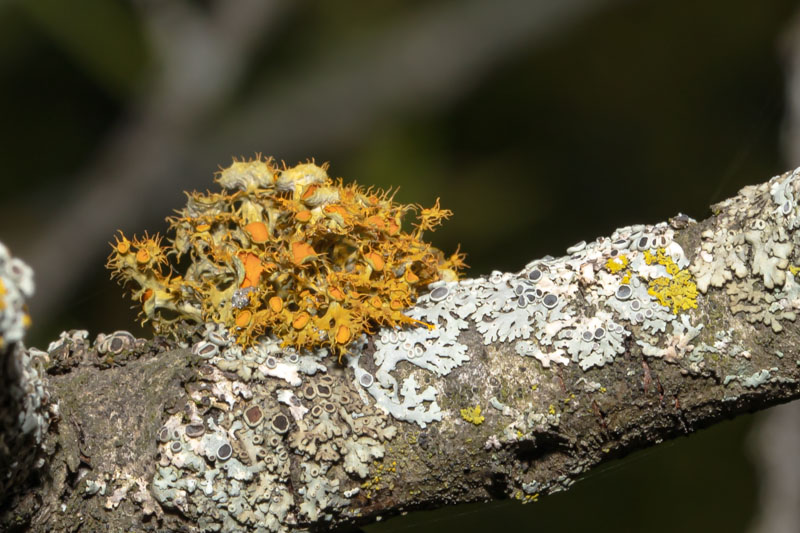
Tufted Form
The colony rises from the bark as a compact, shrubby cluster among gray Physcia-like rosettes.
E22A2611 • Size: 1991 x 1327
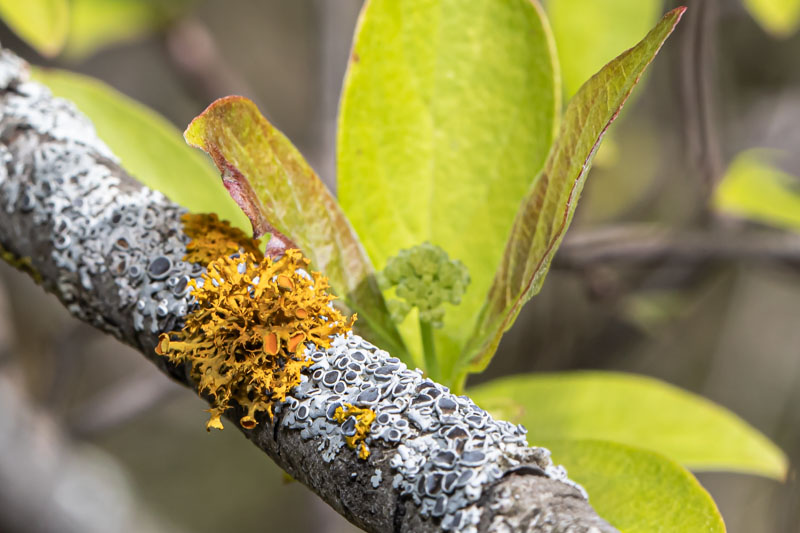
Golden-eye with Spring Leaves
Fresh green leaves brighten the background while the golden tuft rises from a lichen-covered branch.
E22A2631 • Size: 2708 x 1805